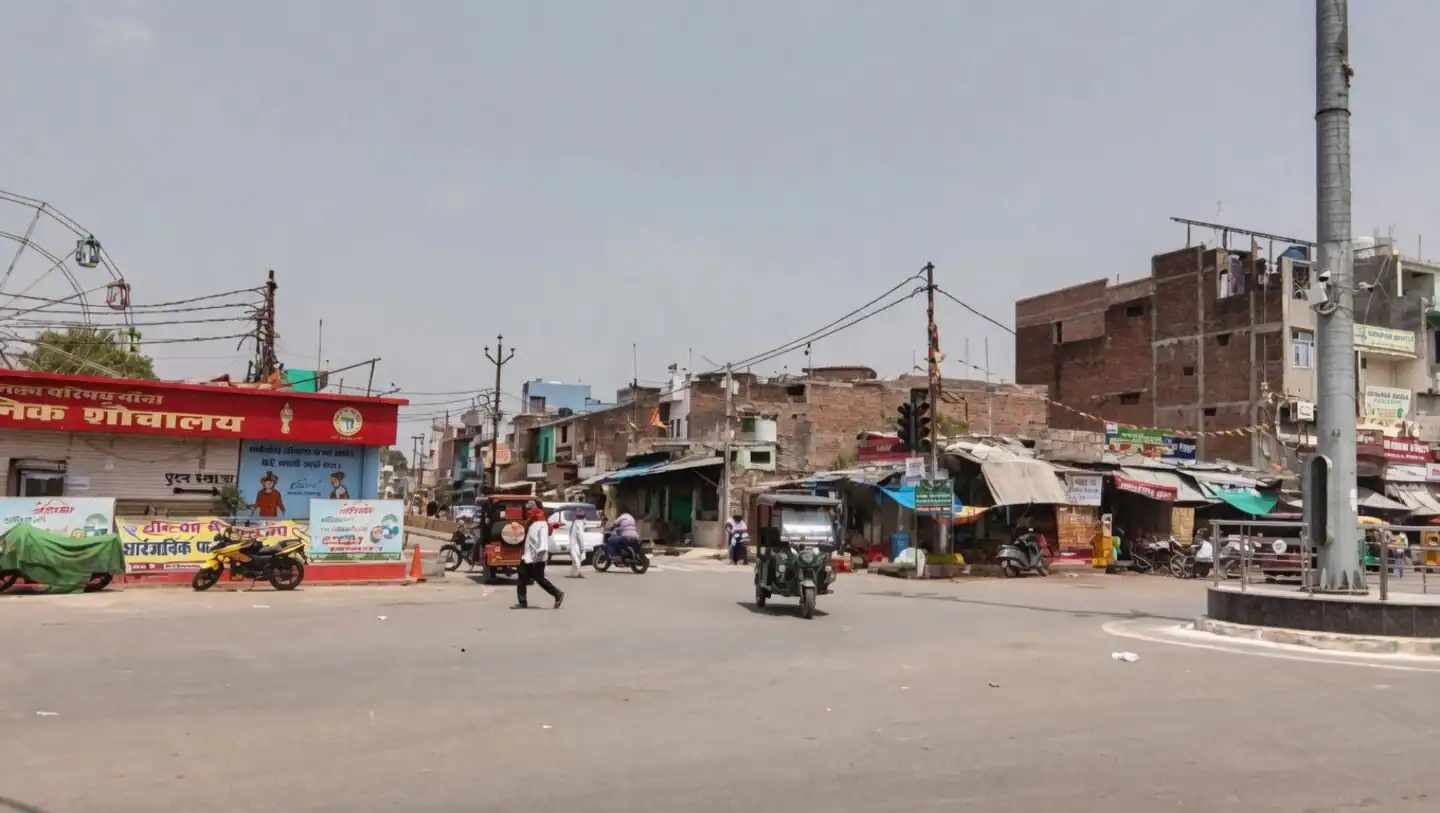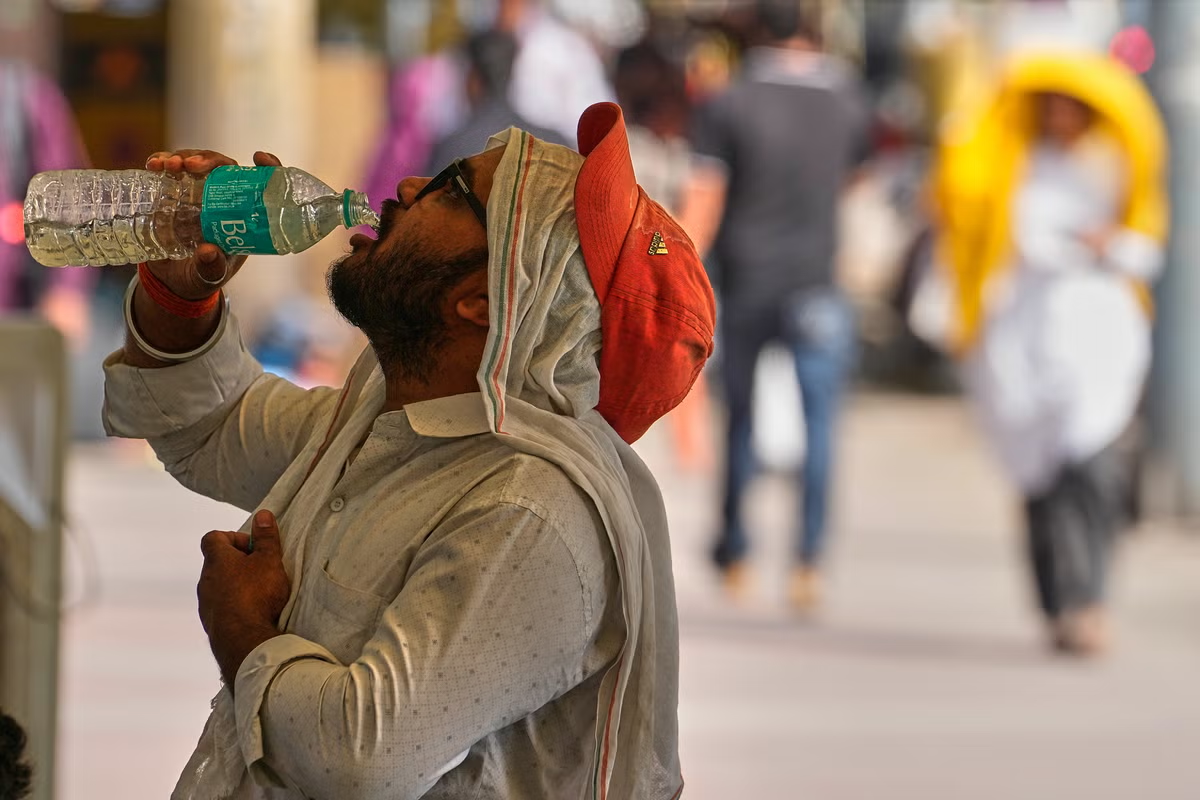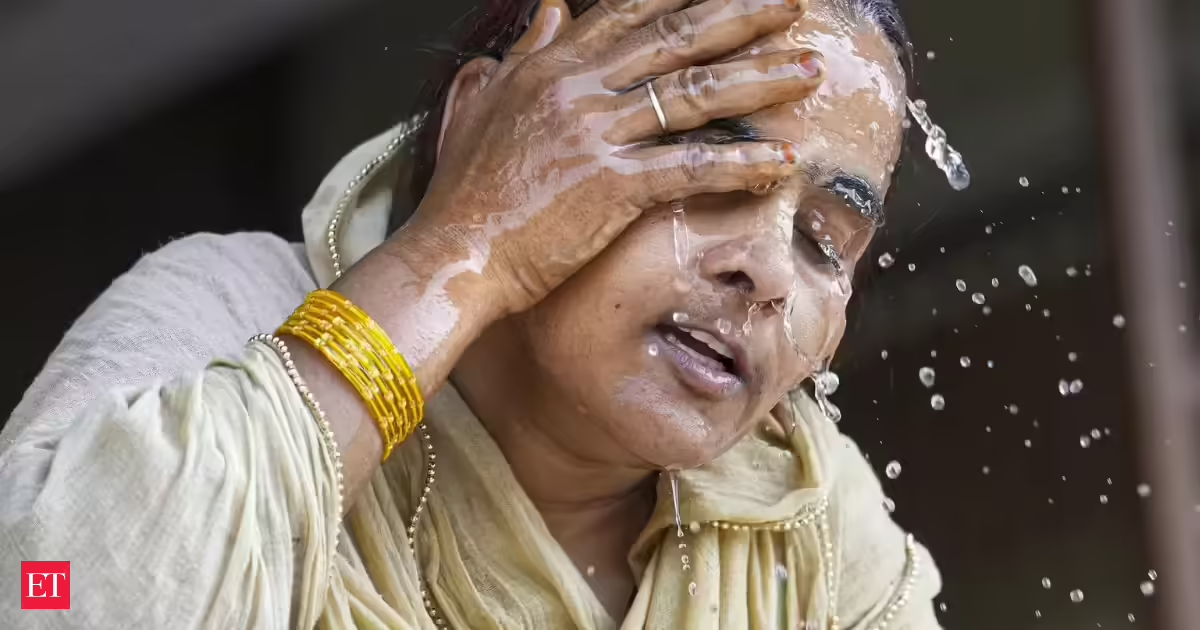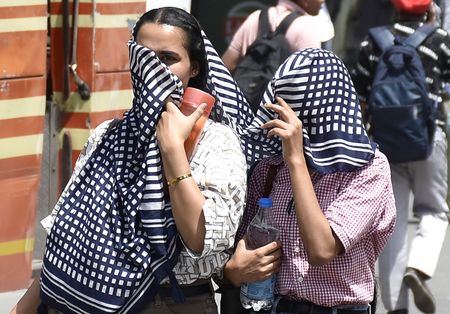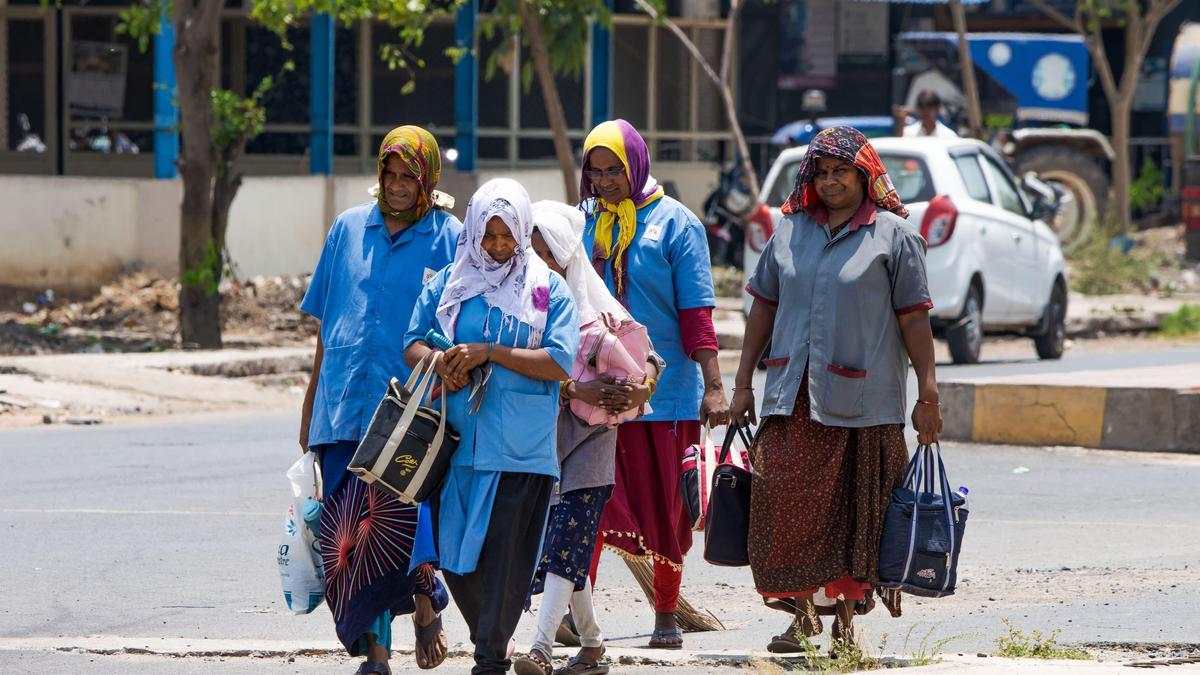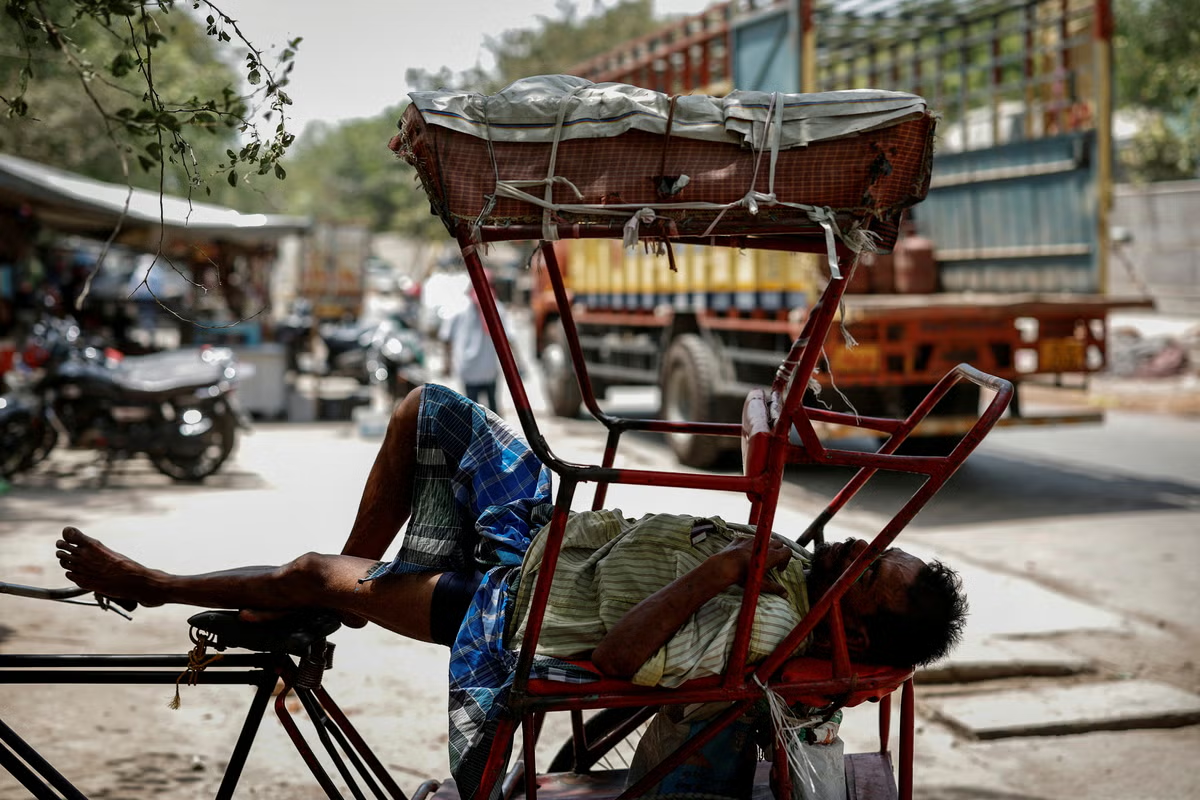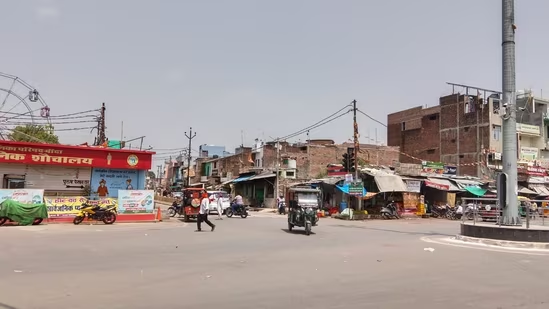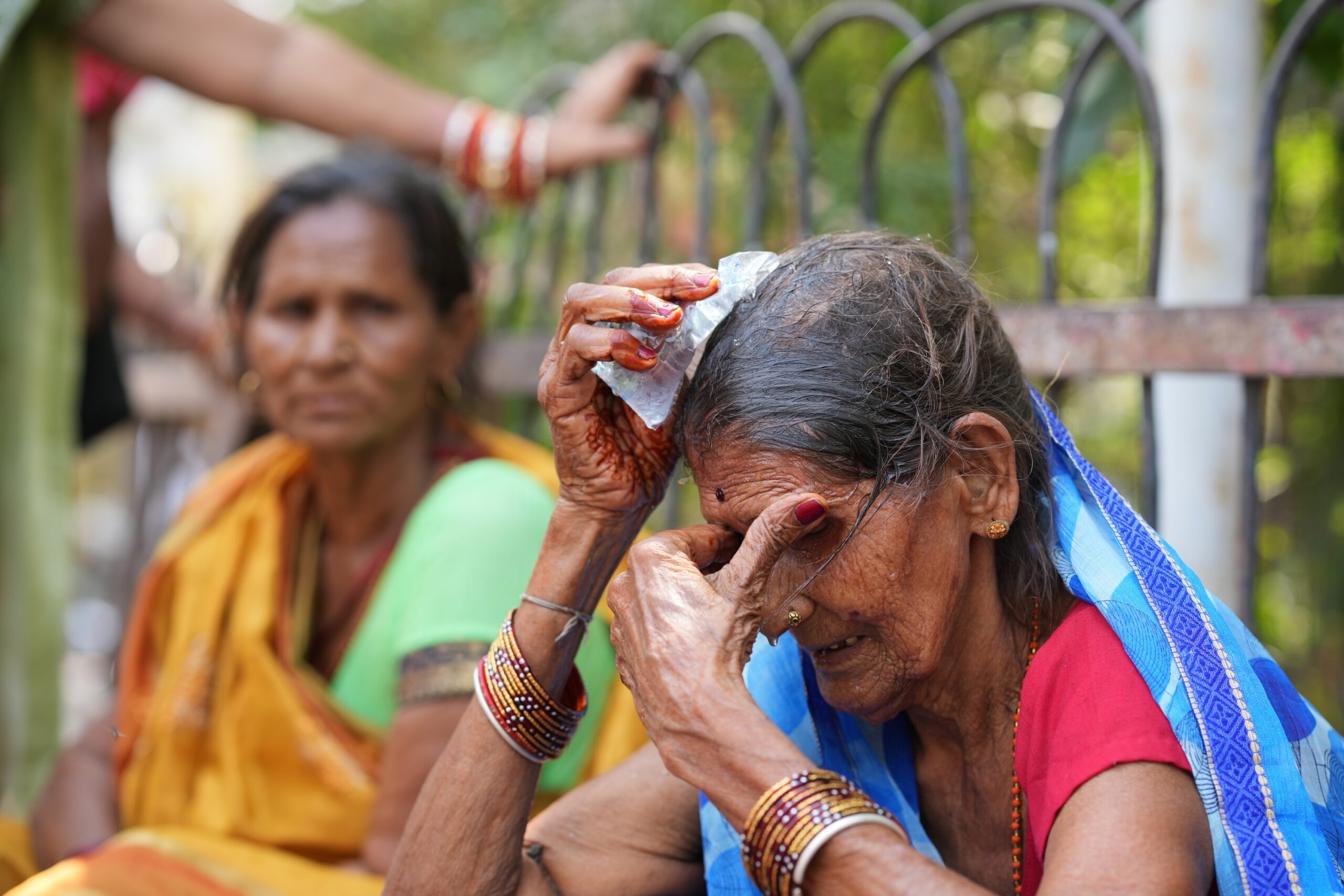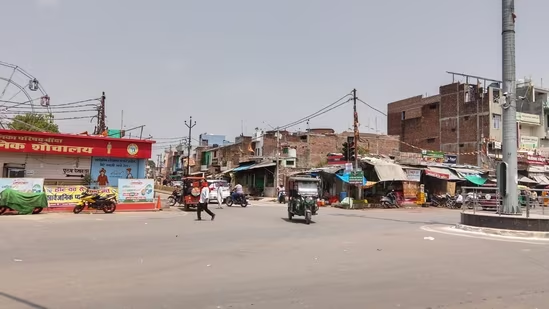
The town of Banda in Uttar Pradesh takes on a deserted look after 10 am every day, with shops almost shut and roads empty, not because of a ritual but due to excruciating heat.Court Road, the most crowded part of the Banda district with all government offices around, bears a deserted look. (Hindustan Times/ Haider Naqvi, Rajeev Mullick)On April 27 this year, Banda recorded 47.6 degrees Celsius, the highest temperature anywhere in India that day and its highest since 1951, surpassing its previous peak of 47.4 degrees Celsius for the month, reached on April 30, 2022, and April 25, 2026. On Tuesday, Banda was again the hottest in India at 48.2°C, setting a new record.The sustained readings have placed Banda among India’s most extreme heat locations — a distinction long associated with Rajasthan towns such as Churu and Jaisalmer.But why exactly is the town in UP’s Bundelkhand region sizzling so much right now? Here is what researchers have to say.Why is UP’s Banda heating up so much?According to researchers, the vulnerability of the Banda district reflects a climate crisis due to years of localised ecological destruction that stripped away the natural systems that once moderated its climate. Here are the key reasons:Mining and blasting: Hills in Banda and the wider Bundelkhand region are blasted with explosives. Sand is extracted from the Ken riverbed by excavators. Both actions are prohibited under NGT guidelines, yet continue on an industrial scale in the area, destroying the ecology and the climate.Dust and debris clouds: Blasting and crushing in Banda are releasing massive dust clouds. These dust particles get suspended in the air and trap solar heat close to the ground surface, preventing natural cooling from occurring.River degradation: As the sand is removed from the Ken riverbed on an industrial scale, it strips the riverbed of its recharge capacity. Water no longer percolates into the ground. Instead, it runs rapidly off the surface.The Ken, which was once 10-20 feet deep in many stretches, is now barely 0.5–1.5 metres deep. And it dries completely during the summer, further trapping heat.Groundwater collapse: With no river recharge and depleted aquifers, groundwater in rural Banda district has dropped to around 120 feet below the surface. Dry soil and rock absorb and radiate far more heat than moist land, providing another route for the heat to keep rising in the area.Deforestation: Banda loses an estimated 13.72 per cent of forest cover each year. Dense forest cover has fallen 17.55 per cent as measured by a 2025 multi-university study. Trees provide shade, release moisture into the air, and slow wind — all of which lower temperatures. With fewer and fewer of them doing it each year, the temperature keeps on adding up
India's hottest place is in UP, not Rajasthan. Here’s why Banda is baking at 48 degrees C
On April 27 this year, Banda recorded 47.6 degrees C, the highest temperature in India when other places were experiencing relatively milder heat. | India News
451 words~2 min read