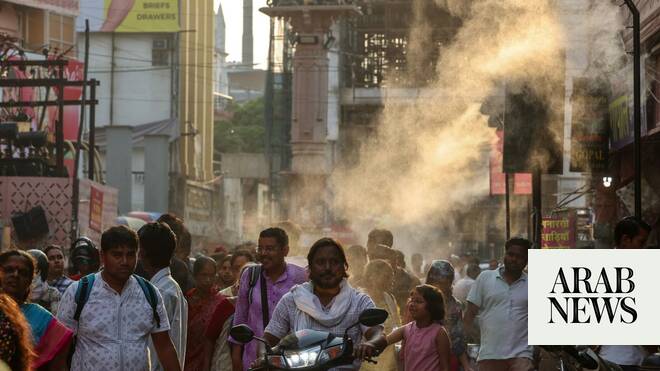
Every one of the world’s 50 hottest cities was located inside India at the end of April—a global weather-tracking anomaly, according to a major air-quality monitoring platform.
As an unusual early-season heat wave gripped the country, average peak temperatures across the most sweltering cities hit around 112 degrees Fahrenheit on April 27, data from the company AQI revealed.
In Banda, the northern India city that topped the heat list, the coolest it got that day was 94.5 degrees.
Temperatures have marginally decreased since, though peak temperatures are still nearing or exceeding 100 degrees in many areas. Forecasters say more bouts of extreme heat are on the horizon for May and June, particularly as the El Niño weather pattern overtakes India. Though the country is no stranger to scorching temperatures, research shows extreme heat events are forecast to become more frequent and severe in much of India as climate change accelerates.
This extreme heat is fueling simultaneous health, labor and financial crises across the country, according to a recent white paper published by Harvard University’s Salata Institute for Climate and Sustainability. While the country scrambles to adapt, experts say solutions can be deceptively complex—and some heat wave responses even drive more warming.