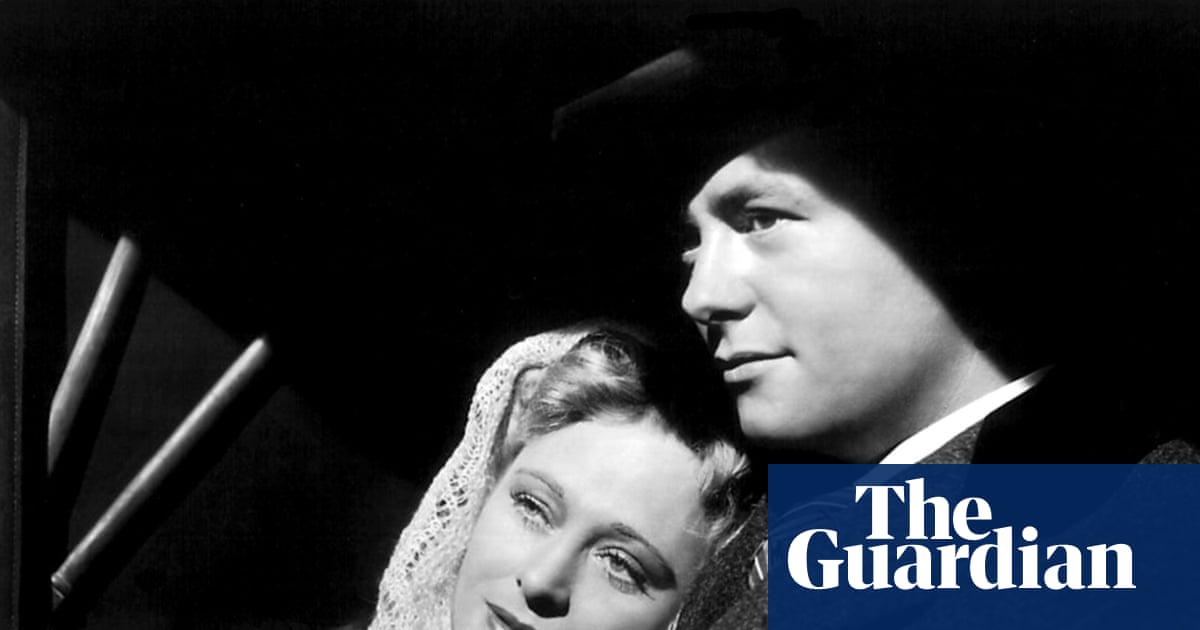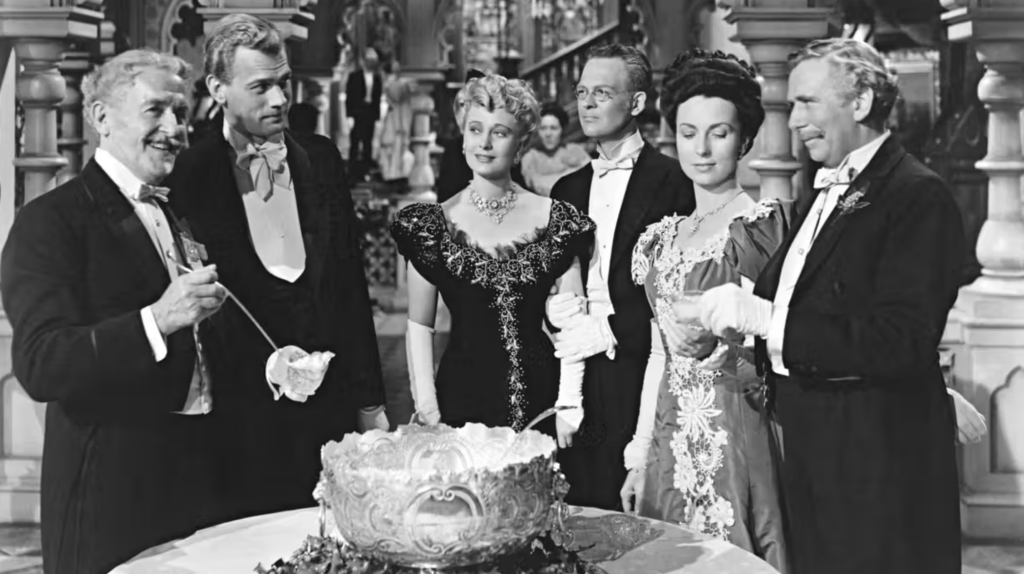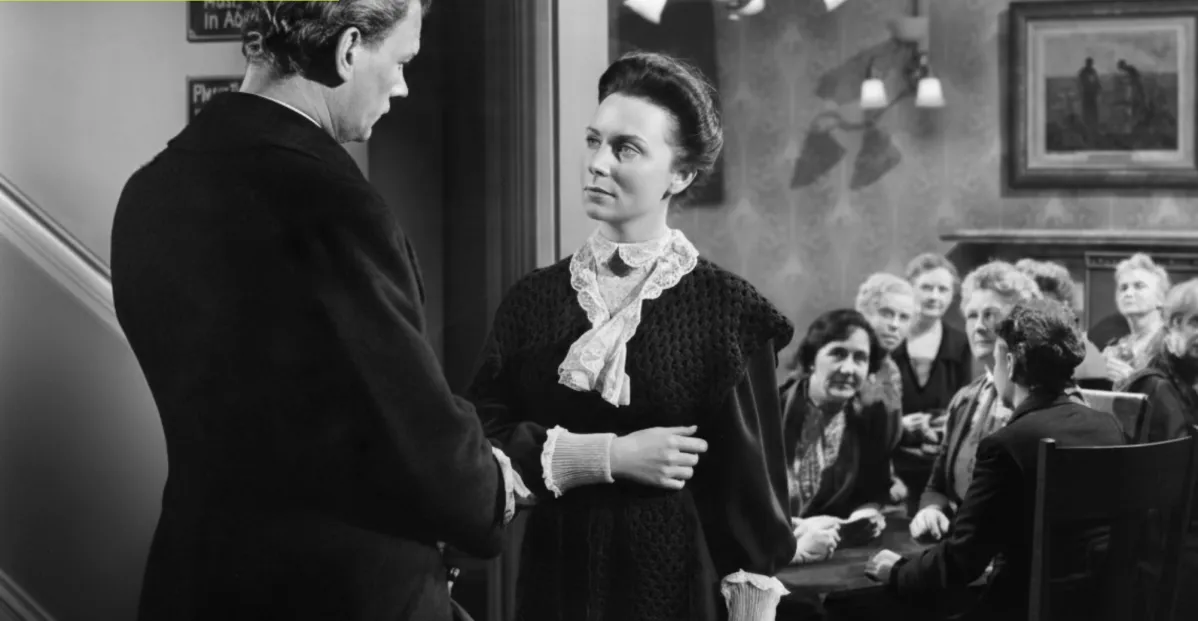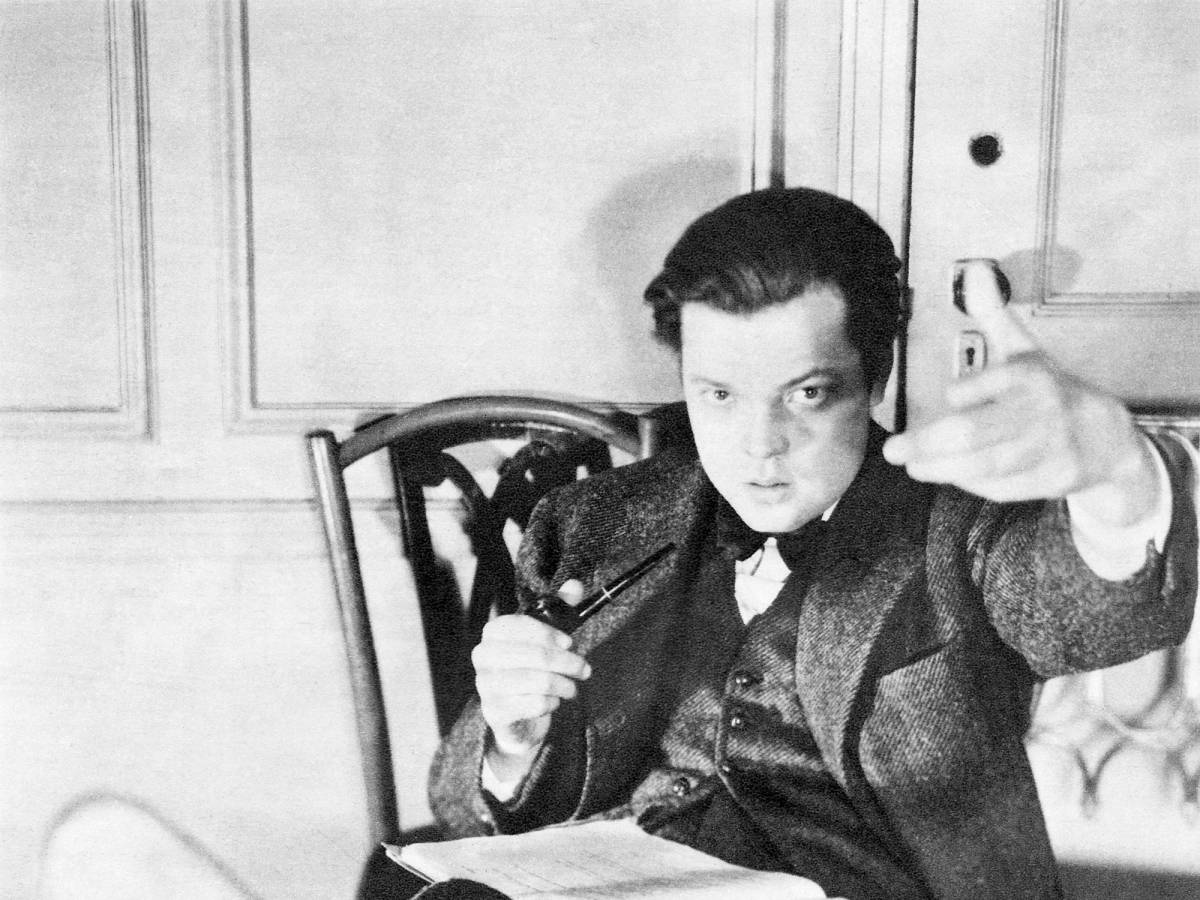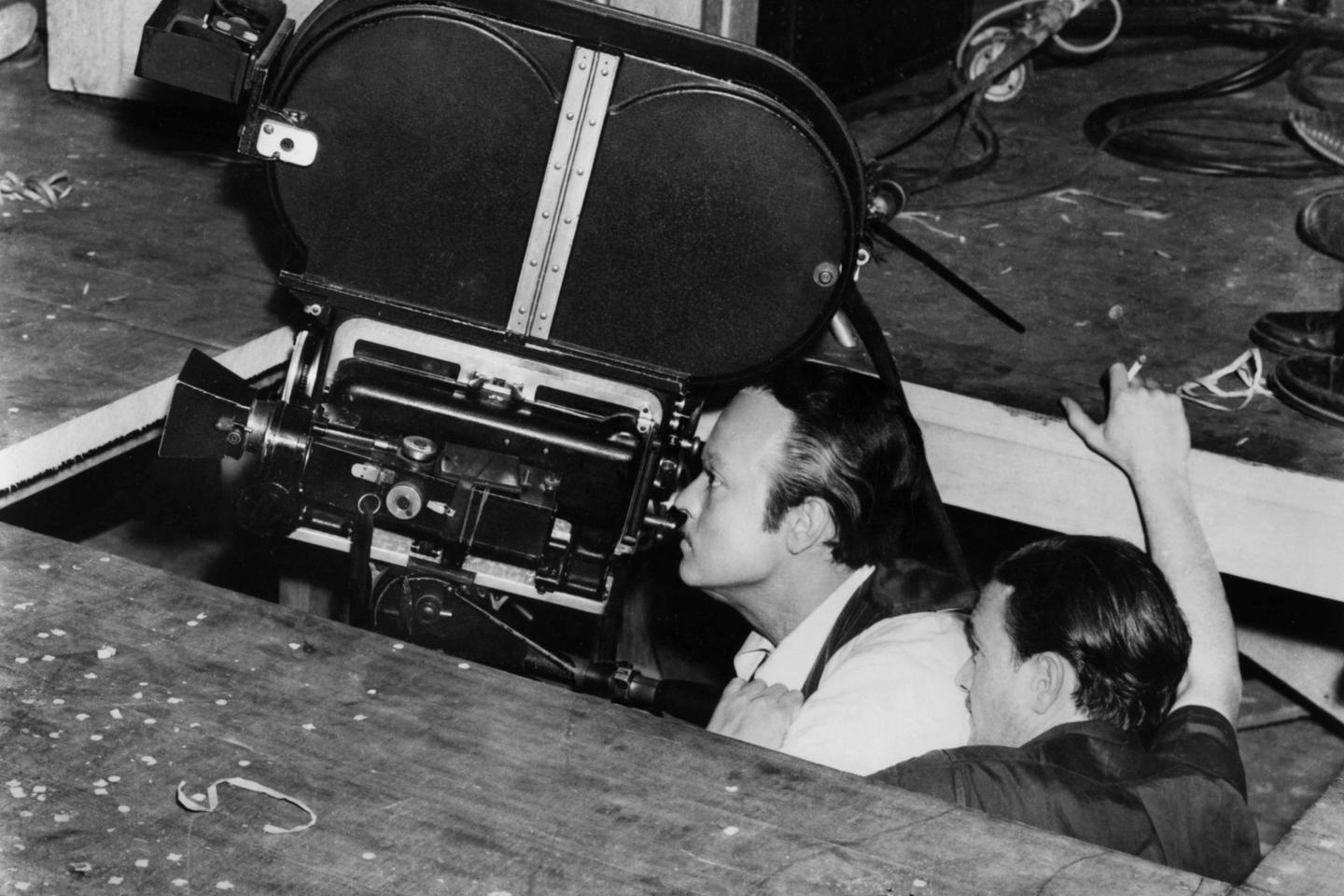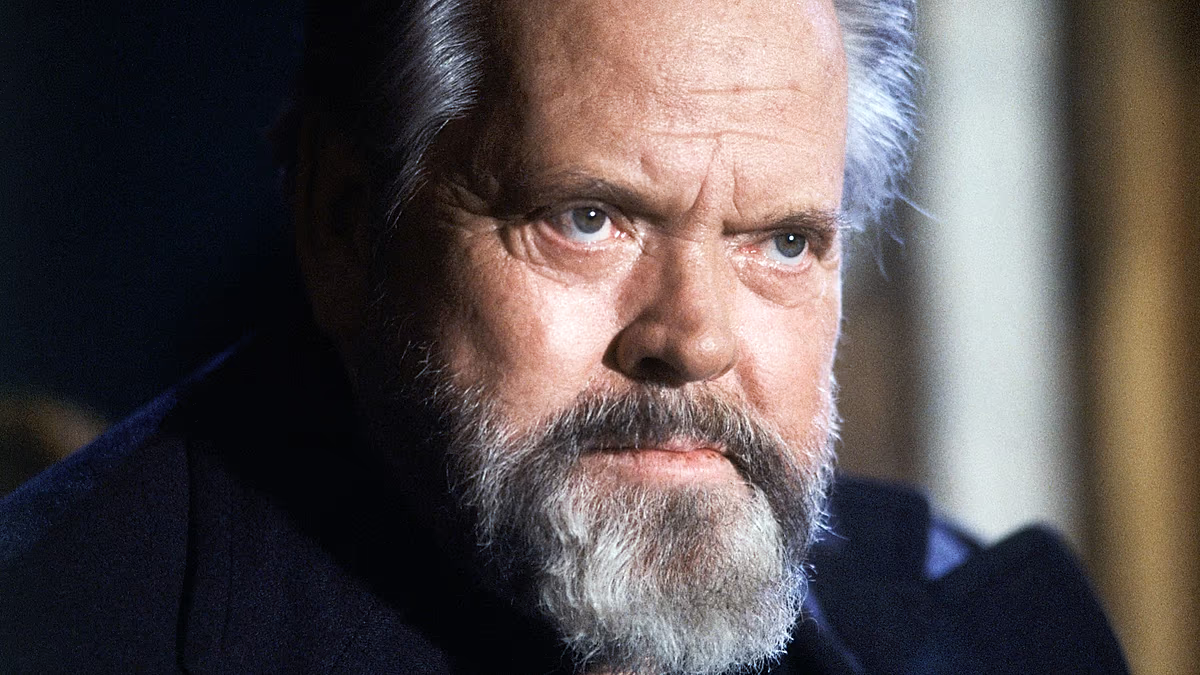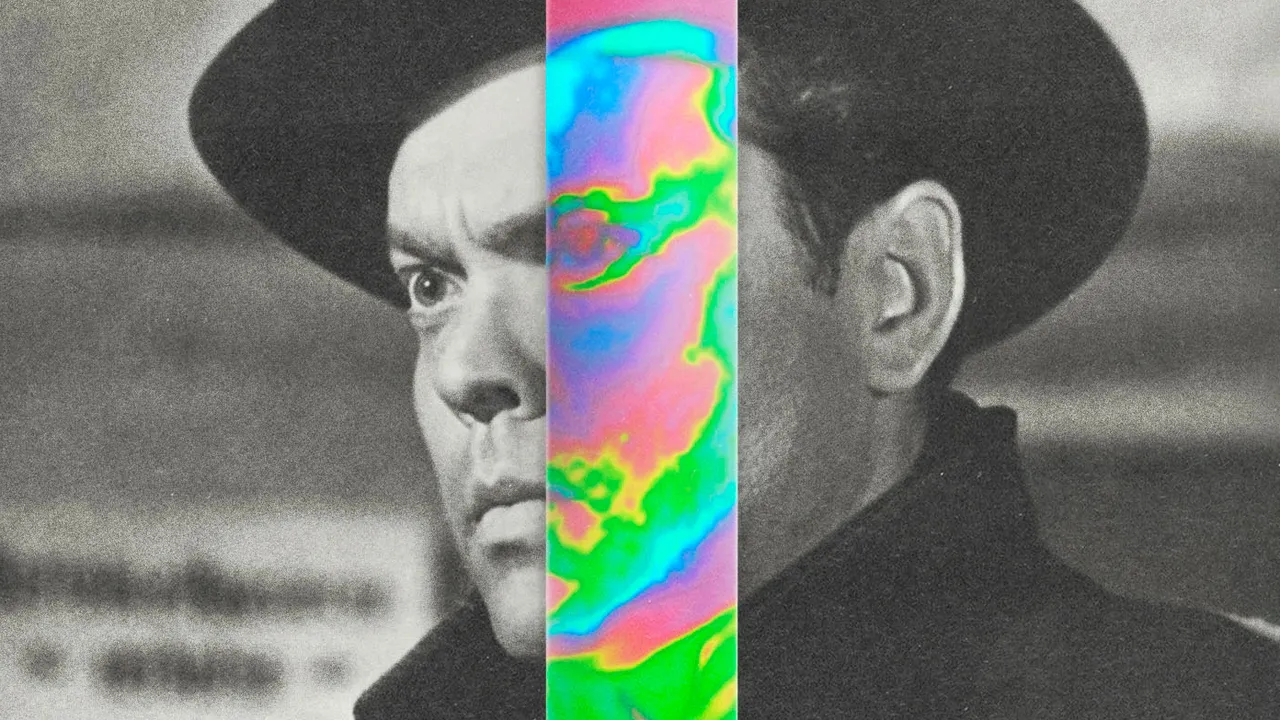
Edward Saatchi first saw “The Magnificent Ambersons,” Orson Welles’s mangled masterpiece from 1942, when he was twelve years old, in the private screening room of his family’s crenellated mansion, in West Sussex. Saatchi’s parents had already shown him and his brother “Citizen Kane.” (The boys found it sad.) But “Ambersons,” Welles’s follow-up film, about a wealthy Midwestern clan brought low, came with a bewitching backstory: R.K.O. had ripped the movie from the director’s hands, slashed forty-three minutes, tacked on a happy ending, and destroyed the excised footage in order to free up vault space, leaving decades’ worth of cinephiles to obsess over what might have been. Part of this outcome was the result of studio treachery, but Welles, owing to some combination of hubris and distraction, had let his film slip from his grasp. Saatchi recalled, “Around the family dinner table, that was always such a big topic: How much was Welles responsible for this? Mum was always quite tough on him.”Saatchi’s father, Maurice, a baron also known as Lord Saatchi, is one of two Iraqi British brothers who founded the advertising firm Saatchi & Saatchi, in 1970, which led their family to become one of the richest in the U.K. Edward’s mother, Josephine Hart, who died in 2011, was an Irish writer best known for her erotic thriller “Damage,” which was adapted into a film by Louis Malle. Edward, born in 1985, grew up in London and at the sprawling country estate, surrounded by palatial gardens and classical statuary. He described his parents as “movie mad.” The actor and Welles biographer Simon Callow, a Saatchi family friend, recalled, “They had a cinema of their own inside the house, and it was a ritual of theirs every week to watch a film together.”Aside from old movies, Edward was obsessed with “Star Trek”—especially the Holodeck, a device that conjured simulated 3-D worlds populated by characters who could interact with the members of the Starship Enterprise. That kind of wizardry didn’t exist in the real world, at least not yet. But the young prince of the Saatchi castle had faith that someday it would, and that it could bring the original “Ambersons” back from oblivion. “To me, this is the lost holy grail of cinema,” Saatchi told me recently, like Charles Foster Kane murmuring about Rosebud. “It just seemed intuitively that there would be some way to undo what had happened.”Top: R.K.O. edited out a third of a late scene of Uncle Jack (Ray Collins) and George (Holt) at a train station. Bottom: To re-create the scene, Fable films the actors John Fantasia and Cody Pressley on a soundstage in L.A., speaking Welles’s original dialogue. A.I. will later overlay the faces and voices of Collins and Holt.(Top) Photograph from Blue Robin Collectables / Alamy; (Bottom) Photograph by Brian Rose / Courtesy FableOne morning last October, Saatchi slipped into a soundstage in Los Angeles. “Almost all the stuff that was cut is really about the financial downfall of the family,” he whispered. Before him were two actors wearing trenchcoats and fedoras, sitting on a bench in a large white void. They were rehearsing a late scene from “The Magnificent Ambersons,” set at a train station. A third of the scene had been cut and destroyed by R.K.O. Eight decades later, Saatchi had devised a method to restore what was lost.In early September, Saatchi’s startup Fable Studio announced that it would re-create the missing forty-three minutes of “Ambersons,” using artificial intelligence. His Amazon-backed generative-A.I. platform, Showrunner, would feed off the data from the extant version of the film to prompt entire new scenes, based on voluminous production materials that survived, including scripts, photographs, and detailed notes. For emotional authenticity, Fable would first shoot live actors, then overlay the footage with the digitized voices and likenesses of the long-dead cast members. “I think that what’s coming is a world where we’re not the only creative species, and that we will enjoy entertainment created by A.I.s,” Saatchi declared last year on the CNBC show “Squawk Box.” “And so we wanted to train our A.I. on the greatest storyteller of the last two hundred years, Orson Welles.”Saatchi, who is forty and has a nimbus of curly red hair that has been compared to Sideshow Bob’s, announced the project without having obtained the rights to the film from Warner Bros., which owns the bulk of R.K.O.’s back catalogue. This means that, for now, the restoration is merely an “academic” exercise that cannot be commercially distributed. Saatchi also did not approach Welles’s estate, which is run by the director’s seventy-year-old daughter, Beatrice Welles; a spokesperson for the estate released a statement that said, “This attempt to generate publicity on the back of Welles’ creative genius is disappointing, especially as we weren’t even given the courtesy of a heads up.”“That was a total mistake,” Saatchi admitted to me. The estate, however, has not shunned A.I. altogether. In May, it licensed Welles’s voice to the location-based app StoryRabbit so that, if you’re, say, visiting the Taj Mahal, you can opt to listen to historical factoids narrated in Welles’s mellifluous baritone. In the past few months, Saatchi has been wooing the estate and Warner Bros., in the hope that they will come around during the two years that Fable will need to reconstruct “Ambersons.” (It doesn’t hurt that Warner Bros. may soon be acquired by Netflix, a tech-forward company that, in 2018, released a posthumously completed version of Welles’s film “The Other Side of the Wind.”) Apparently, the charm offensive is working; last month, Beatrice told me, “As far as ‘Ambersons’ is concerned, I’m a purist and wish that originally it had never been tampered with. Nobody and nothing can think like my father. In regards to what Fable Studio is doing, while I am skeptical, I know they are going into this project with enormous respect toward my father and this beautiful movie, and only for that I am grateful.”Hollywood, like many other industries, has been alarmed by the potential encroachment of A.I. Alongside such inanities as Tilly Norwood, an A.I.-generated “actress” who is supposedly seeking an agent, there have been major moves, like a recent licensing deal that could allow Disney’s intellectual property (everything from Cinderella to Yoda and Captain America) to be manipulated on the OpenAI video generator Sora 2. Saatchi’s announcement came soon after an A.I.-enhanced version of “The Wizard of Oz” premièred at the Sphere, in Las Vegas, a production that delighted tourists but appalled cinephiles. (The technology supersized the film’s frame, generating an endless yellow brick road and scores of eerie waving Munchkins.)The “Ambersons” project takes a more complex ethical stance. Instead of desecrating an easily available classic, Saatchi aims to resurrect a lost one. Rather than trampling a human artist’s vision, the project positions itself on the side of the auteur, whose work had been sabotaged by a greedy studio machine. Saatchi sees himself as “righting a historic wrong.”That wasn’t how the news landed. According to Ray Kelly, who oversees the fan site Wellesnet, opinions among Wellesians have been divided. “Some people are absolutely horrified by the notion,” Kelly told me, and some, like him, are keeping a skeptical open mind. “I don’t expect them to turn out a film that will replace the current version. I think this will be something that film enthusiasts can look at and get a feel of what Welles intended.”Saatchi believes that A.I. is less a tool that will supplement moviemaking than a “new art form” that will compete with it. Although he lives in San Francisco, he peppers his speech with references to Marcel Duchamp and Andrei Tarkovsky that would baffle the average tech bro. He finds most A.I. projects banal—“Here’s this starfighter blowing up another starfighter,” as he put it—and wants his “Ambersons” to reach for nobler heights. “To some extent, I’ve known since I was twelve years old that there would one day be the technology to do this, to make ‘The Magnificent Ambersons,’ ” he told me. “Finally, the technology is here, and to me it would be completely insane to use A.I. for anything else.”The year 1942 should have been a triumphant one for Welles. He had arrived in Hollywood three years earlier, heralded as a boy genius, with an R.K.O. contract allowing him unheard-of levels of creative control, including final cut. “Citizen Kane,” his début film, came out in the spring of 1941, days shy of his twenty-sixth birthday, to critical acclaim (if lukewarm box-office). Despite efforts by William Randolph Hearst’s newspaper empire to bury “Kane,” whose protagonist is a Hearst-like press baron, its release proved that Welles’s knack for provocation paled next to his filmmaking prowess. How could he possibly top himself?Holt (George), Costello (Isabel), and Cotten (Eugene), in a scene from the mangled version of “The Magnificent Ambersons” that R.K.O. released in 1942, with forty-three minutes of Welles’s footage deleted.Photograph from EverettFor his second feature, Welles turned to “The Magnificent Ambersons,” Booth Tarkington’s Pulitzer Prize-winning novel, from 1918. Set in a “Midland town” resembling Indianapolis, the story follows the aristocratic Ambersons from their rise, in the waning years of buggies and ballrooms, to their decline, in the ascendant age of the automobile. The family’s scion, George Amberson Minafer, is a spoiled brat who spins into fits worthy of Hamlet when his widowed mother, Isabel, reconnects with an old flame, the “horseless carriage” entrepreneur Eugene Morgan. Even as they watch their wholesome town “spread and darken into a city,” the Ambersons are nineteenth-century creatures marooned in the twentieth. They wind up either dead or broke, and all of them forgotten.Welles, who had directed and starred in a 1939 radio version of “Ambersons,” had a curious attachment to the novel, claiming (improbably) that Tarkington had been friends with his father, a bicycle-lamp inventor. According to Welles, when he pitched “Ambersons” to R.K.O., George Schaefer, the studio president, dozed off—but Welles got the go-ahead, under a revised contract that denied him final cut. He wrote much of the screenplay aboard the director King Vidor’s yacht. Instead of taking the lead role, as he had with “Kane,” he cast the movie cowboy Tim Holt as George and filled out the ensemble with his troupe of Mercury Players, including Joseph Cotten as Eugene and Agnes Moorehead as the spinster Aunt Fanny.Shooting began in October, 1941, and finished in January, 1942, two weeks behind schedule. Welles had erected a full-scale Victorian mansion over several soundstages on the R.K.O. lot; he also had his own steam room, masseur, and private cook. The budget ballooned to more than a million dollars—the studio had approved eight hundred and fifty thousand. Midway through the production, Pearl Harbor was attacked, and Nelson Rockefeller, as the government’s Coordinator of Inter-American Affairs, called on Welles to go to Brazil and make a quasi-documentary promoting Pan-American unity. Two days after wrapping “Ambersons,” he left for Rio de Janeiro to film Carnival.Welles enjoys himself in Rio de Janeiro, as studio executives back in Los Angeles were taking over the editing of “The Magnificent Ambersons.”Photograph from Paramount / EverettWhat happened next was a cinematic atrocity. On March 17th, R.K.O. held a sneak preview in Pomona. The response was disastrous. “Never in all my experience in the industry have I taken so much punishment,” Schaefer wrote to Welles. The audience “laughed at the wrong places” and “talked at the picture.” Never mind that the college-age crowd had seen the dour period drama following a peppy movie musical. The comment cards stung: “Rubbish.” “It stinks.” “Mr. Welles had better go back to radio, I hope.” The film’s grim view of American modernity was out of step with the country’s new wartime spirit. One spectator griped, “Make pictures to make us forget, not remember.”With Welles a hemisphere away, R.K.O. functionaries took a chainsaw to his work. Scenes were scrapped or reordered, with little regard for character or coherence. An extended tracking shot weaving through the Amberson ballroom, which Welles called “the greatest tour de force of my career,” was sliced up like bologna. The score was so decimated that the film’s composer, Bernard Herrmann, removed his name from the credits. Welles’s bleak finale, in which Eugene visits Aunt Fanny at a dilapidated boarding house, was replaced by a cheery ending in which the two walk away arm in arm, smiling. By the time “Ambersons” came out, in July—with no fanfare, on a double bill with the Lupe Vélez vehicle “Mexican Spitfire Sees a Ghost”—it had shrunk from a hundred and thirty-one minutes to eighty-eight.Welles, meanwhile, was living large in Rio, mostly ignoring the studio’s panic. One associate recalled him pointing to a group of chorus girls he’d been filming and bragging, “I’ve fucked that one . . . and that one . . . and that one.” (His Brazilian project, “It’s All True,” was never completed.) Working remotely when he should have bolted back to Hollywood to oversee postproduction, he wired back reams of cumbersome changes, which R.K.O. disregarded. He found out that the movie was in theatres from a Jesuit priest he met in the Amazon.The “Ambersons” fiasco was the start of Welles’s downfall. That summer, his Mercury unit was expelled from R.K.O., and Schaefer, his corporate protector, was ousted. The incoming regime dropped Welles and adopted a new slogan for the studio: “Showmanship in place of genius.” “They destroyed ‘Ambersons,’ and the picture itself destroyed me,” Welles lamented in a 1982 documentary. “I didn’t get a job as a director for years afterwards.” Welles spent the rest of his career taking acting jobs and doing ads (frozen peas, jug wine) to fund his projects, never regaining the level of studio backing that he’d enjoyed with “Kane.” In the seventies, his protégé Peter Bogdanovich saw Welles catch the mutilated “Ambersons” on TV and watch with angry tears in his eyes. “It was a much better picture than ‘Kane,’ ” Welles insisted, “if they’d just left it as it was.”Attempts to recover the lost “Ambersons” are nearly as old as the film itself. At some point, Welles tried to reconvene the surviving cast members to shoot a new ending, with their characters aged twenty years, but, as he later said, he “couldn’t swing it.” Yet he left behind a substantial fossil record. There’s the “cutting continuity,” a document made by R.K.O. employees for the original film as a guide for editors and projectionists, with descriptions of each line, camera movement, and shot duration. There are publicity photos and frame enlargements—blown-up stills from the film reels, which Welles used while he was sending notes from Brazil—that provide visual clues. And there are Welles’s comments over the years about what he filmed and the effect he intended it to have.In 1993, a Welles enthusiast from Detroit named Roger Ryan put together a reconstruction interpolating stills in place of the missing footage, paired with a recording of amateur actors reciting the dialogue from the original script. That same year, the scholar Robert L. Carringer published a readable adaptation of the uncut screenplay. In 2002, A&E aired a TV movie based on a draft of the unexpurgated script, starring Madeleine Stowe and Jonathan Rhys Meyers. Sadly, as Ray Kelly, of Wellesnet, told me, “It’s just really a bad movie.”Others—Bogdanovich, William Friedkin—dreamed of finding an intact original print. In 1995, Joshua Grossberg was an undergraduate at Northwestern when his dorm master showed him “Ambersons.” Grossberg learned of a print that had been sent to Welles in Rio and supposedly destroyed—but rumors persisted that it was languishing in a vault somewhere. “I was just entranced, because it sounded like an Indiana Jones story,” he told me. During his Christmas break that year, he flew to Brazil and began a hunt that has lasted three decades. He’s making a documentary about his quest, “The Lost Print,” which he hopes to finish this year. “We have some new revelations, which I can’t disclose,” he said. Grossberg has nothing but disdain for Saatchi’s A.I. project. “I’m not looking to re-create the lost print,” he said. “I’m looking to find the lost print.”In 2019, a filmmaker named Brian Rose started noodling around with his own reconstruction. Rose, who is forty-one, had been fascinated with “Ambersons” since taking a grad-school seminar on Welles. His class watched the “released version” (as Rose calls it) alongside Roger Ryan’s. “It was a haunting experience,” Rose told me last fall. “I was really struck by what a different and far more powerful film it was.” We were in his office in Kansas City, which was festooned with old movie posters, including two for “Ambersons,” along with an antique typewriter and parking meter.At his vintage Steelcase desk, Rose pulled up his “Ambersons” files on a computer. After grad school, he’d spent years—and his savings—making a documentary about a Kansas City college student who went missing on a class trip. He submitted it to festivals and got nowhere. “I was in a terribly dejected place,” he recalled. He started researching “Ambersons” because he needed something to fill the void. He scoured Welles’s papers at Indiana University and bought a 16-mm. print. A film restorationist gave him a copy of the cutting continuity. When the pandemic hit, Rose started creating rough Photoshop animations of the missing scenes. Then he refined them using digital sketching tools, hired actors to record the dialogue, and spliced his animated scenes into the surviving footage. (To get one transition effect that he wanted, he would light pieces of paper on fire in his shower and film them.) He submitted his “animatic” to animation festivals, but it was too weird. On his fortieth birthday, he rented out a theatre and showed the project to friends and family. “That didn’t go terribly well,” he said. “A lot of them were scratching their heads.”Then, last June, Rose got a text message from Edward Saatchi, who had heard about his reconstruction. Saatchi said that he was an “Ambersons” fan and would love to see it. They began talking regularly by phone. “After a month of these conversations, Edward says, ‘I think we should collaborate,’ ” Rose recalled. The animatic would become the blueprint for Saatchi’s A.I. version. Rose was hired on as a consultant, and was given a stake in Saatchi’s company. (Saatchi called Rose the project’s “moral compass.”) “We both talk about how this can’t be like Fred Astaire dancing with a vacuum cleaner,” Rose said, referring to a 1997 TV ad that used computer imaging to partner the dead star with a Dirt Devil. Saatchi’s project, Rose told me, was “an opportunity to put all those doubts I might have about my own career to rest.”On his computer, Rose showed me the detective work he’d done to approximate what Welles had shot. Most straightforward was a scene set in the Ambersons’ bathroom in which George bursts in and confronts his uncle Jack in the tub. R.K.O. had deleted about half of it, but the camera setups between the two actors were consistent, so Rose could simply plug in the missing shots.Video courtesy Fable
Deepfaking Orson Welles’s Mangled Masterpiece
Will an A.I. restoration of “The Magnificent Ambersons” right a historic wrong or desecrate a classic?
6,786 words~31 min read