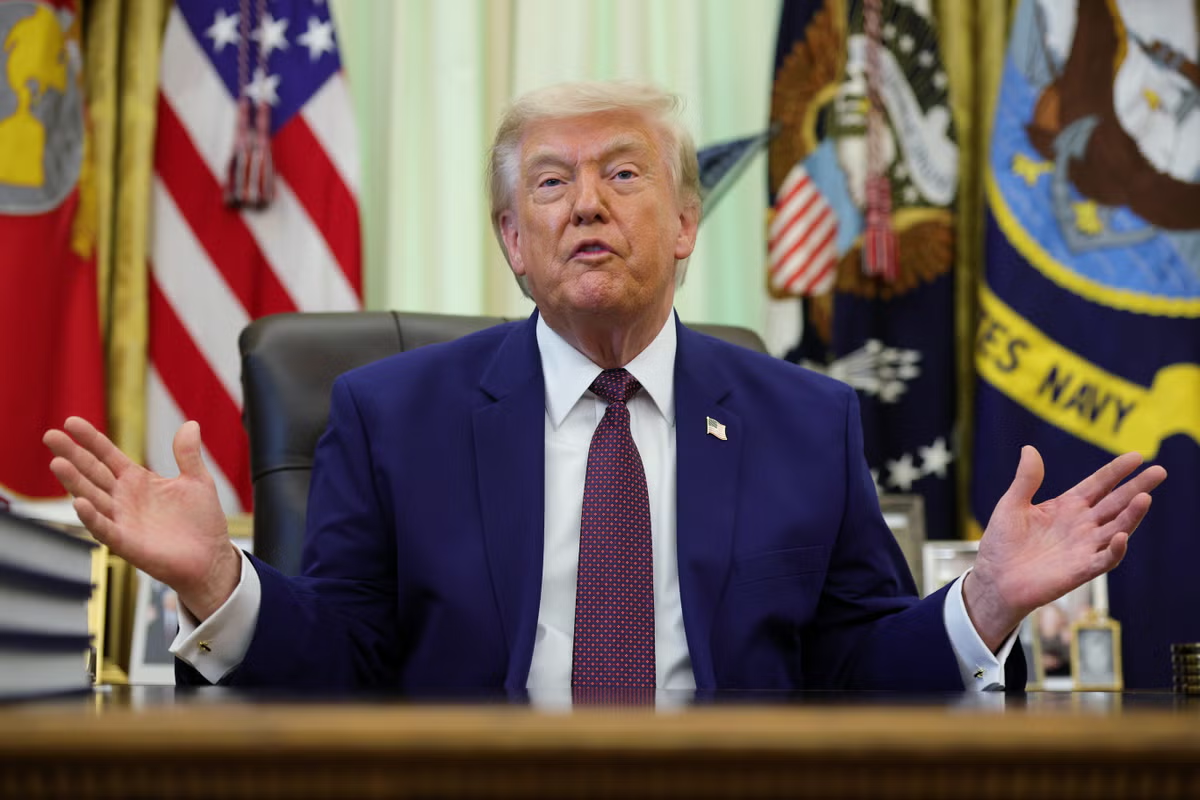
TrumpGetty ImagesLike any other taxpayer, the United States President must file their tax return and pay taxes on their income. However, the outcome of Trump’s recently settled lawsuit may put that into question for Trump and his family. According to CNBC, the lawsuit settlement contains a provision that Trump and his family’s past tax returns cannot be prosecuted, meaning that whatever was paid cannot be challenged by the IRS. This provision puts a select few people in a rare category of individuals who are immune to taxation.President Trump And Income TaxesWhile the President holds a distinguished position in office, he is treated exactly the same when it comes to income taxes. That is, Trump earns money from his position as President and other non-Presidential activities, such as his business dealings; he must pay taxes on those earnings, and he must file his income tax return on or before April 15th. Like any other taxpayer, his tax returns are confidential government documents and cannot be publicly disclosed by the taxing authority. While many Presidential candidates running for office voluntarily disclose their past returns, Trump never did so, which raised scrutiny on his business dealings. The public’s desire to see his tax returns led to leaks of information, most notably via the New York Times. This leak led to a lawsuit by Trump against the U.S. Government, claiming damages for the involuntary disclosure of his tax returns.The Trump v. Internal Revenue Service LawsuitFollowing the disclosure of his tax return information, Donald Trump sued the Internal Revenue Service for $10 billion in damages. In the settlement of Trump v. Internal Revenue Service, acting Attorney General Todd Blanche agreed that the government would create a fund totaling $1,776,000,000 for ananti-Weaponization Fund, to be deployed to compensate individuals who were wrongfully prosecuted by prior administrations.However, the settlement also created a somewhat unusual provision in that the IRS will be barred from investigating Trump and his family for past tax issues, according to CNN. While the provision is only for past tax payments and his future tax dealings could still be subject to audit and prosecution, this provision provides the President with unparalleled immunity over his taxes. MORE FOR YOU3 Key Takeaways From Trump’s IRS Settlement And Tax Immunity Controversy(1) Trump’s Past Tax Concerns Are Likely Now Behind HimMany might have already forgotten that Trump has been engulfed in tax controversy, including the famous People of the State of New York v. Donald J. Trump court case. In this lawsuit, Trump and his family were accused of misrepresenting property values for financial gain. New York Attorney General Letitia James prosecuted the case and won. Trump and his family were required to pay $464 million in damages, a penalty that was later voided. Trump has also faced past federal tax controversy, including that involving misrepresented executive compensation, according to the Washington Post, as well as his ongoing tax audits with the IRS. It is these matters that will now face less scrutiny. As a term of the lawsuit settlement, Trump and his family’s past tax matters will now be immune from prosecution, potentially providing substantial financial protection.(2) Trump’s Current & Future Taxes Are Still Fair GameThe Trump v. Internal Revenue Service settlement forever bars prosecution of Trump’s past tax issues. However, current and future tax matters can still be subject to audit and prosecution. This point is particularly important for critics who might suggest that the settlement goes too far in providing Presidential immunity. In particular, the only immunity presented to Trump is for past financial transactions. However, providing immunity in a manner such as this can be a slippery slope in that once the President becomes immune from tax audits one time, it provides grounds to attempt to seek this immunity in future circumstances. Only time will tell whether Trump and his family will seek future immunity. (3) The Lawsuit Settlement Can Still Be Challenged, Potentially Invalidating Trump’s Tax ImmunityThe creation of a $1.776 billion fund and providing immunity to Trump and his family over past tax matters are two significant items. In fact, they are so significant that they could lead to the challenging and overturning of this settlement, as reported by Forbes. Critics of the settlement have been widespread and come from members of both sides of the aisle, including Republican Senate Majority Leader John Thune, according to the BBC. After all, it was Trump’s lawsuit that led to this matter, and it was effectively Trump who settled the lawsuit, creating a potential conflict of interest in how this matter was dealt with. If all or part of the settlement is challenged, it could lead to a stay, allowing his past financial matters to continue to be prosecuted until the matter is heard by the courts. While those objecting to the settlement might welcome this notion as a beacon of hope that Trump’s financial matters will not be immune from prosecution, it is important to note that if this case is appealed, the governing body that will hear the case would be the U.S. Supreme Court. Even if they take up the case, the court currently houses several Trump-appointed judges. Thus, there are many hurdles in place that might prevent the overturning of this settlement.
3 Key Takeaways From Trump’s IRS Settlement & Tax Immunity Controversy
3 key takeaways from the Trump v. IRS settlement. Trump's past tax concerns are now behind him, however his current and future tax matters can still be contested.
871 words~4 min read