ads
Q: “Kidnapping economies thrive where the state is predictable in rhetoric but inconsistent in enforcement, where announcements are frequent but consequences are rare, and where insecurity is condemned faster than it is dismantled.”
On December 3, 2025, BusinessDay published an editorial titled “South-West security: Intent is not enough, action is urgent.” At the time, it was a warning aimed at prevention rather than diagnosis. The southwest governors had just unveiled a regional security fund, renewed commitments to intelligence sharing, and reiterated calls for stronger statewide policing architecture. The underlying assumption, still faintly held then, was that the region had sufficient time to act before insecurity hardened into structure. That assumption is now collapsing under daily evidence.
Today, that editorial reads less like commentary and more like an early diagnosis of a condition the region failed to treat in time.
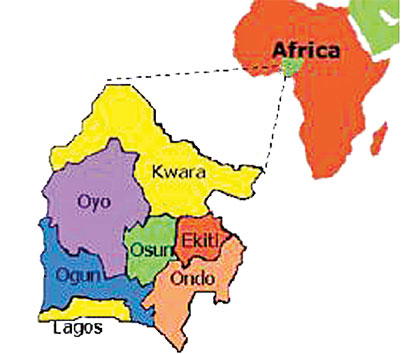
The South-West is no longer managing isolated security incidents. It is now confronting a slow but steady expansion of organised kidnapping economies across highways, forest corridors, and rural settlements. The geography of fear is widening with measurable consistency. In Ondo, Ogun, Oyo, Ekiti, and Osun, travel routes that once represented commerce, mobility, and connection are increasingly being remapped by risk calculations. Farmers are withdrawing from farmlands not because agriculture has become unviable, but because their presence itself has become hazardous. Communities are quietly adapting to a new normal where survival depends less on productivity and more on discretion, silence, and avoidance.