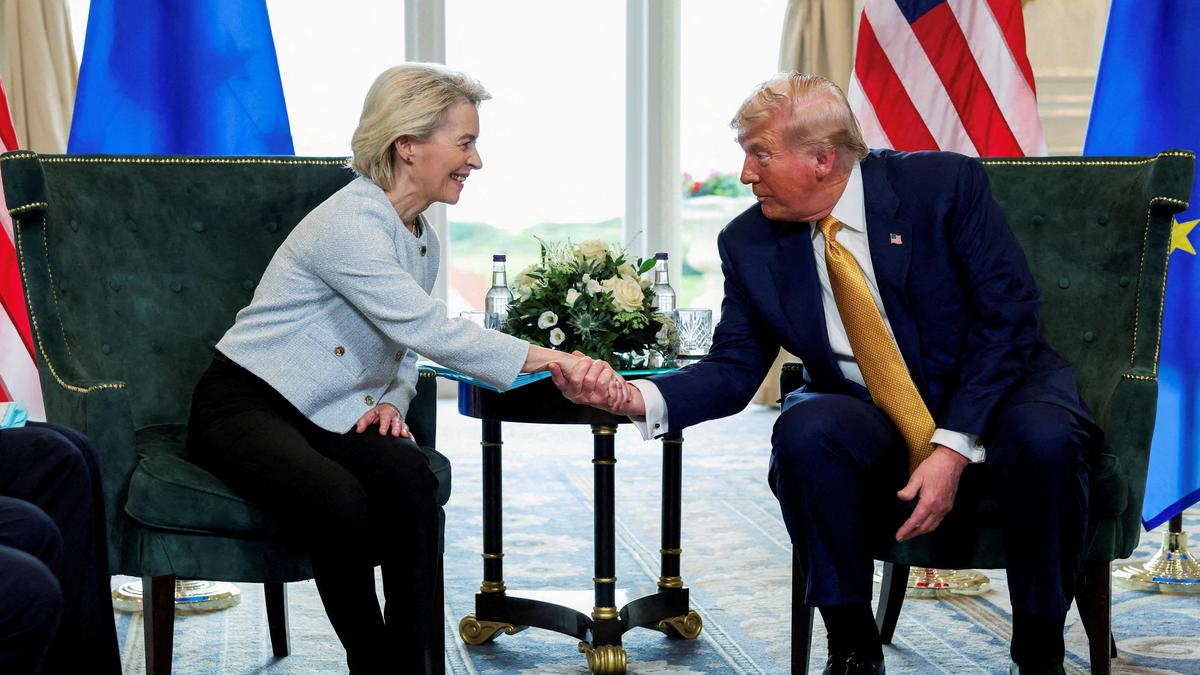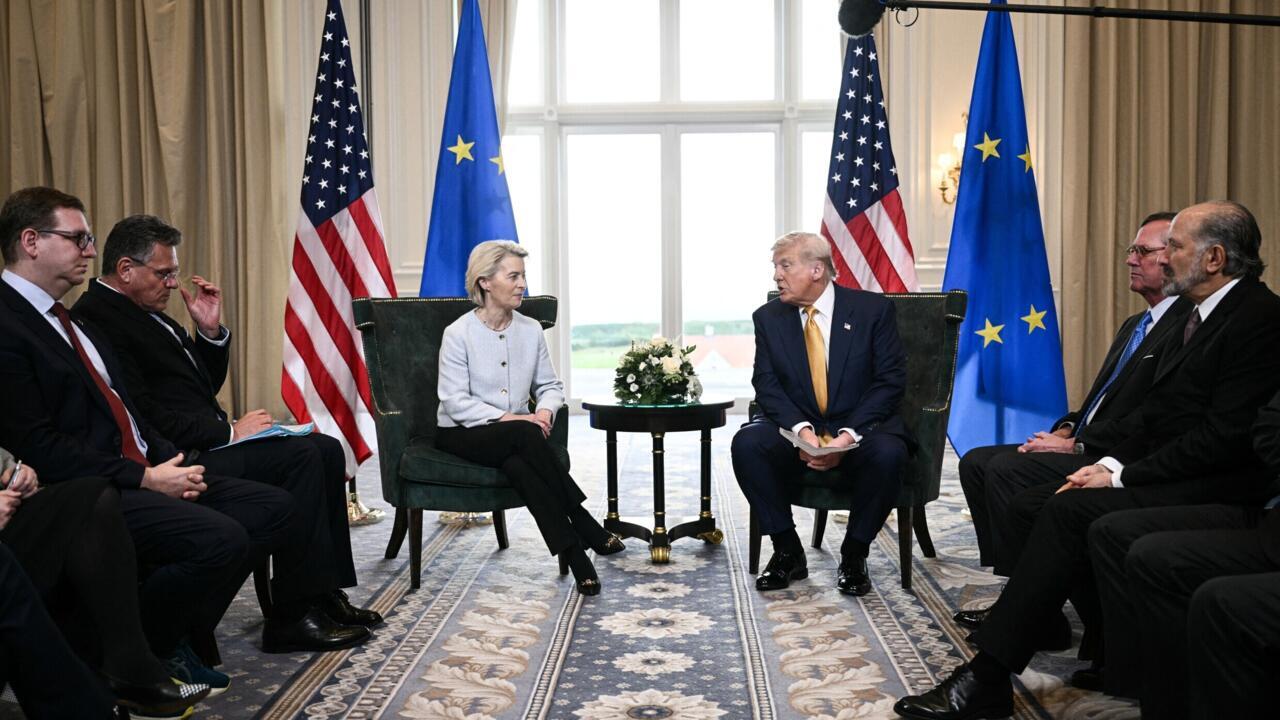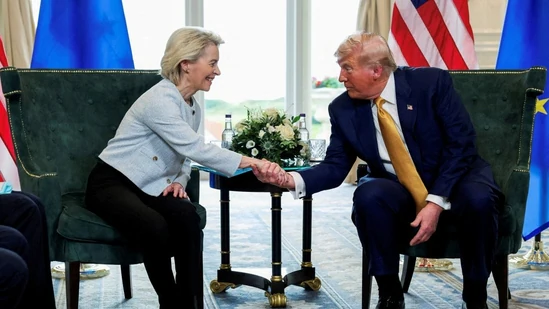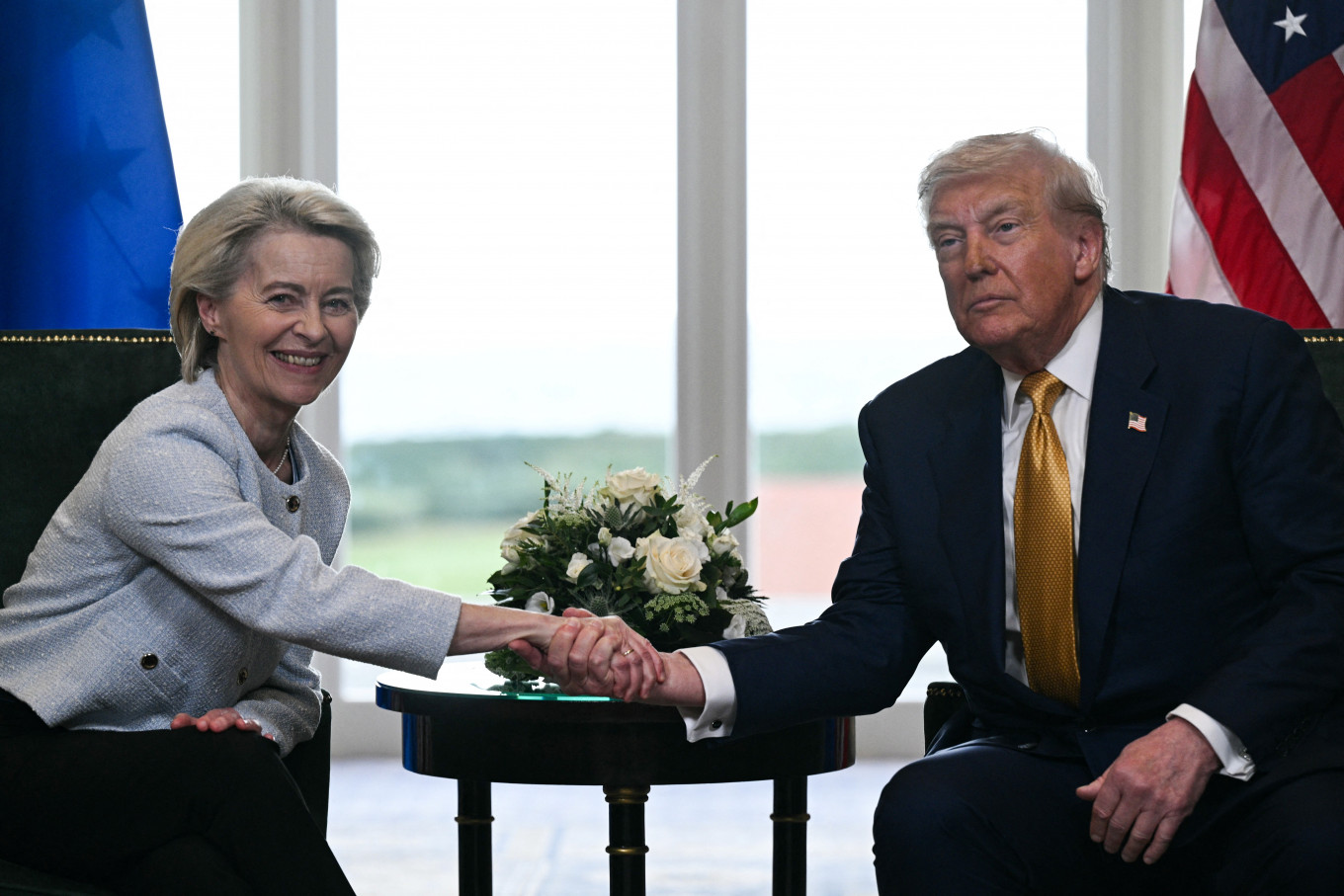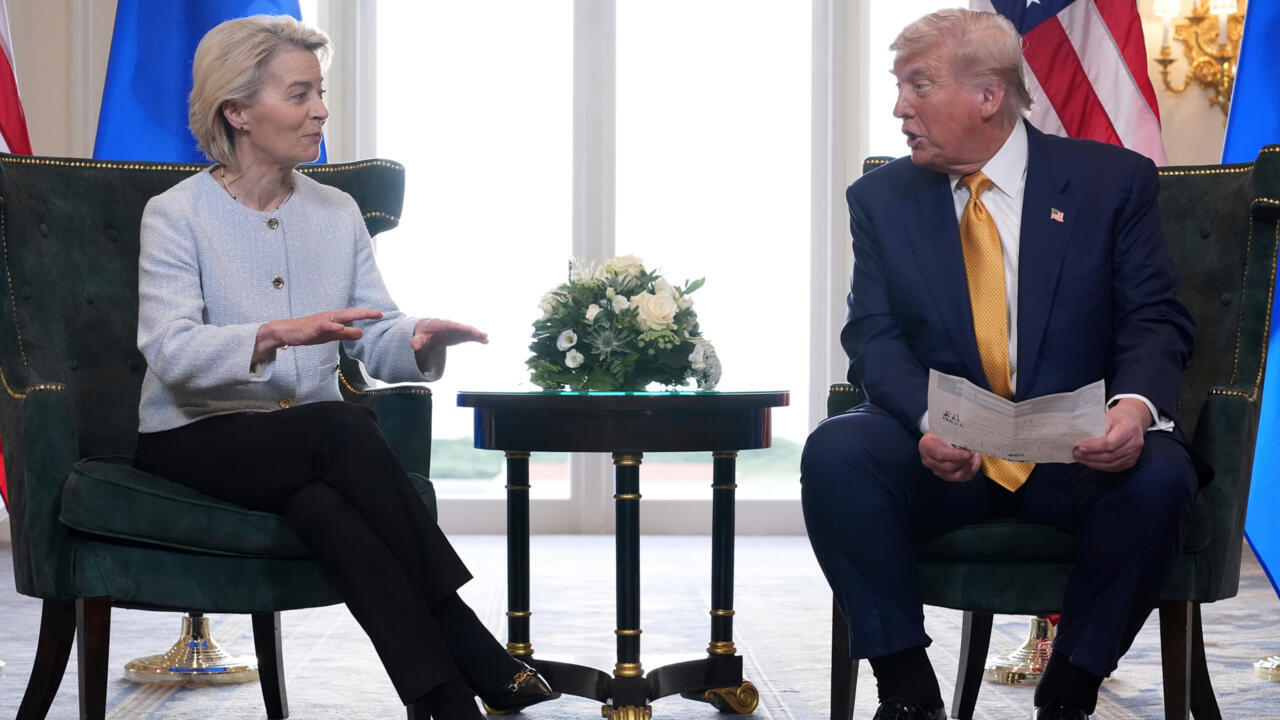
The European Union moved closer to implementing its trade pact with the United States on Wednesday after lawmakers and member states agreed to cut duties on US goods, keeping the bloc on track to meet a deadline set by President Donald Trump and head off steeper tariffs on European exports.
Issued on: 20/05/2026 - 09:10Modified: 20/05/2026 - 09:11
2 min Reading time
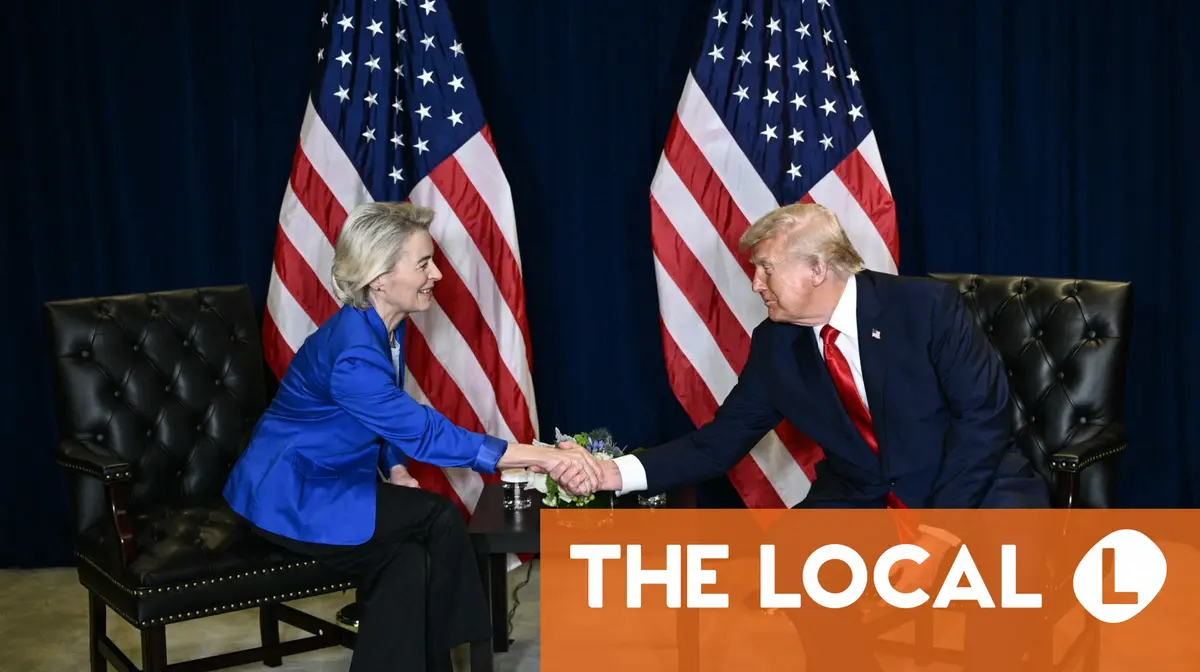
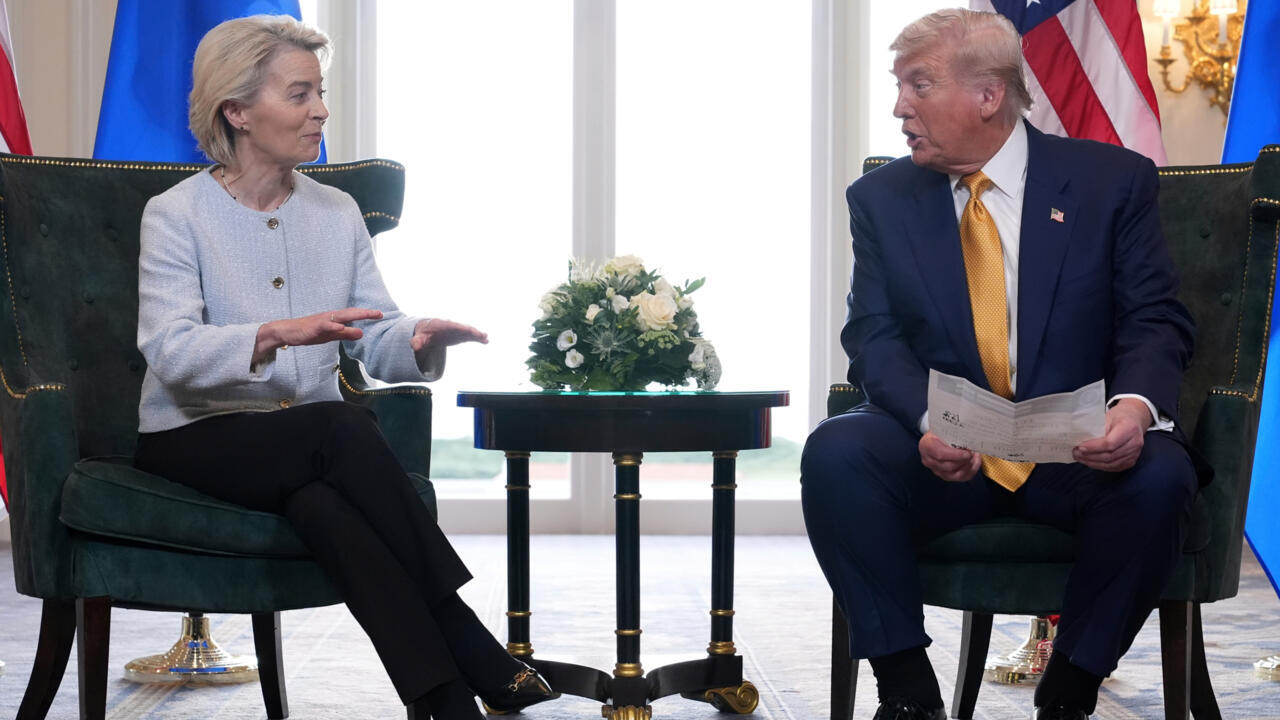
The provisional agreement between the European parliament and the council, which represents EU governments, would remove duties on US industrial goods and grant preferential access to American farm and seafood products.In return, the United States would keep tariffs of 15 percent on most EU exports under a framework agreed last July at Trump’s Turnberry golf resort in Scotland. Trump had warned that much higher tariffs would be imposed on EU goods if the bloc failed to implement the agreement by 4 July. Earlier threats included raising tariffs on European car imports from 15 percent to 25 percent. The legislation had been delayed twice after Trump threatened tariffs on allies that opposed his proposal to acquire Greenland, and after the US Supreme Court struck down earlier global tariffs. Global trade tensions test WTO as reform battle begins in Yaoundé Trump’s deadline Negotiators from parliament and EU governments reached the compromise after late-night talks. “I welcome the agreement reached by the European parliament and the council on reducing tariffs for US industrial exports to the EU. This means we will soon deliver on our part of the EU-US Joint Statement, as promised,” European Commission President Ursula von der Leyen wrote on X. “Together, we can ensure stable, predictable, balanced, and mutually beneficial transatlantic trade.” The agreement was also welcomed by Zeljana Zovko, the lead trade negotiator for the European People’s Party group on the US deal. “I am proud to announce that Europe has avoided a damaging escalation of transatlantic trade tensions and protected European companies, investments and millions of jobs on both sides of the Atlantic,” Zovko posted on X. Australia and EU sign comprehensive trade deal amid global tensions Safeguards and steel The final text allows the European Commission to suspend parts of the deal if the United States breaches its commitments or disrupts trade and investment with the EU, including by targeting EU businesses. Additional measures would allow Brussels to react to sudden increases in US imports that could harm European producers. Lawmakers had pushed for tougher protections, including a “sunrise clause” that would only trigger EU tariff cuts once Washington fulfilled its side of the agreement. They also wanted EU concessions to expire in March 2028 unless renewed. The sunrise clause was dropped, while the sunset provision was extended until the end of 2029. The agreement also gives Washington until the end of the year to remove steel surtaxes above 15 percent instead of making that a condition for the deal to take effect. “There is a suspension mechanism if the US does not abide by the deal, a monitoring mechanism for the impact on our economy, provisions for unjustified tariffs on certain products, an expiry date for the legislation, and strong involvement of the European parliament,” Bernd Lange, who heads parliament’s trade committee, said. Criticism also emerged from some lawmakers who argued the EU had conceded too much. “The deal puts the EU at a disadvantage,” Anna Cavazzini, a member of the Greens group, said. “It can secure a certain degree of economic stability.” A final vote in the European parliament is expected in mid-June. (with newswires)