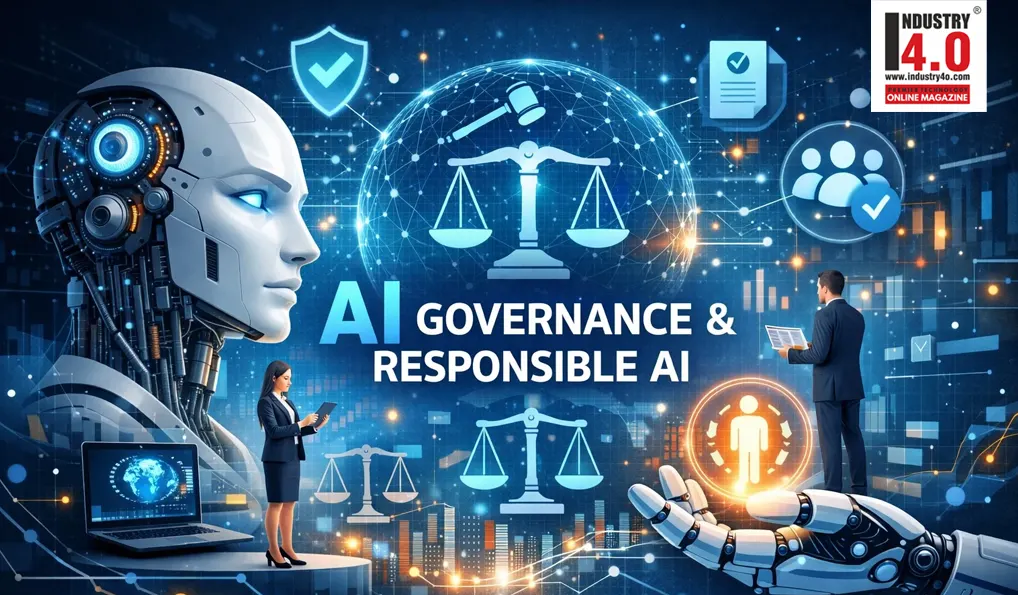
AI Governance : Initiatives, Opportunities & Challenges
“AI will be the best or worst thing ever for humanity” – Elon Musk, Techpreneur
The above-mentioned quotable quote pretty much sums up the state of affairs that we are in. AI adoption has intensified in all walks of life. 2023 will perhaps go down as the year of ChatGPT. Generative AI (Gen_AI) models led by ChatGPT and including Microsoft Co-pilot, Google Gemini, Llama, Whisper, and Claude, using Large Language Models (LLM), not only became pervasive but also impacted all sectors and endeavors of humankind. Over the last couple of years, we also realized that with growing AI adoption, stronger governance is vital to balance innovation with safeguards on accuracy, accountability, autonomy, bias, ethics, fairness, integrity, morality, privacy, safety, transparency, trust, and sustainability
Various challenges and misuse of AI that we encountered included bias, deep fakes, election interference using AI, copyright infringements, job losses, carbon emissions, misinformation, cyber-attacks, monopolistic practices, and low-quality content. Biases could be algorithmic, gender, language, and political in nature. AI regulatory frameworks have come to the fore with all governments engaging in said efforts. Governance of AI technologies has become essential for governments across the world. Over the last decade, 40+ countries have enacted 200+ AI and related legislations while over 90 countries have developed AI governance frameworks, which will eventually translate to legislation. This is a far cry from just one AI legislation in 2016. These governmental efforts are complemented by supranational agencies such as the International Telecommunication Union (ITU) agency of the United Nations (UN) & Organization for Economic Cooperation & Development (OECD). High-technology giants such as Google, OpenAI, Microsoft, Nvidia, Amazon, Meta, and Apple are also shaping the discourse in terms of AI technologies and its impact.