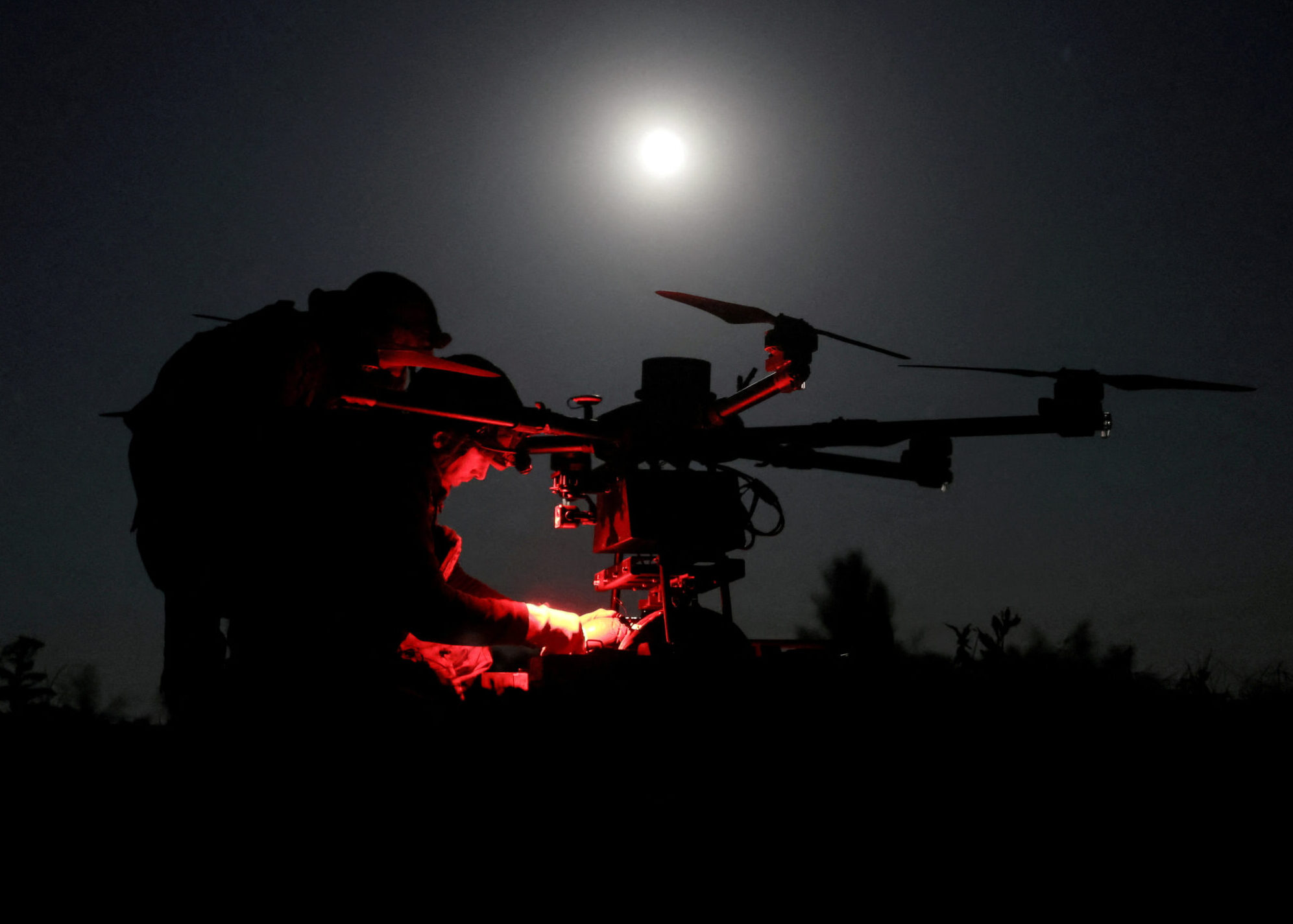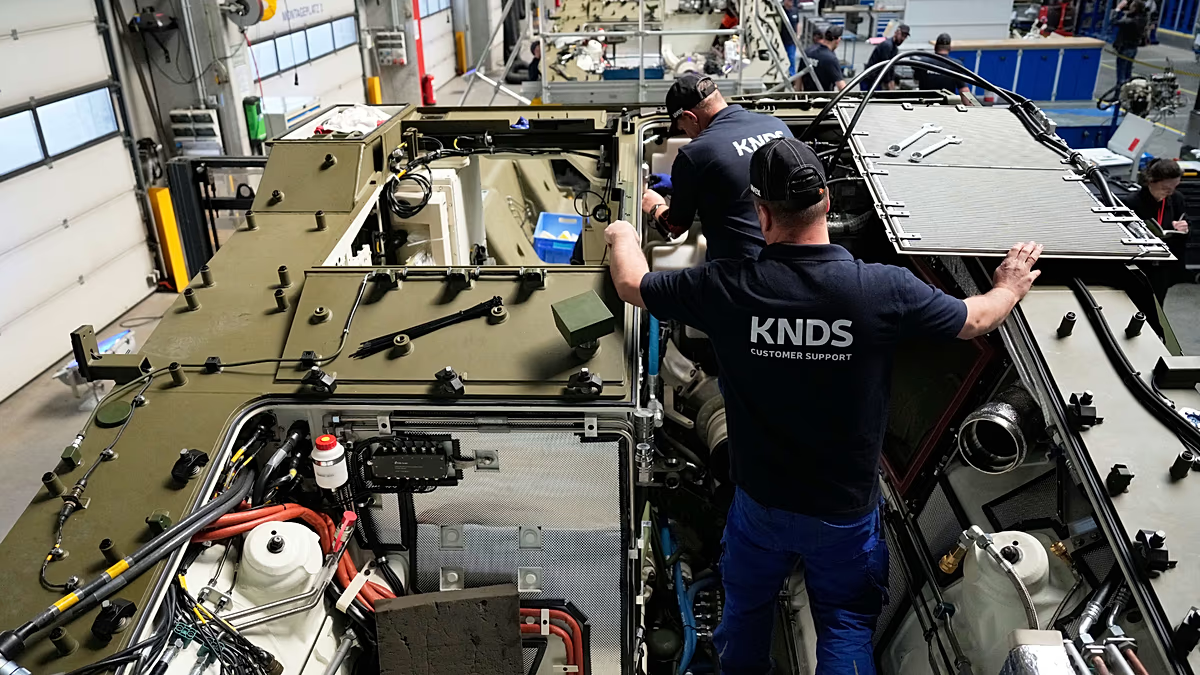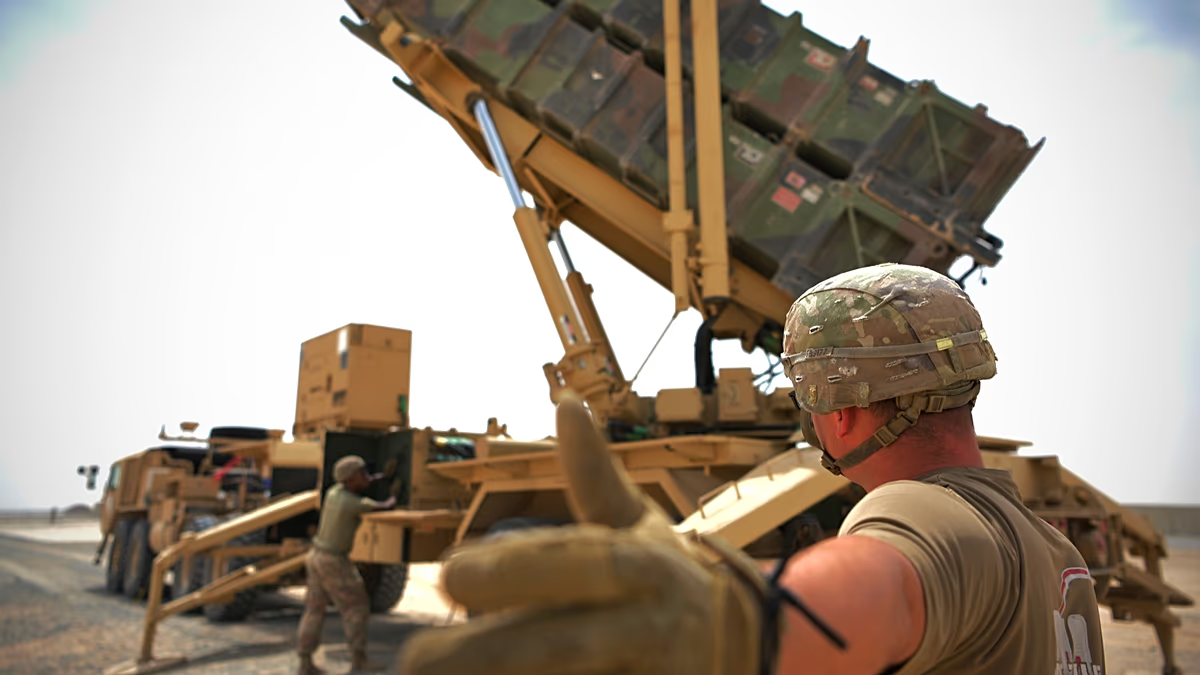
Europe must recognise that effectiveness in modern warfare derives not from the sophistication of any single munition, but from the coherence of the system connecting them
The wars in Ukraine and the Persian Gulf have shown that long-range strikes do not deliver a decisive blow but work best when applied continuously against an adversary’s critical logistics, communications, and infrastructure. Europe collectively lacks the capacity to sustain deep strikes of this kind, and that gap is now a strategic liability.
Europe’s response, embodied in the European Long-range Strike Approach (ELSA), reflects a recognition that this dimension of defence can no longer be outsourced. Yet ELSA remains platform-centric, risking a focus on acquisition without the system-level integration required to build a credible deterrent.
Europe’s vulnerabilities are rooted in post-Cold War choices. NATO developed deep strike concepts during the Cold War, but the operational burden shifted to the United States. European allies came to rely on American intelligence, surveillance, and reconnaissance (ISR), strike assets, and stockpiles.
Log in to continue reading for free