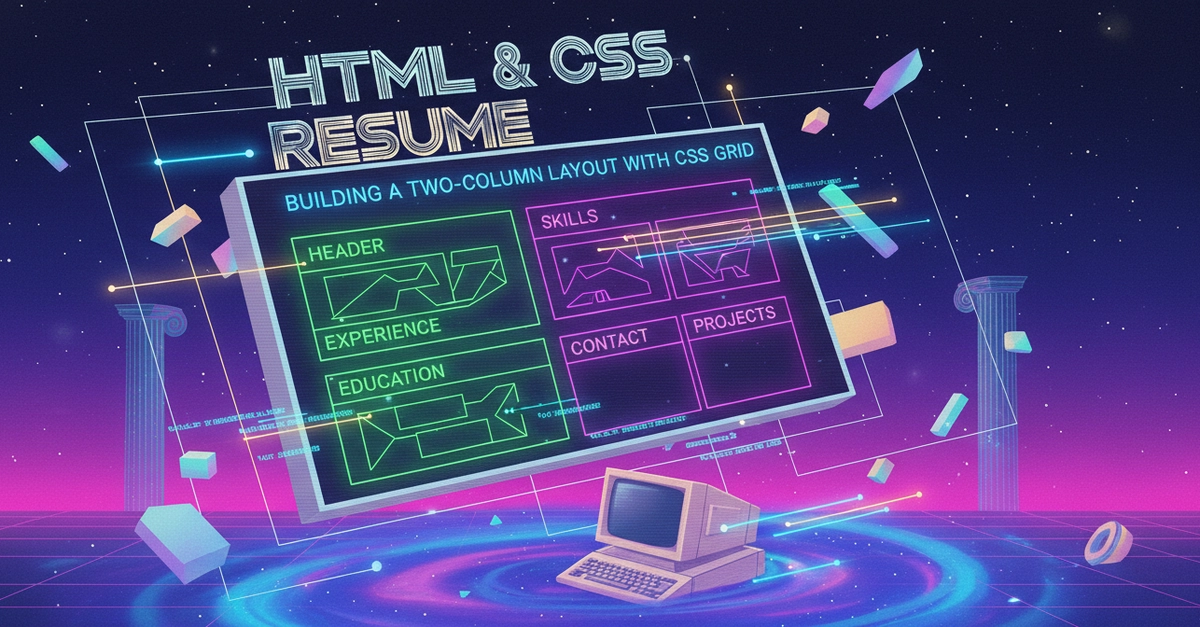
Most grid layouts sit in neat rows, perfectly aligned, like soldiers in formation. But sometimes you want something with more rhythm — a layout where items cascade diagonally, like water flowing down a waterfall.
This is the zigzag layout. And building it requires a small trick that reveals something fascinating about how CSS transforms actually work.
The Strategy
Before writing a single line of CSS, let’s think about approach.
The first idea that comes to mind: set up a flex container with flex-direction: column and flex-wrap: wrap, so items flow down and then wrap into a second column. Usually we think of the flex-wrap property in terms of rows, but the nice thing about flexbox is that it works in either orientation.