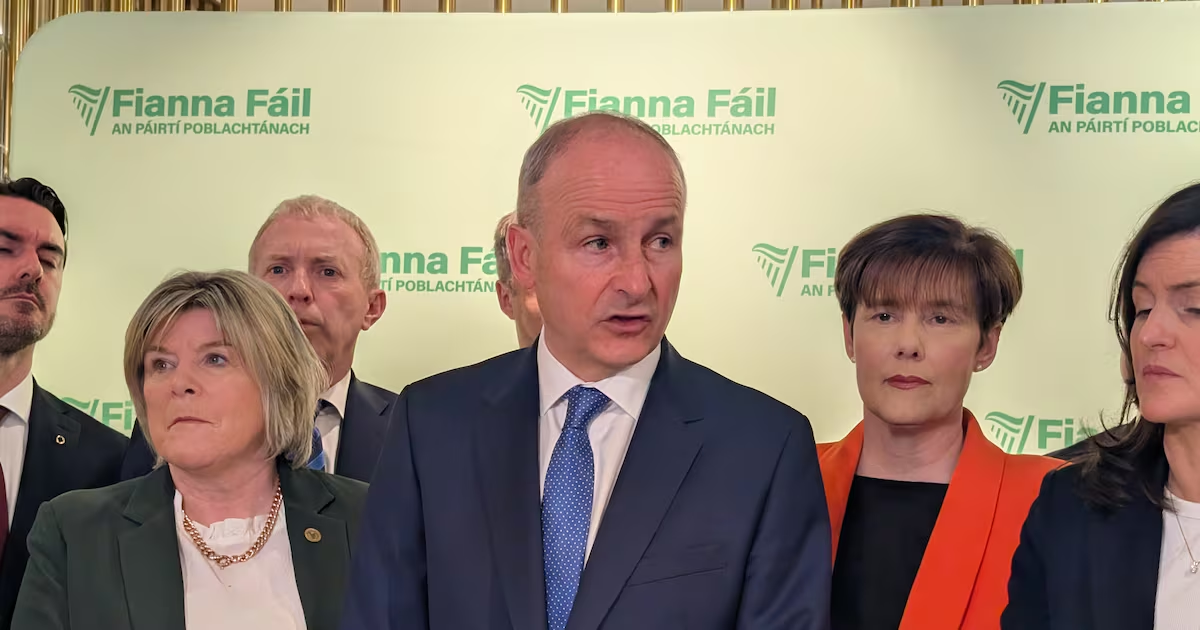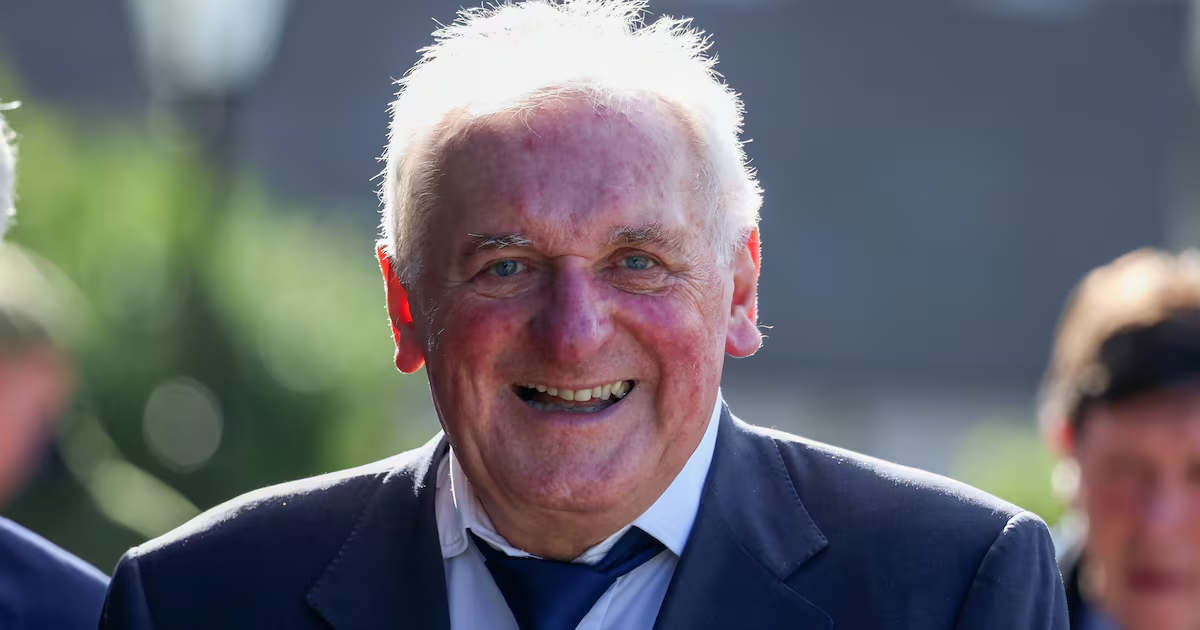
Sir, – As researchers with expertise in law and social sciences, we condemn in the strongest possible terms the recent racist sentiments expressed by former taoiseach Bertie Ahern as well as the subsequent response by senior politicians including the current Taoiseach and the Minister for Justice (“Fianna Fáil will not seek to stop Ahern from canvassing despite immigration remarks,” May 15th). We are gravely concerned about the increasing use of divisive political rhetoric among those in positions of power.Ireland has made commitments under the UN Convention on Racial Discrimination and the EU Anti-Racism Action Plan. This Government committed to challenging racist discourse in public life in the national action plan against racism in 2023. As such, Ahern’s remarks directly contradict the Government party’s own commitments.Ahern’s comments – while canvassing on behalf of a Government party – are deeply problematic at a time when racialised candidates across the country are experiencing harassment and abuse. The responsibility of political leaders is not just to avoid explicitly racist statements, but to actively challenge racist framing. O’Callaghan and Martin both declined to call Ahern’s remarks racism, with Martin describing them only as “an exchange on a doorstep”. This frames canvassing as outside of the areas where public accountability applies. But the doorstep is not a private space. It is where political norms get set. When a senior political figure validates racist ideas on the doorstep, it signals to voters that racist framings are reasonable. If politicians treat the doorstep as a place where racism is used for votes with no accountability, they cede ground to the parties that only have racism to sell. Moreover, it also signals to racialised communities that their belonging in Ireland is conditional.Government parties are trying to occupy two positions simultaneously: demonstrating responsiveness to voters with racialised concerns about immigration, while maintaining credibility with diverse communities and equality commitments. These positions are not compatible.Ireland will take on the presidency of the Council of the European Union in just six weeks. Migration is one of the politically sensitive issues Ireland will have to navigate as a presidency holder. The EU antiracism action plan runs through the presidency period. Ireland will be chairing discussions on its implementation. Martin’s classification of the comments as “not appropriate” is not the language of a state preparing to lead EU-wide negotiations on migration, antiracism, and fundamental rights.The Government must start acting in a way that befits the holder of the EU presidency. This must begin by demonstrating real commitment to the plan against racism both its actions and its words, both on the doorsteps and beyond. – Yours, etc,DR LUCY MICHAEL, Independent researcher, Smithfield, Dublin 7.DR MUIREANN NÍ RAGHALLAIGH,School of Social Policy, Social Work and Social Justice, University College Dublin,PROF AUDREY BRYAN, School of Human Development, Dublin City University,Sorcha Mellon, School of Sociology, Trinity College Dublin,PROF SU MING KHOO, School of Political Science and Sociology, University of Galway.This letter has been signed by 125 researchers. A full list of signatories is available here.
Grave concern over divisive political rhetoric
Government parties are trying to occupy two positions simultaneously
497 words~2 min read