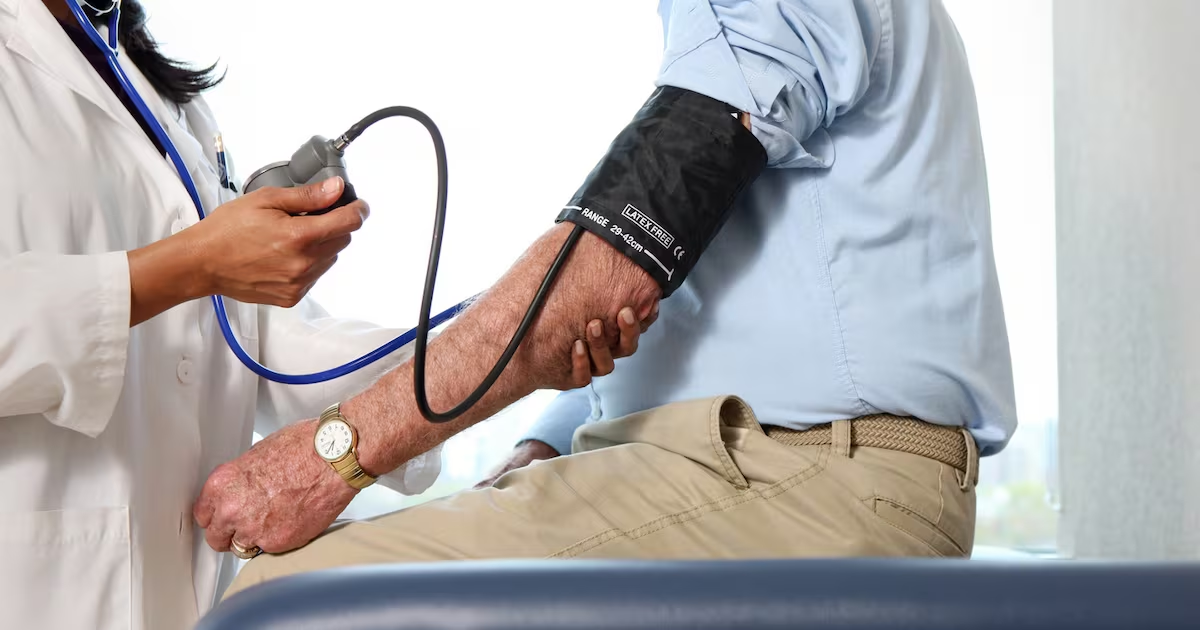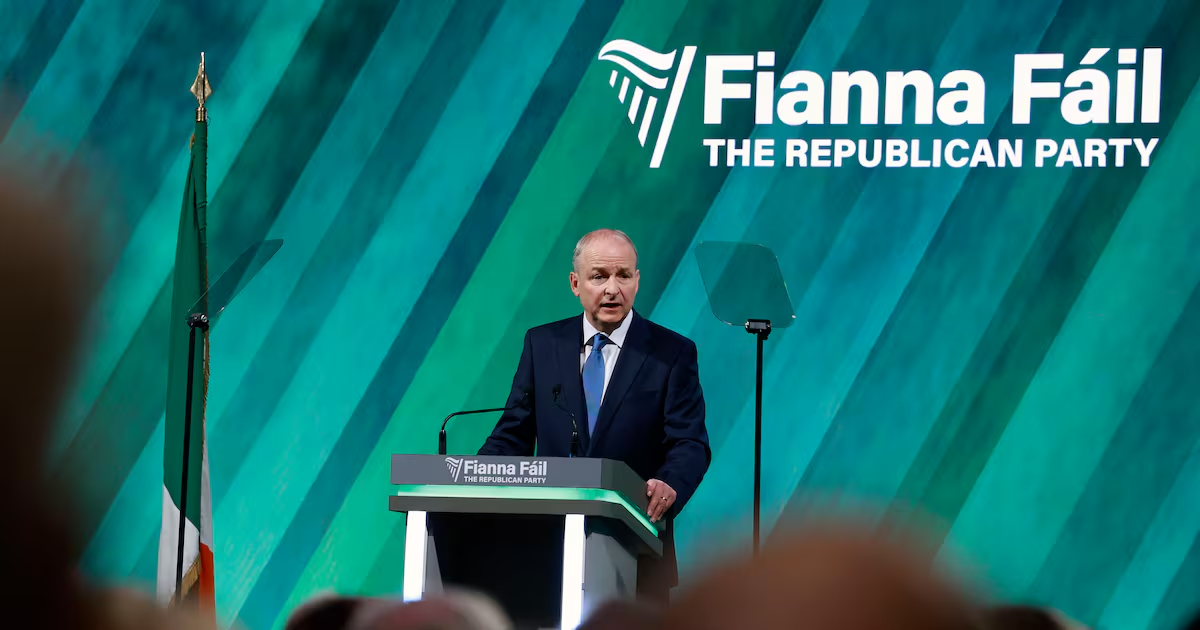
The Government is to examine the level of profit in the private health insurance market against the backdrop of increased profits for providers and higher premiums for consumers, Taoiseach Micheál Martin has said. Speaking in the aftermath of the Fianna Fáil ardfheis, held on the 100th anniversary of the party’s founding, the Taoiseach also indicated that the Coalition is examining plans to shift the impact of paying for investment in the electricity grid away from consumer bills. Earlier this week, both Irish Life Health and VHI announced significant increases in their profits, with the former saying its profits increased by 84 per cent to €31.1 million. State-owned VHI doubled its profits to €71.2 million for 2025, it announced last month.Asked about this level of profitability, Martin told RTÉ’s This Week programme: “Those are issues we do have to examine, in terms of excessive profiteering, and premium increases parallel with that.”He said healthcare inflation can increase at a higher rate than in the wider economy, which the State knew about due to the cost of funding the HSE. “Still though, that is an issue that we do need to examine”. Speaking earlier to the broadcaster’s The Week in Politics Programme, Martin also hinted at a restructuring of how the State pays for investment in the electricity grid – moving the burden away from consumer bills as energy costs increase. He said the link to the price of gas in setting the cost of electricity was the “fundamental issue” in the energy market. “We could look at the impact of investment in the grids, for example, and how much that’s feeding into consumer pricing as well.”Asked if this would mean instead of consumers being levied, the Government would pay the charge he responded: “And that would be a hefty charge, but that’s something we’re examining.”Asked about the ongoing controversy over remarks on immigration made by former taoiseach Bertie Ahern which came to light last week, Martin reiterated his view that his predecessor was not a racist, but that his comments had disappointed people from different ethnic backgrounds within the Fianna Fáil party. Former taoiseach Bertie Ahern. Photograph: Nick Bradshaw He said in that context “the remarks were particularly disappointing”. Martin again sought to dampen discussion about his future leadership of Fianna Fáil after a damaging period in the wake of the fuel costs protests and the party’s disastrous presidential election campaign last year.He said he was focused on fulfilling his mandate and suggesting voters “get annoyed” if they feel politics was overly focused on politicians “just thinking about themselves and positioning”. He suggested frequent changes of leader result in political instability, pointing to the United Kingdom as an example, where the embattled Prime Minister Keir Starmer could be forced from office by his own party, being the seventh occupant of 10 Downing Street since the 2016 Brexit vote. He said he would be worried about the “kind of politics” being brought into the UK by Nigel Farage’s Reform UK party and other, as well as “the level of external influences that are shaping the politics of Britain, which we need to be very careful about here in Ireland and indeed in Northern Ireland”. He said Ireland would plan for every scenario and if Farage were prime minister the Government would engage with him although “his policies are completely at variance with ours in terms of the European Union”. Martin said are “no new developments” on two reviews being carried out by Government departments into links between Irish-made alumina and dozens of Russian weapons manufacturers. An Irish Times investigation in March, carried out in co-operation with the Organised Crime and Corruption Reporting Project, found the Aughinish Alumina plant in Co Limerick is shipping vast amounts of alumina to smelters in Russia where it is used to make aluminium.[ From the Shannon to Siberia: How alumina from a Limerick refinery enters Russia’s weapons supply chainOpens in new window ]This aluminium is then sold to trading company ASK, which supplies dozens of Russian arms manufacturers, according to leaked financial documents.He argued that sanctions should hurt Russia more than Europe and cautioned that any move to restrict trade in Alumina from the Limerick plant would be damaging for European industry and the local jobs market. “Fundamentally, there are no restrictions on Aughinish Alumina, and there haven’t been and Europe hasn’t proposed them. The reason being is that because it’s the European Union’s largest alumina refinery – it produces 37 per cent of the European Union’s smelter grade alumina,” he told RTÉ’s This Week programme on Sunday.“That is a factor – in other words, the sanctions were never designed to punish Europe or indeed to punish Ireland more than Russia, so that is a factor“And let’s be under no illusions that if there were severe restrictions it would be devastating for Aughnish and for all those working there as well. That said, we keep everything under review and we’ll keep this under review but there’s no new developments in respect of it just yet,” he said.
Government to examine level of profit in private health insurance market, says Taoiseach
Recent remarks on immigration by former taoiseach Bertie Ahern were ‘particularly disappointing’, says Martin
839 words~4 min read