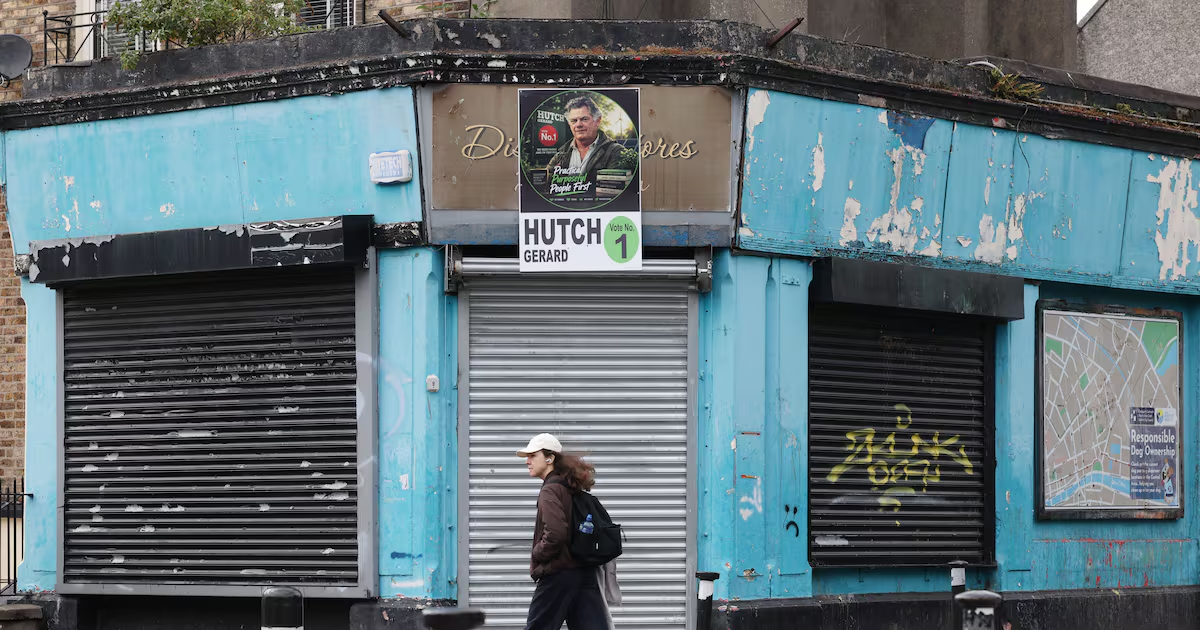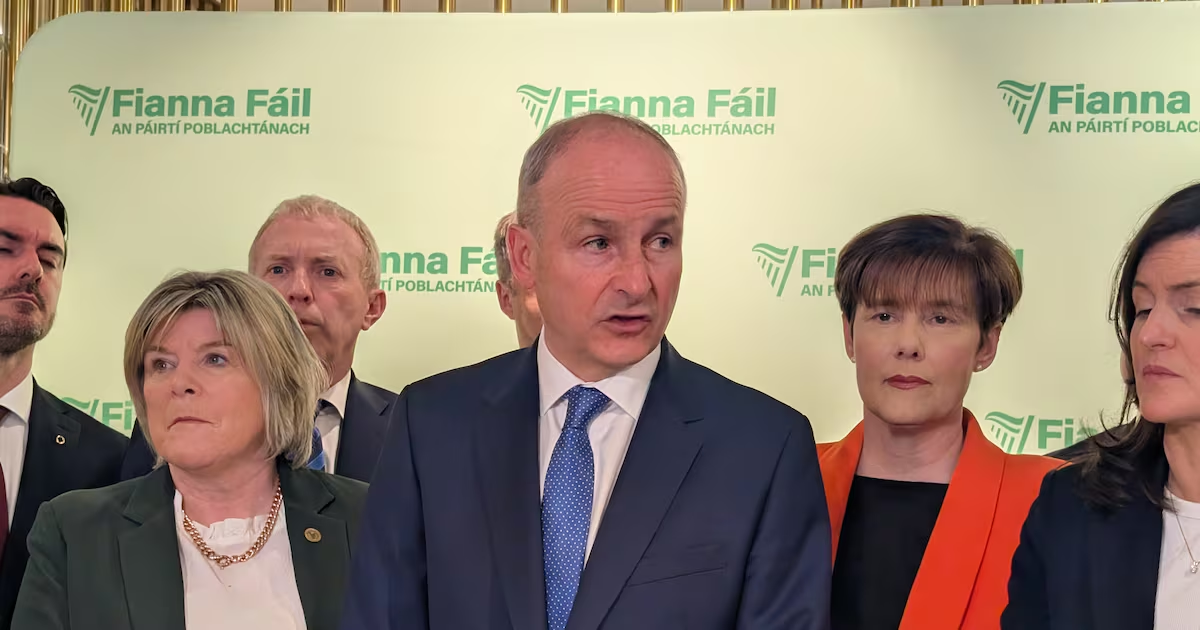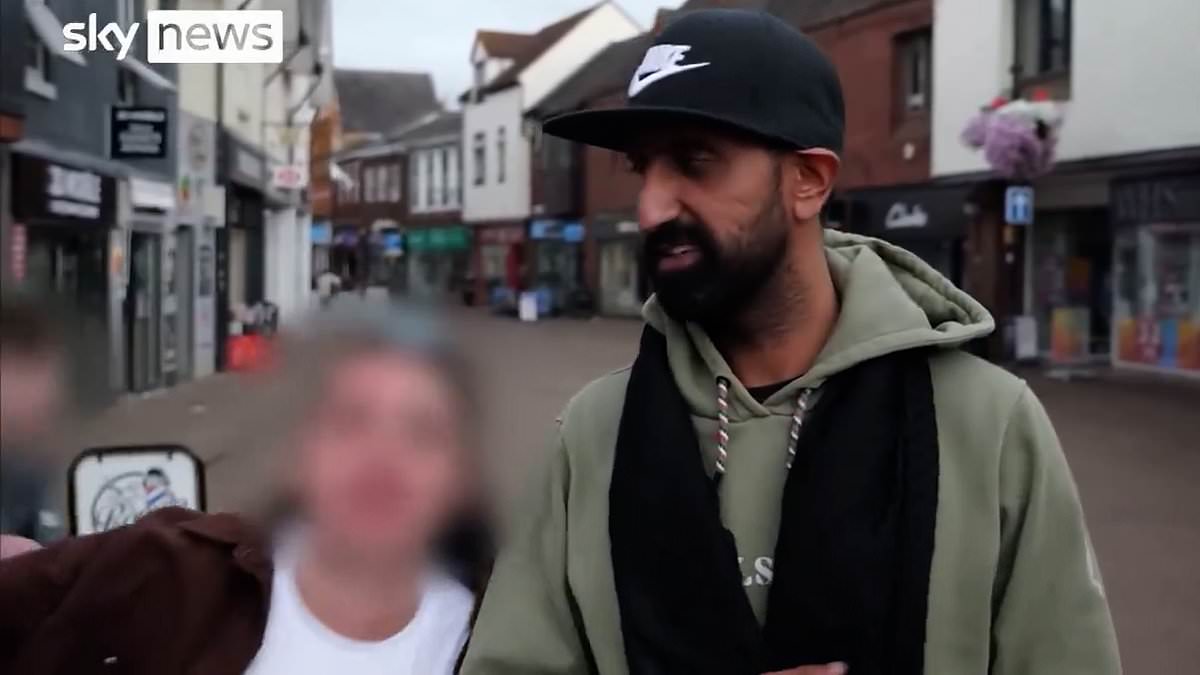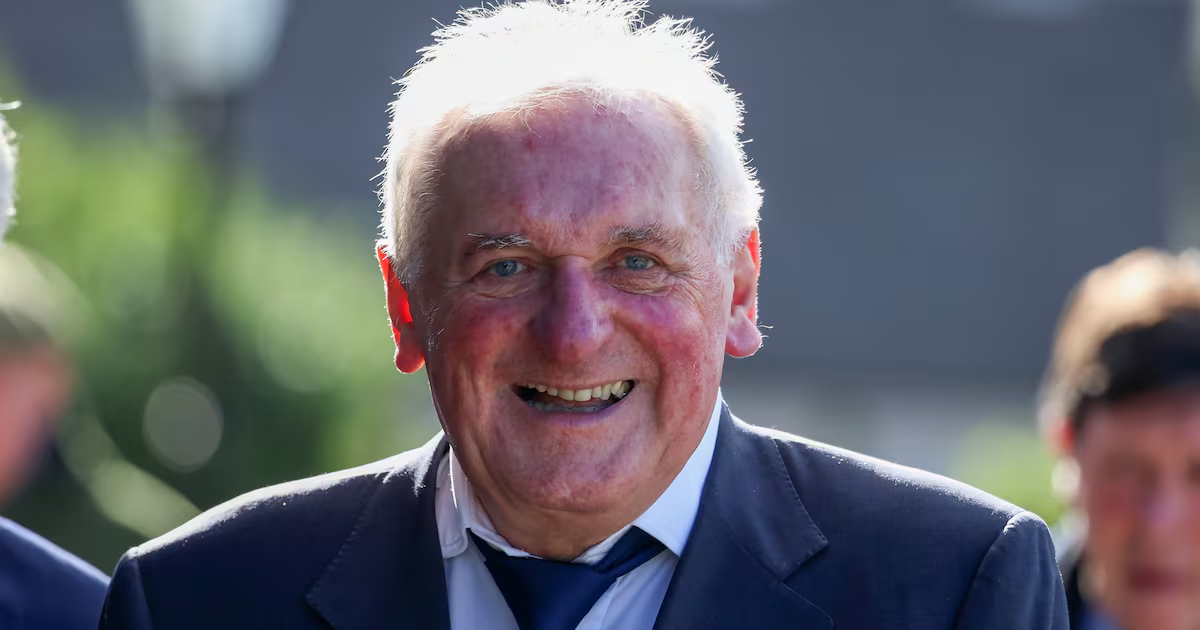
The woman who asked for a word with Bertie Ahern spoke softly and carried a big chip. Unfortunately for the former taoiseach, doing his man-of-the-people bit for the Fianna Fáil candidate in Dublin Central, she also carried a smartphone. “The hordes of foreigners coming into our country ... all these Indians, all these Muslims, all these Africans,” she began.She rattled through the usual talking points with an equal-opportunities sense of grievance: Muslims with their “47 countries”, sharia (Islamic law), child brides, stabbings, open borders, globalism, the Ukraine war, transgender people, women’s safe spaces, hate speech laws, female genital mutilation, Africans and, weirdly, “Indians and their space programme”.“You think there’s too many coming in?” he asked, in his most confident step-back-folks-I’ve-got-this manner. He had “no problem with the Ukrainians”, he said. Or, it seemed, “the Poles”. But he went on, marking 100 years of Fianna Fáil with one more incidence of Bertie Ahern putting his foot in it, “the ones I worry about are the Africans, I agree with you on the Africans. We can’t be taking in people from the Congo and all these places.”When she brought up sharia, he replied: “I don’t worry about this generation of Muslims, I worry about the next generation of Muslims coming up ... That’s when the problem comes. Howya anyway?” After the video emerged, Ahern pulled out his signature move: the simultaneous backtrack-double-down, a manoeuvre that would daunt Simone Biles but one he spent his professional life perfecting. “In the heat of a fire ... I was actually defending Ukrainians at the time ... I don’t have any problem with any of these people, my only problem is the system,” he said. The real victim here, he implied, was not “the Africans” or the Muslim children heading off to their camogie or football this morning, oblivious to their designation as a looming threat to national security, but himself. “You talk to people at doors and you don’t expect people to be taping you ... I shouldn’t have bothered.”Paul Murphy of Solidarity-People Before Profit rounded on the “disgusting racism” which was part of a Fianna Fáil “act of mass distraction”, “a dirty game ... to divide and rule ordinary people”.Bertie’s cunning may be a matter of public record, but it is a stretch to suggest there was any kind of master plan here. The rule of Occam’s razor applies: a disgraced former taoiseach turned occasional Aontú voter talking off the cuff like a disgraced former Fianna Fáil taoiseach turned occasional Aontú voter is most likely just what he seems.Nonetheless, the doorstep interaction felt like a watershed moment for two reasons. The first is that Ahern – part of a generation of Fianna Fáil politicians whose shtick was that they might have worn Charvet shirts or availed of generous dig-outs from their pals, but they spoke for the “real Ireland” – always had a nose for popular opinion. [ Bertie Ahern tells canvasser he once voted Aontú as he ‘didn’t fancy’ the Fianna Fáil candidateOpens in new window ]The second was the response to it. Taoiseach Micheál Martin’s effort to distance himself from Ahern’s diatribe – it was “not appropriate” to be specific about any ethnicity; he “did not approve” and moreover “we do not approve” – stopped short of very cross, let alone furious. We don’t have to wonder what will happen if we allow political discourse to be coarsened and divisive narratives to be normalised in this way. We just need to look east towards the maniacally grinning spectre of Nigel Farage looming over Westminster. The playbook for this normalisation is well established. It begins with talk of migrants as a strain on public resources and evolves into migrants as a threat. It begins with discussion points about systems and scarcities and drifts into categorising, as Ahern so casually did, white migrants as “good” and brown and black migrants as “bad”. It begins with politicians like Jim O’Callaghan referring to the “indigenous Irish” and becomes former taoisigh warning voters of the dire threat supposedly posed by Muslim children. Ahern famously prides himself on knowing what the people want, but where is the evidence for a public clamour for a drift to the right? A recent poll by Amárach Research for European Movement Ireland, a pro-EU think tank, found that fewer people than a year ago feel the EU is moving in the right direction, 26 per cent of people believe it is not, and one in three of those people cite immigration control as the reason. That is a worrying trend, but it’s far from a view shared by most Irish people. A recent Hope and Courage Collective survey found that Irish people are becoming more tolerant and more inclusive. Surveys of 3,000 people carried out in 2024 and 2025 by Dynata with Ireland Thinks found that 66 per cent of people agree that immigrants contribute positively to Irish culture and community, up from 64 per cent in 2024. [ Immigration not prominent issue on Dublin Central doorsteps, Social Democrats candidate saysOpens in new window ]There was no Fianna Fáil master plan to send Bertie out to distract from the housing crisis. There was something worse: a sign of how the language of mainstream politics is being shaped by the populist right. And before you can say (as Bertie did) “I’ve good friends who are African”, those talking points will start to influence public opinion. If we allow the dehumanisation of migrants to take hold – if we allow the Taoiseach to shrug it off when his predecessor suggests Muslim children are a threat, or if mainstream politicians of the centre right stay schtum when Gerry Hutch suggests interning migrants – we shouldn’t be surprised to wake up one day and discover that Ireland is indeed no different from Britain, the US, Sweden or Argentina.Narratives have a habit of worming their way into the mainstream. Any story, however fantastical, repeated often enough starts to become accepted as truth. The country that embraced moving statues and ignored mother and baby homes should grasp that better than most.
Jennifer O'Connell: Bertie’s outburst wasn’t part of a Fianna Fáil masterplan. It was worse than that
The real victim here, Ahern implied, was not “the Africans” or Muslim children who are going about their weekend oblivious to their designation as a national security threat, but himself
1,013 words~5 min read