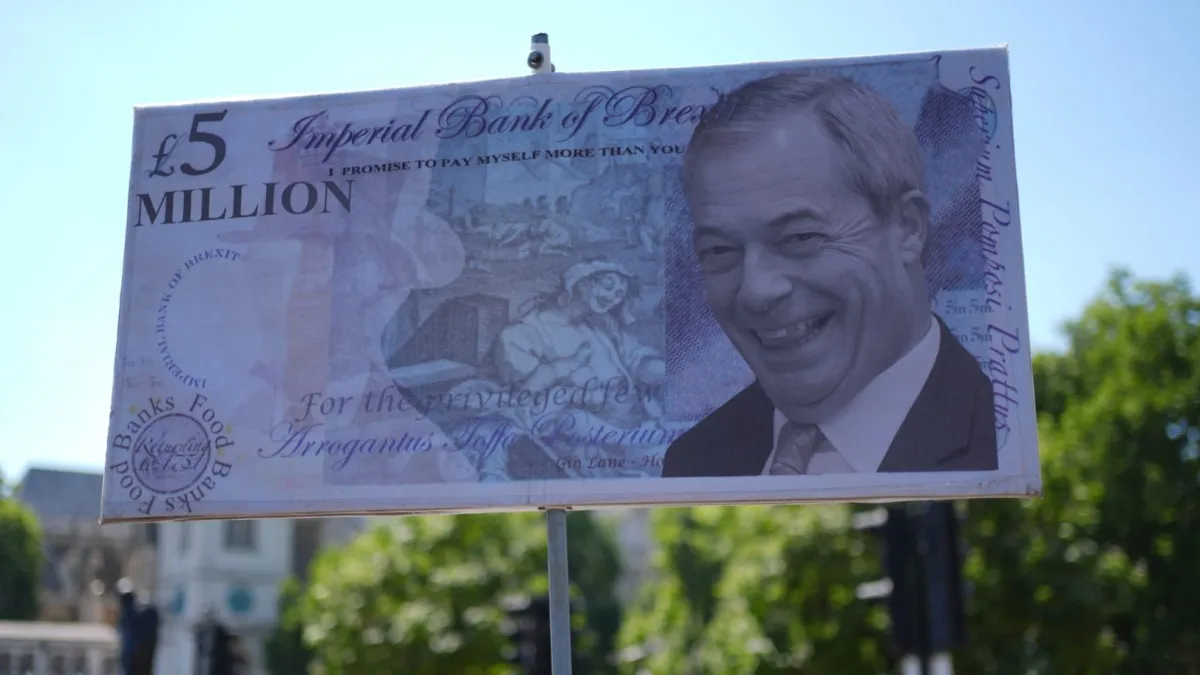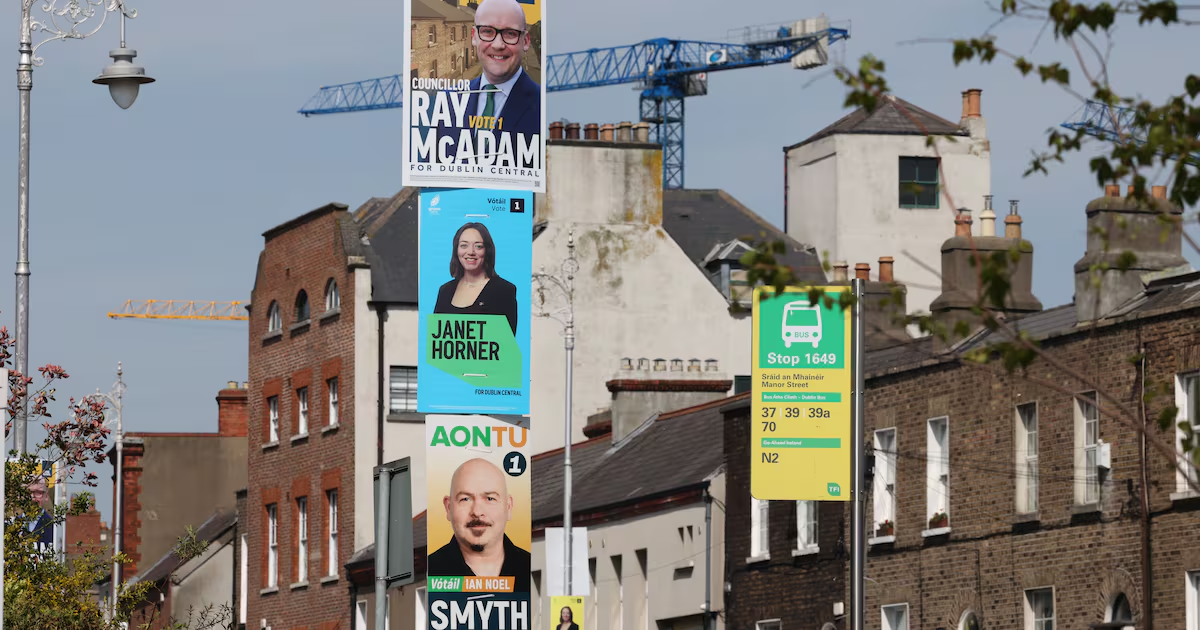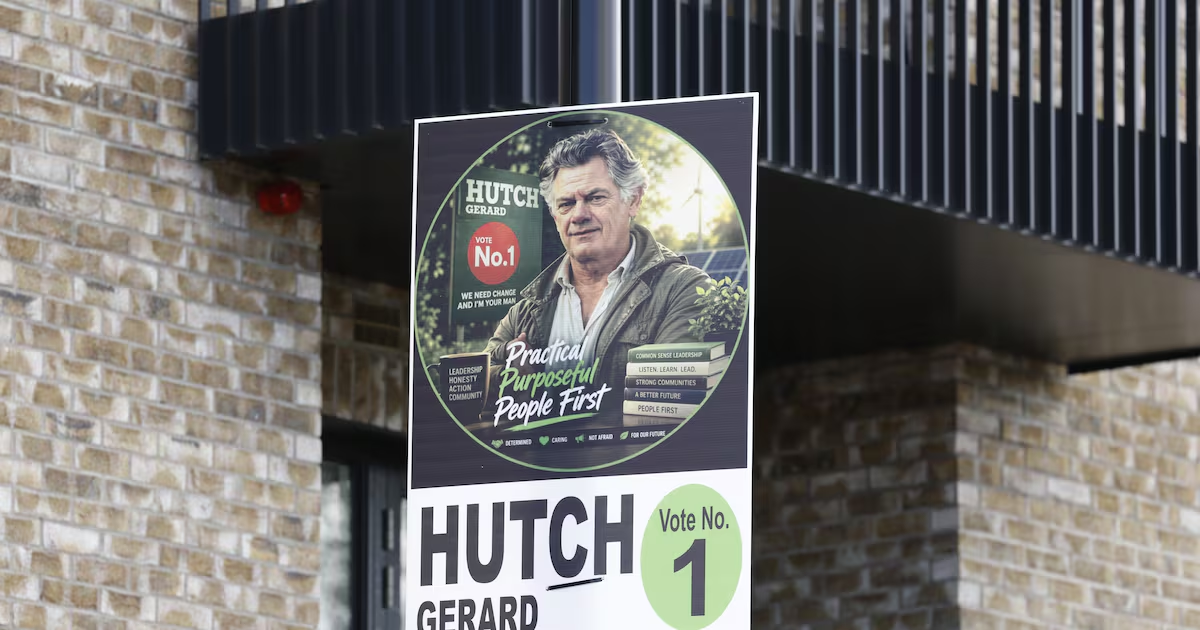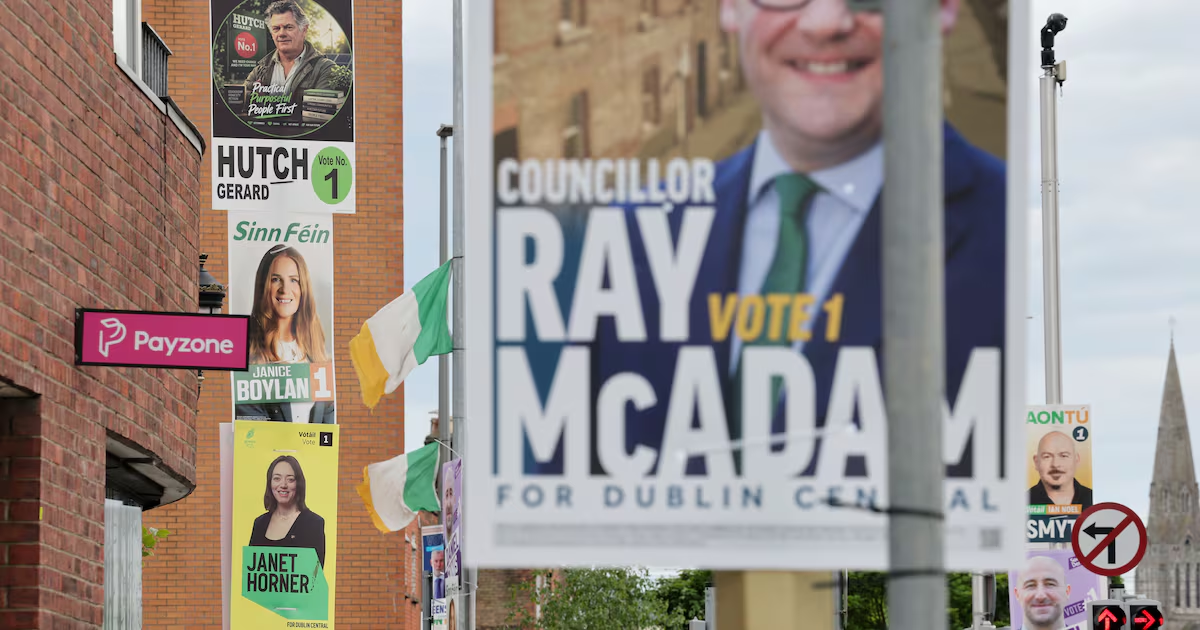
Looking at the role that money plays in elections in the US and UK, including recent revelations about a £5 million (€5.7 million) payment to Nigel Farage from a crypto billionaire, there may be a temptation for voters here to feel quite smug. Modern Irish political campaigning is less about big donations and large online spends and more about shaking hands, hanging posters and knocking on doors. But this rose-tinted view of Irish campaigning overlooks the large sums politicians spend trying to influence our votes. In 2024, parties collectively spent about €10 million on the general election. Add in the local and European elections, and Fine Gael alone spent €3.2 million that year. We only learn these figures months after power has been allocated, and when our attention has moved on to how it is being wielded. New rules from Brussels are starting to change this, and are letting us know for the first time in real time how much is being spent on posters and ads in these byelections – €225,000, as of last week. But for now, these figures have a limited usefulness. Without some significant changes, there is a risk the opportunity to help us better understand who is trying to influence our vote will be lost. Eight years after the Trump and Brexit scandals about online manipulation, the EU introduced rules to try to make political ads transparent. The Transparency and Targeting of Political Advertising Regulation (TTPA) asks tech platforms to build online libraries of the political ads they sell. Meta and Google had started doing this in response to political pressure, and the EU essentially codified their approach into law. Sellers of ads now need to publish a long list of data for each ad, including who paid and who was targeted, all within 48 hours of an ad going live. One immediate impact was that the tech companies banned political ads in the European market. But the TTPA is still law, and the rules do not just apply to digital campaigning, but to anything that meets a new definition of political ad. This has resulted in a huge amount of extra work for political parties and not much extra scrutiny. Every bus shelter or newspaper ad, election poster or leaflet, car wrap or badge falls under this EU regulation. The requirements for non-digital ads are not as stringent – but still, if you print stickers for a local election candidate in Ballinasloe, you now need to keep detailed records for seven years. The new rules also apply to political parties and candidates, across both their digital and real world spending. At least eight Irish parties have over the past few months – and in some cases days – been building transparency portals on their websites. This has created a field day for Irish election watchers with an appetite to wade through reams of data.[ Polymarket betting on Dublin Central byelection to be examined by officialsOpens in new window ] These web pages give us the €225,000 advertising figures across the two byelections, of which 99.7 per cent has been on non-digital campaigns. Browse these web pages and you can see that Independent Ireland bought four ads in the Connaught Tribune for Noel Thomas at €369 each; that Labour spent €196.80 on “Helen Ogbu High Vis Vests”; and that Fine Gael has so far spent €14,144 on posters for Ray McAdam, and €75 on a “Letter to Stoneybatter area re: bins”. These changes can be transformative for how we understand and cover elections, how the money flows, how parties prioritise seats, how constituencies differ and how campaigning changes over time. It will also hopefully let us catch rule breakers and benders before we vote for them. Based on my conversations over the last few weeks, political parties are scrambling to comply. They worry that if they follow the law and their rivals don’t, they will be exposed to more scrutiny and “punished for obeying the rules”, as one put it to me. They are also concerned about being asked to take on additional tasks at a busy time, with limited practical support. I heard the phrase “teething problems” a lot, as well as some disgruntlement about how the rules were communicated and are being applied. While parties (at least the ones with Dáil representation) are making efforts to comply, the data they are producing is not easy to navigate. Some have commissioned sophisticated portals, while others are listing expenses on a webpage. One party was publishing each new purchase as a separate blog post. And not all websites allow their data to be read by machines. This all makes accessing and using the data very difficult. There is also the issue of Independents, a quirk of the Irish political system (Germany, for example, has a 5 per cent national vote share threshold for a party to get any seat in the Bundestag, with limited exceptions for regional parties – meaning “Fraktionslos” are a rarity). General and local elections can have hundreds of Independent candidates, all of whom will be required to comply with this rule. Many of them will have neither websites nor the data skills to do so well. So although we need transparency about political spending, this ad hoc system won’t deliver it.There are better solutions that could turn this rule from bureaucratic box-ticking into real democratic accountability.[ Dublin Central and Galway West byelections: Four things to watch in the last week of campaigningOpens in new window ]The Electoral Commission could produce templates and off-the-shelf tools that would give political parties and candidates easier ways to comply. Data standards should be introduced to make the numbers more accessible to journalists, who can then help the public to understand the forces that try to influence their vote. This would allow the data to be used, and let candidates get on with campaigning. Elections are the responsibility of member states, so the commission has a lot of say over this. These byelections are a trial run and parties are rightfully being treated with grace. But now is the time to start building our infrastructure so that we can better understand the growing role of money in politics, and most importantly, avoid the fate of the US, UK and elsewhere.
Liz Carolan: We finally know how much money shapes Irish elections
We now have the data to see who’s trying to buy our votes in real time through everything from posters to leaflets. If only it were easier to make sense of it
1,044 words~5 min read