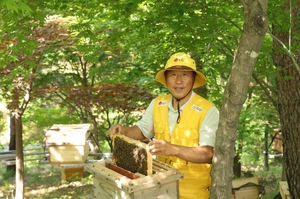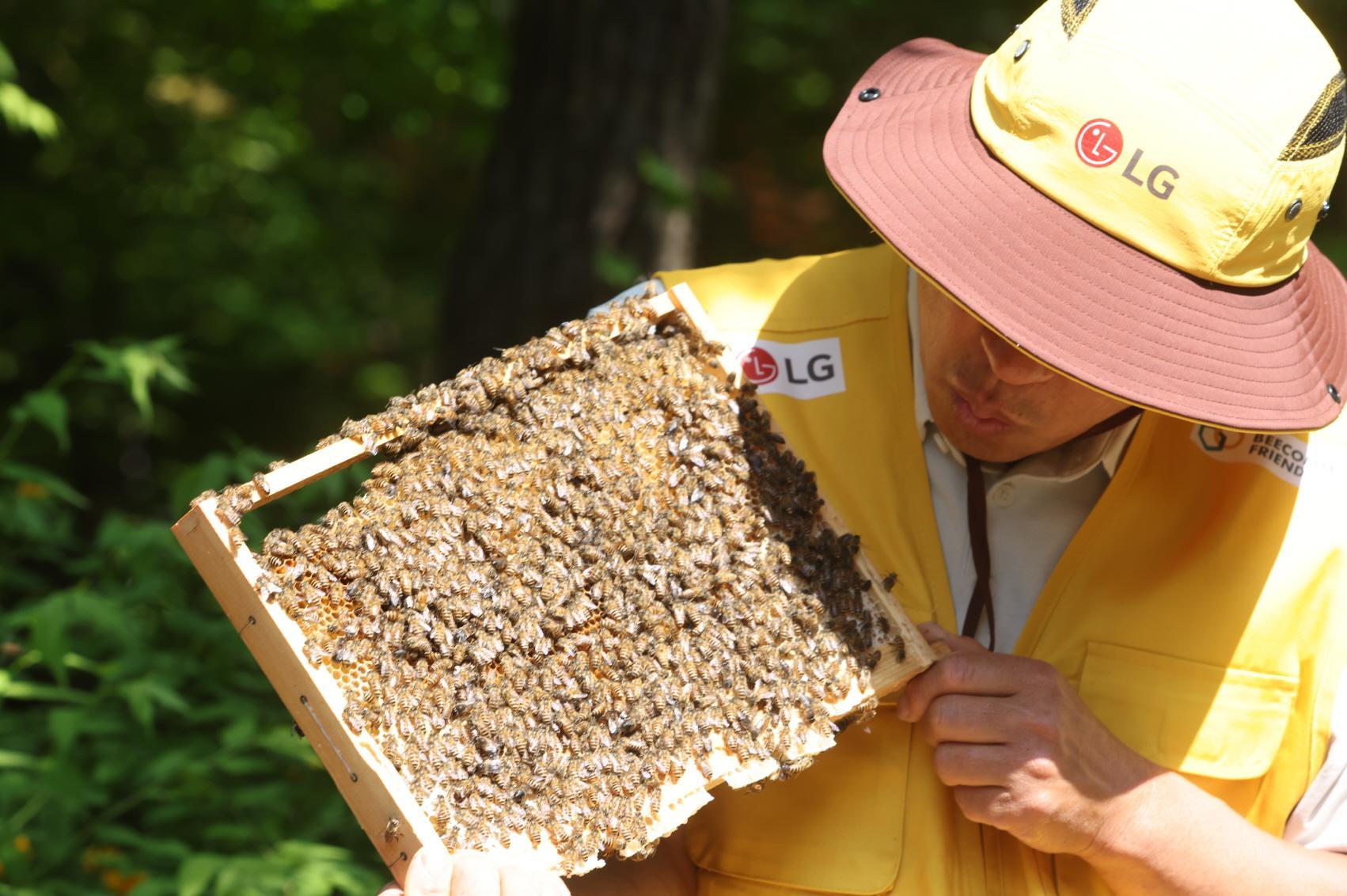
Kim Dae-rip, Korea’s first master of native bees, holds a beehive at a native honeybee habitat created by LG near Hwadamsup in Gwangju, Gyeonggi Province. Courtesy of LG
In the dense, protected woodlands of Mount Jeonggwang, just outside Seoul, a massive biological resurrection is quietly underway.
LG, the Korean conglomerate better known for consumer electronics, said Wednesday that its ecological preservation initiative has successfully quadrupled the local population of the endangered Korean native wild honeybee from 1 million to 4 million within a single year.
The initiative, launched last year by the conglomerate’s environmental arm, the LG Sangrok Foundation, established a specialized sanctuary near the Hwadam Forest arboretum. Working in close collaboration with Kim Dae-rip, designated as the nation's foremost master of traditional beekeeping, the project stabilized the initial colony at 2 million last year before achieving its current milestone of 4 million. The ultimate target is to double the population annually through 2027.
Unlike imported Western honeybees, Korea’s native wild bees play an irreplaceable role in the local ecosystem, specifically pollinating indigenous flora that other species cannot. However, their numbers plummeted by roughly 98 percent following a devastating 2010 outbreak of Sacbrood virus. Compounded by accelerating extreme weather, the species had reached a threshold where self-sustained recovery was deemed impossible.