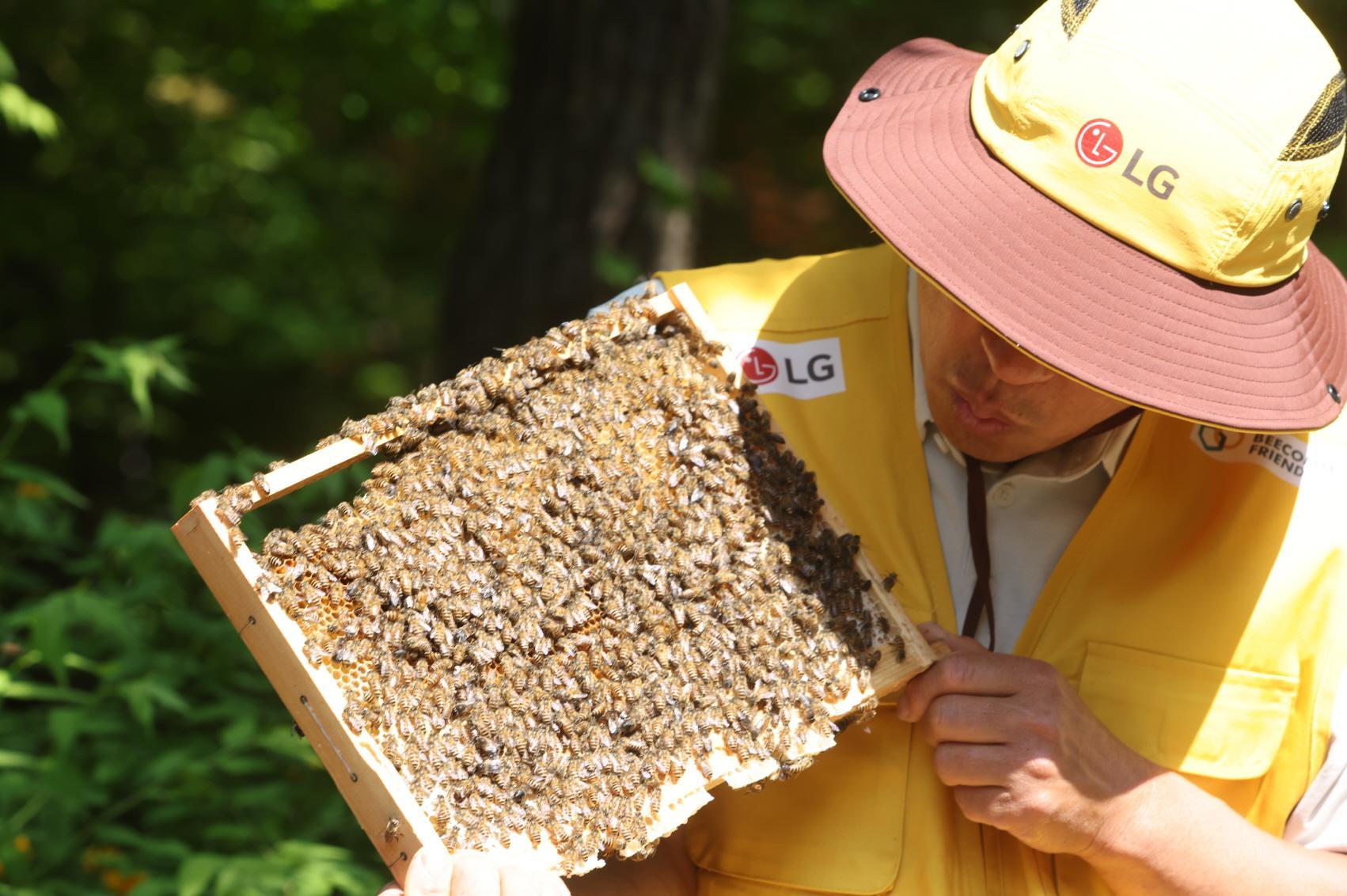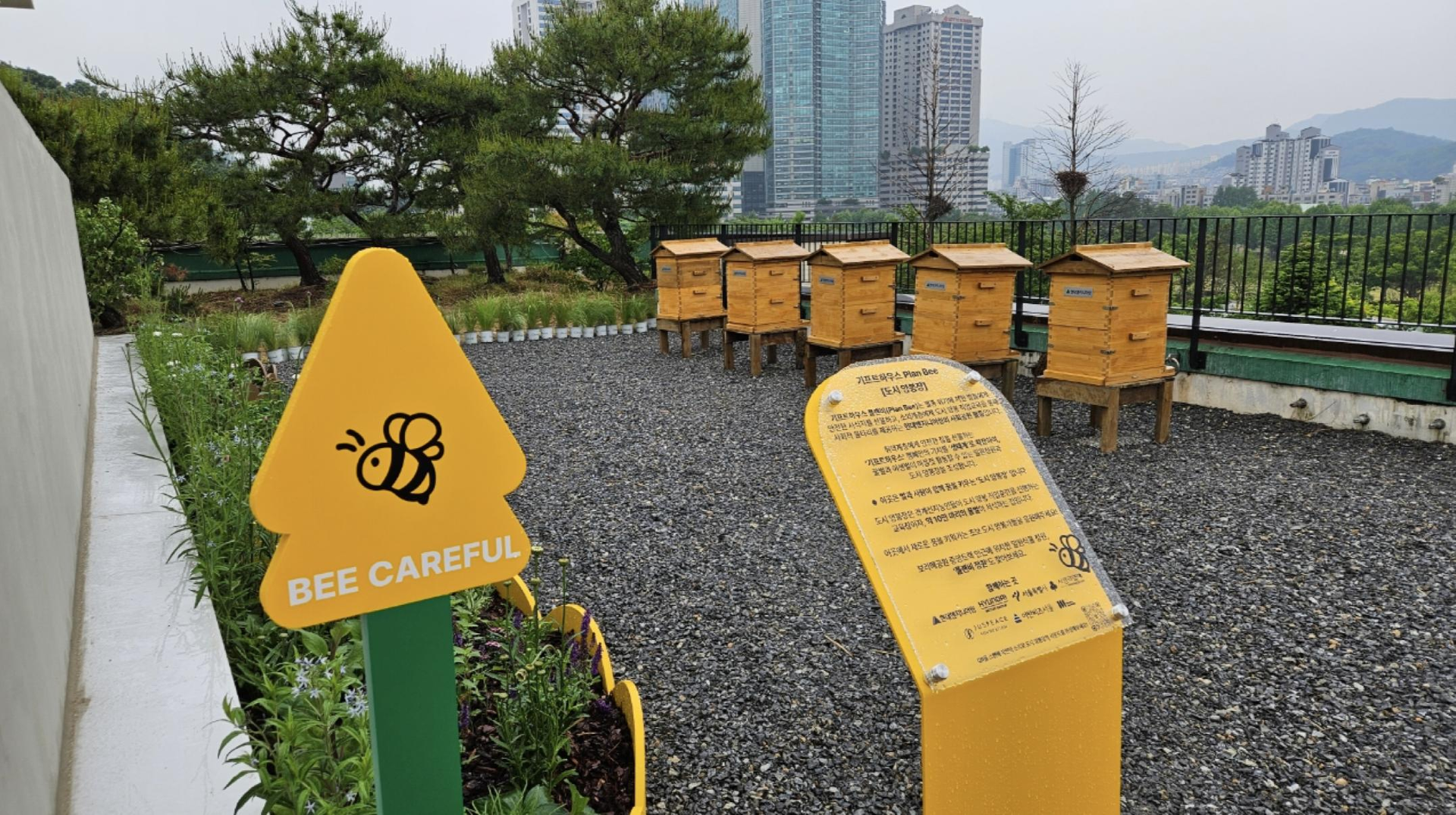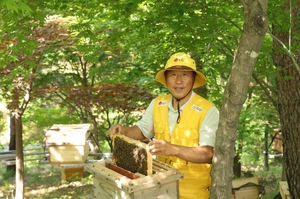
Endangered bee population quadruples to 4 million under LG-led breeding initiative Korea’s first officially recognized native bee master, Kim Dae-rip (LG Group) LG Group said Wednesday it has quadrupled the population of endangered native Korean honeybees to 4 million within a year as part of its biodiversity and ecosystem preservation initiative.The group said it established a habitat for the native “Halla honeybee” near Hwadam Botanic Garden in Gwangju, Gyeonggi Province, last year and increased the bee population from 1 million to 4 million through a breeding project carried out with Korea’s first officially recognized native bee master, Kim Dae-rip.Native Korean honeybees play a key role in pollinating indigenous plants that Western honeybees struggle to pollinate. But their population has plunged by about 98 percent since the 2010s due to sacbrood virus outbreaks and climate change, pushing the species close to extinction.LG said it aims to double the native bee population every year through 2027 while expanding habitats and increasing nectar-producing plants around breeding sites.“The project began from LG’s sense of urgency that the disappearance of bees could ultimately lead to a food crisis,” Kim said. “The fact that we achieved a fourfold increase in population within a year is highly meaningful.”After securing a stable breeding population of 4 million bees, LG plans to distribute additional colonies to beekeepers affected by honeybee population declines in partnership with social enterprise BecomFriends.The company is also operating a beekeeping training program for people with developmental disabilities together with BecomFriends.LG has expanded biodiversity-related initiatives through the LG Sangnok Foundation, including habitat restoration projects for endangered species such as storks, spoonbills and native turtles.The initiative comes ahead of World Bee Day on May 20, designated by the United Nations to raise awareness about the importance of pollinators and ecosystem preservation.
LG helps native honeybee population buzz back
LG Group said Wednesday it has quadrupled the population of endangered native Korean honeybees to 4 million within a year as part of its biodiversity and ecosys
295 words~1 min read