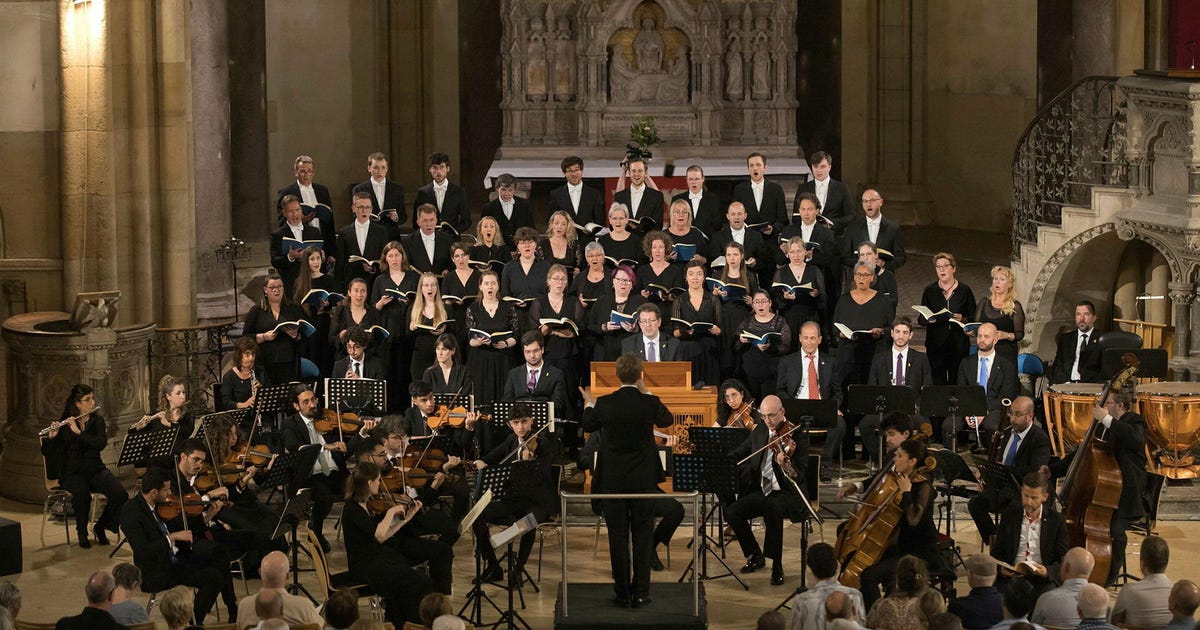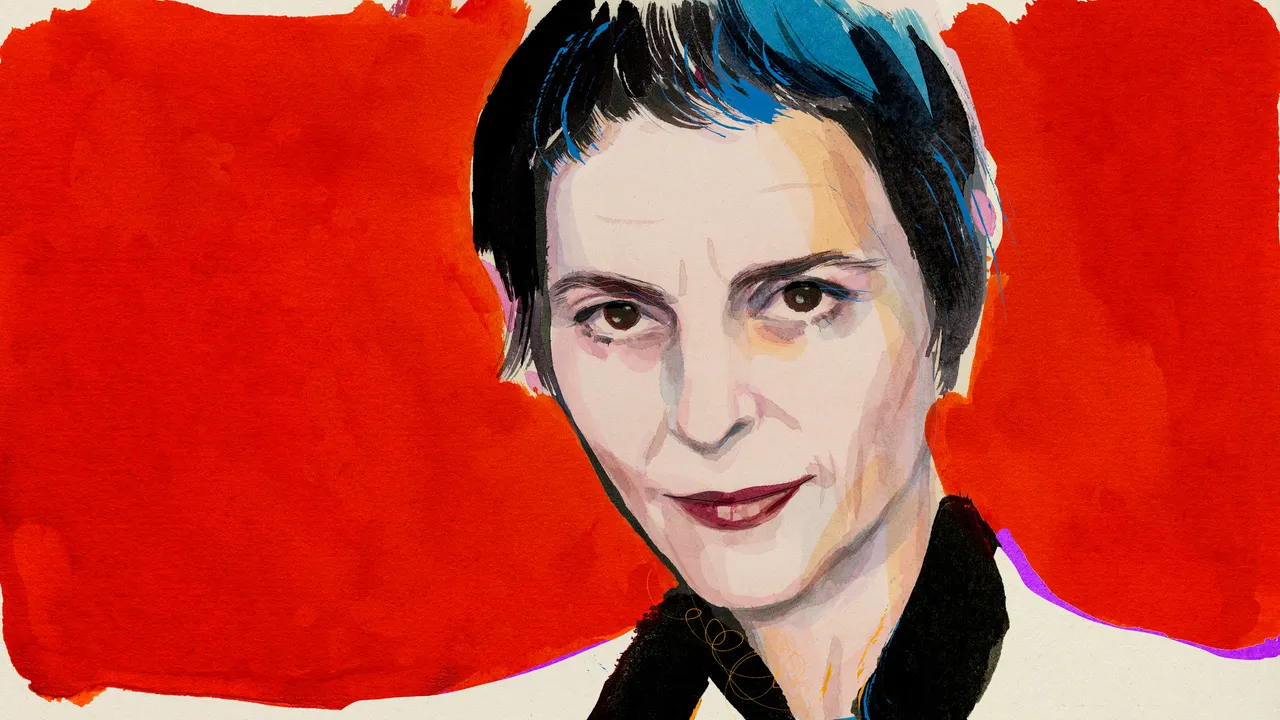
Global disaster shadowed this year’s Witten Days for New Chamber Music, an ostensibly insular contemporary-music festival that takes place each spring in the Ruhr Valley, in Germany. Two Iranian composers were featured; only one, Amen Feizabadi, could attend in person. Golfam Khayam, the other, conveyed a message pleading for peace and extolling music as a “free bird who knows no border.” The Russian composer Dmitri Kourliandski, also on the program in Witten, left his homeland in 2022 after participating in protests against the war in Ukraine. The Israeli-born composer Chaya Czernowin, the focus of several concerts, has described herself as being profoundly alienated from her country, and she has also decried repression in the United States, where she now lives. Composers from more stable lands nursed their own fears. In Germany itself, neo-Nazis are gaining ground.The agonies of the day were only intermittently audible in the music on offer in Witten. The festival, which is organized by West German Radio and has been running in its current form since 1969, favors experimental idioms that customarily avoid obvious political messaging or clear cultural signposts. Kourliandski, for example, presented a string quartet, “Partially Restored Landscapes,” in which fragile, brittle sonorities surface amid long silences. It felt like a refuge conscious of its vulnerability. Feizabadi’s “Ungezähmter Fluss” (“Untamed River”), edges toward social significance by invoking the erotic mysticism of the great Persian poet Rumi, but the dissonant grunge of the musical language keeps worldly passions at bay. Khayam was an outlier, in that the work of hers performed, “Seven Valleys of Love,” has tonal leanings and incorporates an old Iranian folk melody called “Deylaman.” This being a stringent European new-music gathering, someone in the audience felt compelled to boo the intrusion of conventional harmony.Perhaps the most political aspect of this year’s Witten Days—its theme, “The Present / Inescapable,” nodded toward the pressures of outer reality—was its obliviousness to national borders. Composers from nineteen countries, ranging from Cuba and Brazil to Japan and South Korea, communally explored an inexhaustible continent of sound. Activist spirits might dismiss this emphasis on the purely sonic as a strategy of avoidance, although the likes of Feizabadi and Kourliandski can’t be accused of sitting idly by. In any case, to compose in the classical tradition today is to go against the grain of a hyper-commodified culture. Theodor W. Adorno, the high priest of the high modern, once wrote that art criticizes the status quo “simply by existing.”I went to Witten primarily to hear new and recent works by Czernowin, a composer I would follow anywhere. Born in Haifa in 1957, she emerged from an avant-garde background that included stints at IRCAM, Pierre Boulez’s electronic compound in Paris, and at the Darmstadt Summer Courses for New Music, in Germany. In the past couple of decades, however, Czernowin has deëmphasized the frantic gesturing that characterizes so much latter-day modernism. In large-scale instrumental scores such as “Maim” and “HIDDEN,” and in the operas “Infinite Now” and “Heart Chamber,” her language takes on a spacious concreteness, assuming the contours not just of a distinct landscape but of an entire organic world. Within open-ended forms that last up to an hour, you hear surges and storms, explosions and silences, isolated cries, insectoid choruses, mutant arias, and, beneath it all, axial, cosmic drones. Alternatively, all this could be experienced as a noise within—the groaning of an overloaded psychic infrastructure. Either way, Czernowin forges a logic that integrates disparate, unpredictable events.Czernowin is, as it happens, a politically outspoken composer. She often divulges her preoccupations in program notes, although her music is so innately gripping that audiences may forget her agenda once their ears are engulfed. “Seltene Erde” (“Rare Earth”), for double-bass and ensemble, which Evan Hulbert and Klangforum Wien played in Witten, under the direction of Elena Schwarz, alludes to the deadly business of mining precious minerals for use in cellphones. Double-bass glissandos hint at hands grubbing in the earth, while abrupt moments of concerted action—notably, an accordion wheezing out an F-sharp-minor chord—suggest flickering signals and transmissions. But I eventually gave up trying to match the program to the musical narrative, which exists on its own plane of beauty and terror intermingled.
Chaya Czernowin Gives Voice to a Wounded World
The composer’s work, featured at a recent festival in Germany, includes a howling denunciation of war crimes against children.
696 words~3 min read