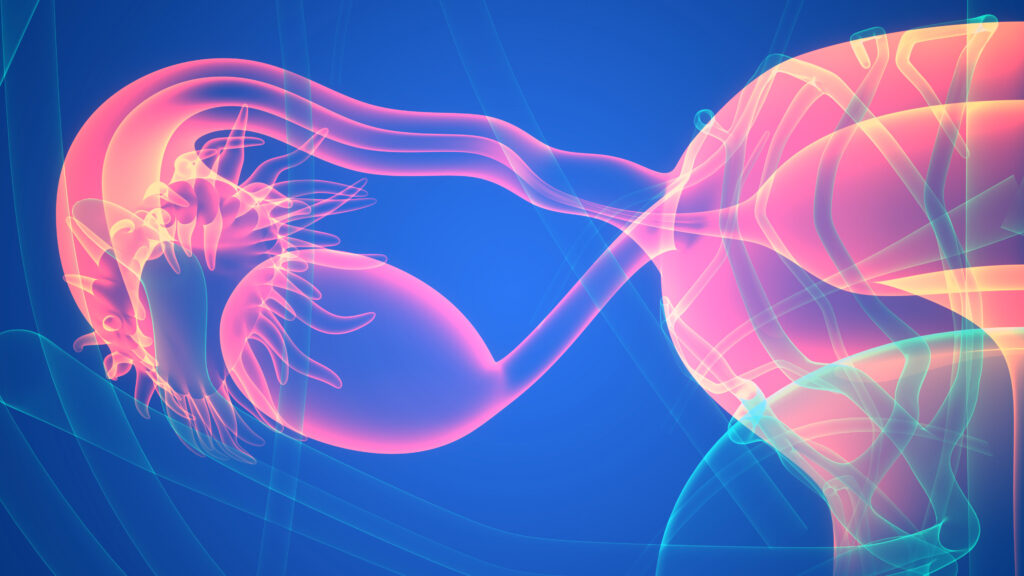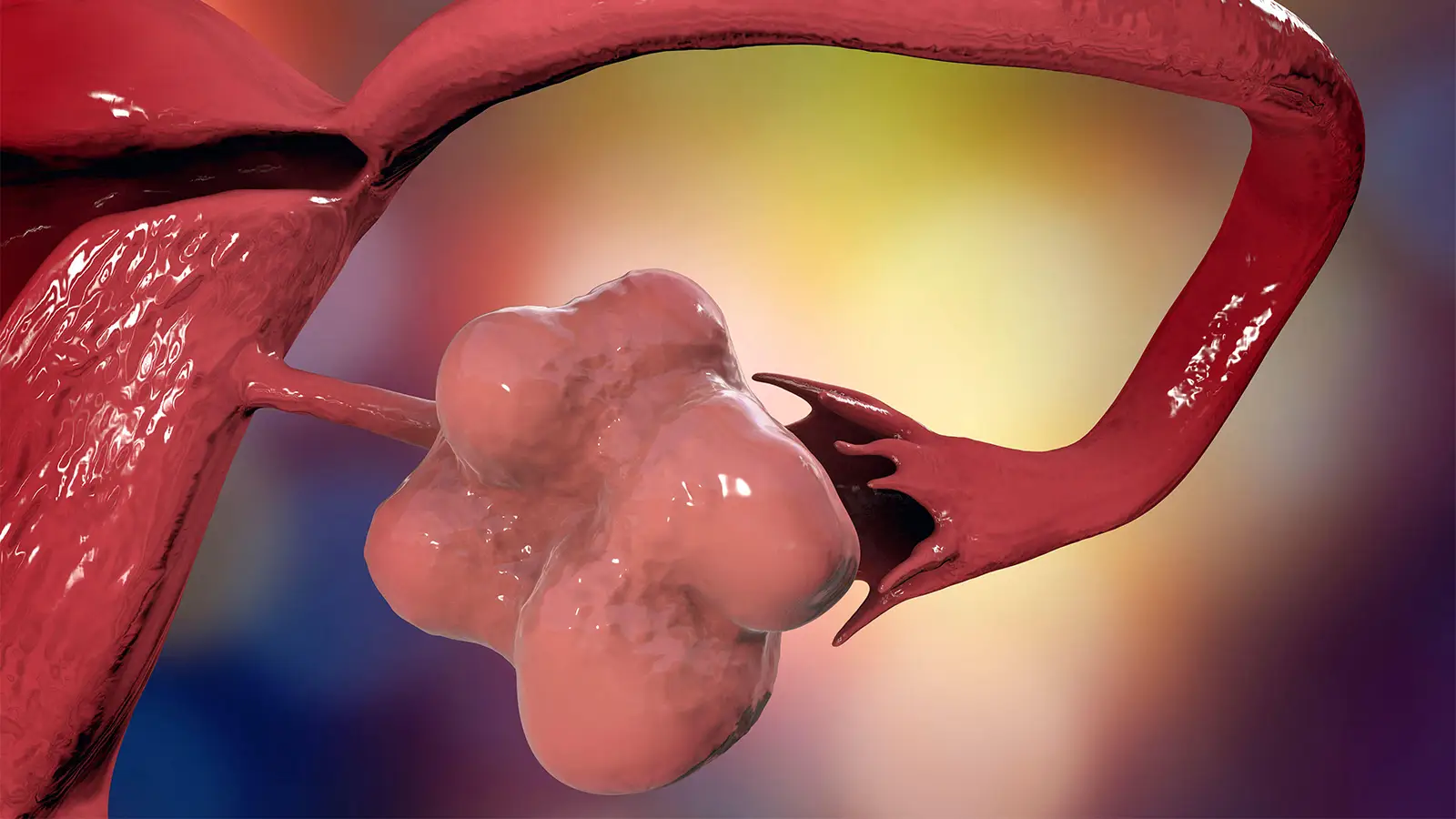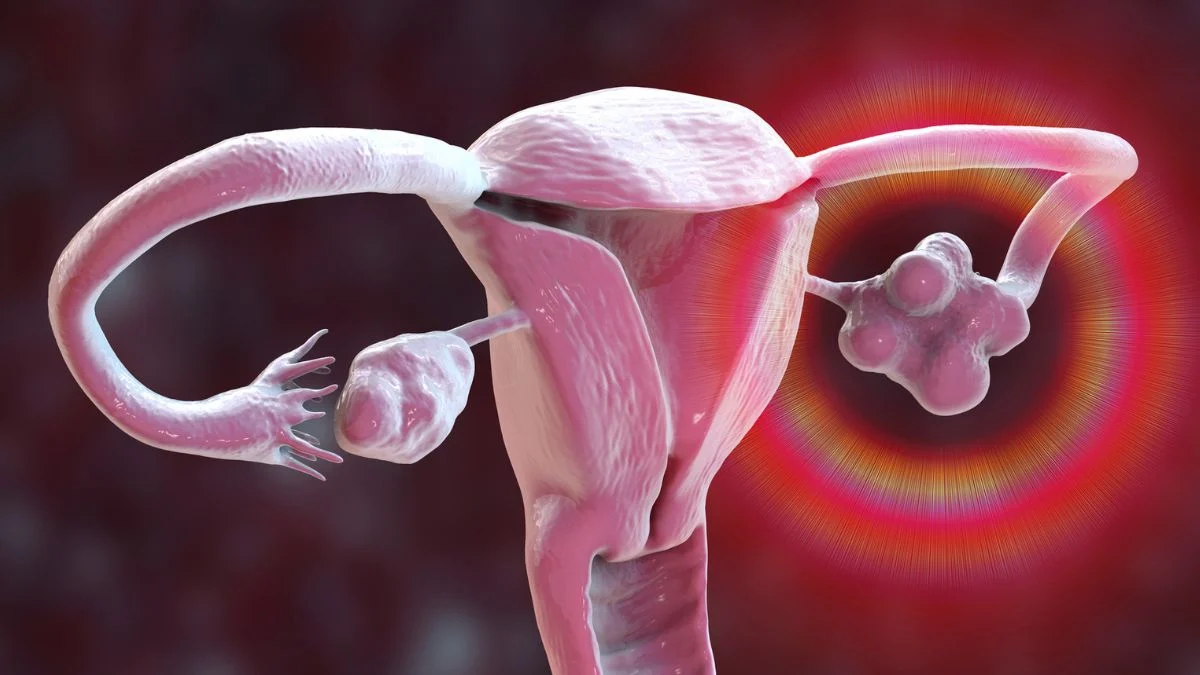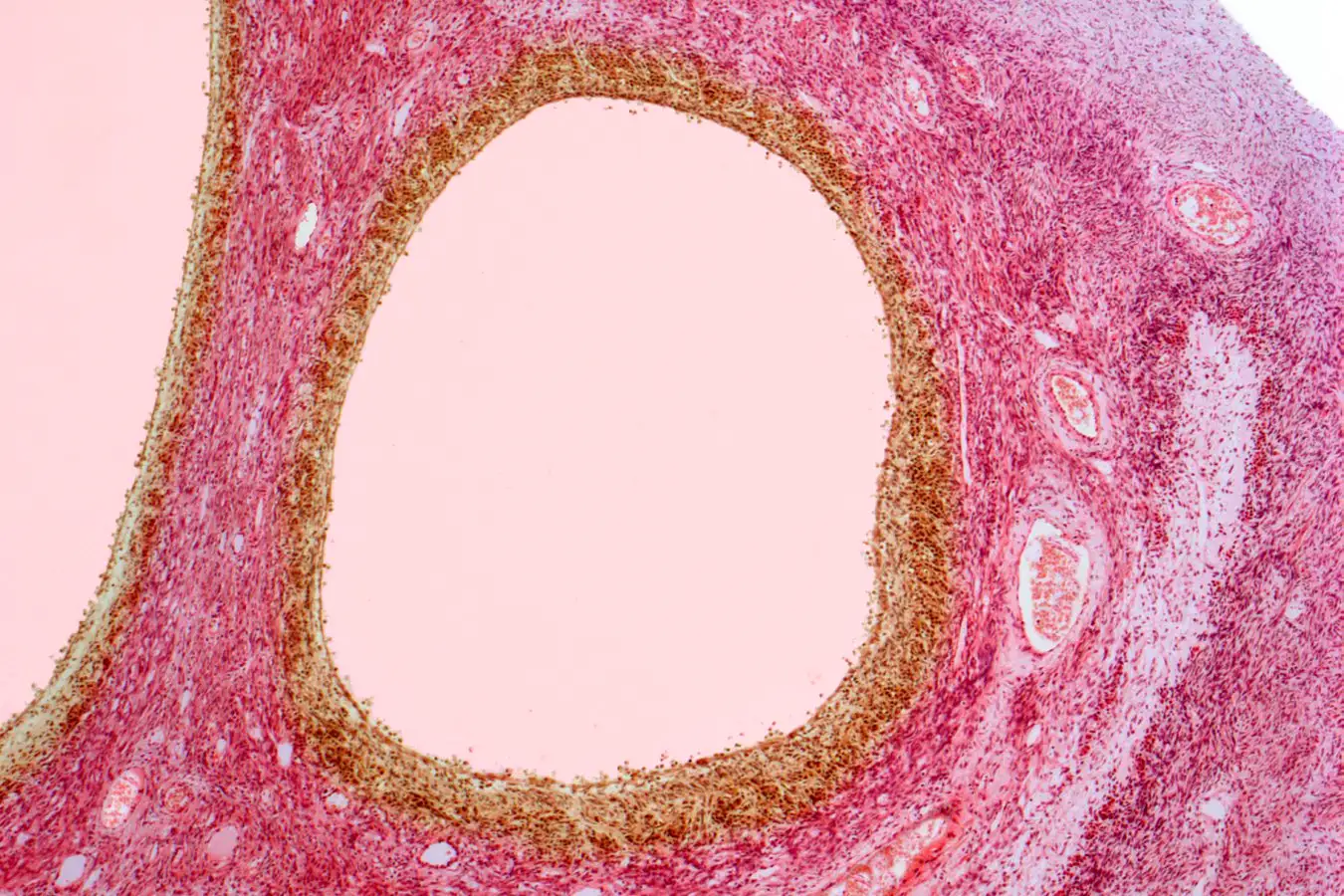
The “cysts” (light pink) seen in polycystic ovary syndrome aren’t really cysts at allSTEVE GSCHMEISSNER/SCIENCE PHOTO LIBRARY
Polycystic ovary syndrome (PCOS) has finally got a new name. Today at the European Congress of Endocrinology in Prague, Czech Republic, endocrinologist Helena Teede announced it will now be known as polyendocrine metabolic ovarian syndrome (PMOS).
This might not sound like much of a change, but it is a boon for those of us with the condition. For one, it addresses a huge misconception about how the ovaries are affected. It also draws much-needed attention to the metabolic and hormonal dimensions of the condition that have nothing to do with our ovaries.
Things have changed enormously since I was diagnosed with PCOS more than two decades ago, in my late teens. I had terrible acne and irregular periods, two common symptoms, and was sent for an ultrasound to investigate. I was appalled to see my ovaries covered in dark spots, so-called “cysts”. I was told I might not be able to have children, and that there was a risk the cysts would burst and require emergency surgery. I was bewildered and devastated.
It was only when I started looking into emerging PCOS/PMOS research for New Scientist that I realised how mischaracterised it had been. I first wrote about the condition in 2018 and it was the most-read article I have ever produced, which told me I wasn’t alone in wanting to understand it better.