Wednesday 20 May 2026 5:00 am
| Updated:
Tuesday 19 May 2026 5:44 pm
The Bank of England is the first regulator to announce plans for a digital bond
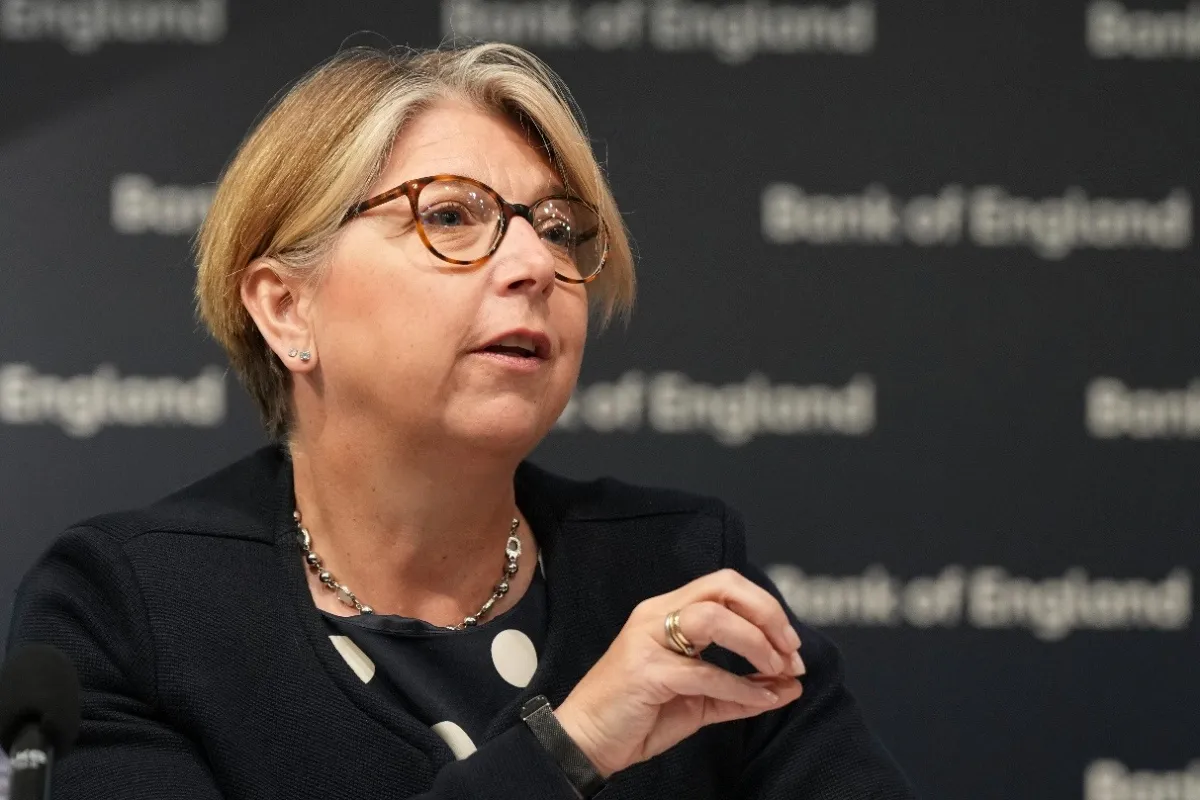
The Bank of England’s plans to launch a digital gilt will make Britain’s sovereign debt more appealing to a wider pool of investors and help bring down government borrowing costs, its deputy governor has said.Speaking to City AM at the City Week conference, Sarah Breeden hailed the central bank’s efforts to become the first developed economy to issue all-digital government bonds, pointing to early research showing they will “have a lower yield than the traditional alternative”.Launching the blockchain-based bond will allow for “faster settlement, less cost, less risk, less friction [and] more functionality”, Breeden, the Bank of England’s deputy governor for financial stability, said. “That will certainly have benefits for gilt holders, and therefore you’d expect that to be reflected in the price at which gilts can be issued.”Alongside the Treasury and the Financial Conduct Authority, the Bank of England is working on plans to to allow the government to issue its debt via blockchain, in a bid to speed up transactions and upgrade the country’s capital markets infrastructure. The push puts Britain on course to become the first G7 economy to launch an all-digital bond, with neither the European Central Bank nor the US’s Federal Reserve currently pursuing equivalent programmes.But some experts have warned that digitising a portion of Britain’s gilt issuance will leave some of the UK’s most critical capital markets infrastructure more exposed to hacks and cyberattacks. The rapid roll-out of ever more advanced artificial intelligence models has caused central banks across the world to reevaluate the profound threat the technology poses to financial stability. Anthropic is poised to brief the Financial Stability Board, widely referred to as the global finance watchdog, on the profound effect its Claude Mythos would have on major financial institutions. The AI giant has withheld the release of its latest and most advanced model after it found major weaknesses in the cyber defences of most companies’ IT systems.Bank of England to pare back stablecoin red tape after backlashBreeden said the Bank was alive to the risk of cyberattacks on any digital gilt system “The important thing, I think, is for this not to be a botched job for us to do it responsibly and ensure that we learn the lesson as we go,” she said, adding: “If we’re going to put all our assets on a blockchain, how confident are we that that is resilient to a cyber threat? That is something that we’ll need to work through.”Breeden’s made the remarks shortly after giving a speech in which she suggested the Bank of England may look to water down its approach to regulating the fledgling stablecoin and token assets space.The central bank had planned to introduce strict caps on the number of stablecoins – a form of cryptocurrency that is pegged to a traditional fiat currency like the dollar – that a business or individual could hold. It had also planned to force stablecoin providers to hold 40 per cent of the assets backing their coin in an interest-free deposit at the Bank, to help reduce the effects of any run on banks or government bonds. Both those proposals sparked a powerful backlash from the crypto sector, with industry figures warning they would strangle innovation and adoption in the fast-moving space. Breeden said the Bank was “open to other mechanisms to achieve the same objective”, including temporarily clamping down the amount of coins a provider could issue.Speaking to City AM, the Bank’s deputy governor, who also sits on its rate-setting Monetary Policy Committee, played down the gravity of any changes, saying would not represent a significant “change in tone”. “What we really need to make sure is that stablecoins that are being used widely in the economy as money, function as money, and that means that a pound of stablecoin needs always to be worth a pound in that context,” she said. “What we want is us, the Bank of England, to be the banker to the coin, so there’s no credit risk from holding deposits with other banks.”The Bank is expected to publish its draft rules next month in line with a parallel push in the US.