Bottom lines up front
After one year in power, Friedrich Merz’s government in Germany is deeply unpopular.Despite real progress on foreign and security policy, Germany’s struggling economy and lack of clear leadership remain significant weaknesses for the governing coalition.Without major changes, it is uncertain if the Merz government will last the full parliamentary term.
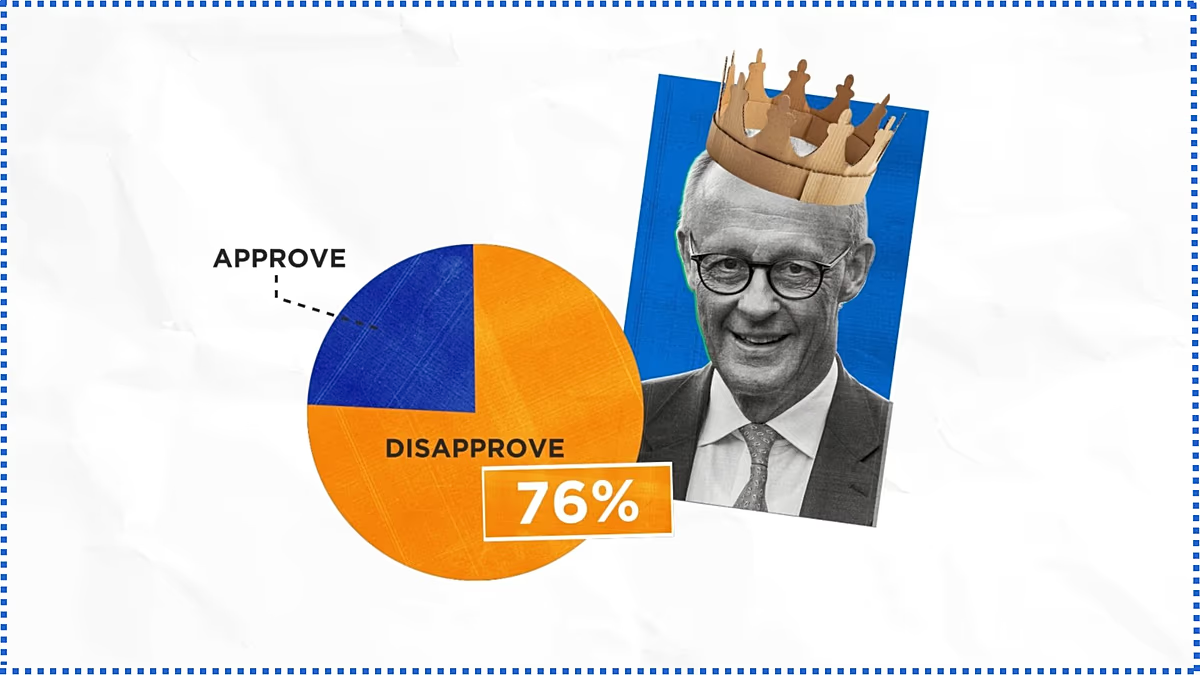
After just a year in office German Chancellor Friedrich Merz faces increasing questions about the future of his government. Merz has failed to restore confidence in the German government and in a poll from the end of March, 86 percent of Germans were dissatisfied or very dissatisfied with the work of the government, 1 percent of Germans were very satisfied and only 12 percent were satisfied with the government’s work.
US policies are worsening these challenges—the economic effects of the Iran war have led the German economics ministry to halve its growth forecast while raising its inflation projection for 2026. Business expectations are at their lowest level in almost three years. Merz’s attempt to balance continued transatlantic cooperation with increasing European capabilities is being tested by US President Donald Trump’s continued attacks on NATO, lack of support for Ukraine, and incoherent Russia policy.