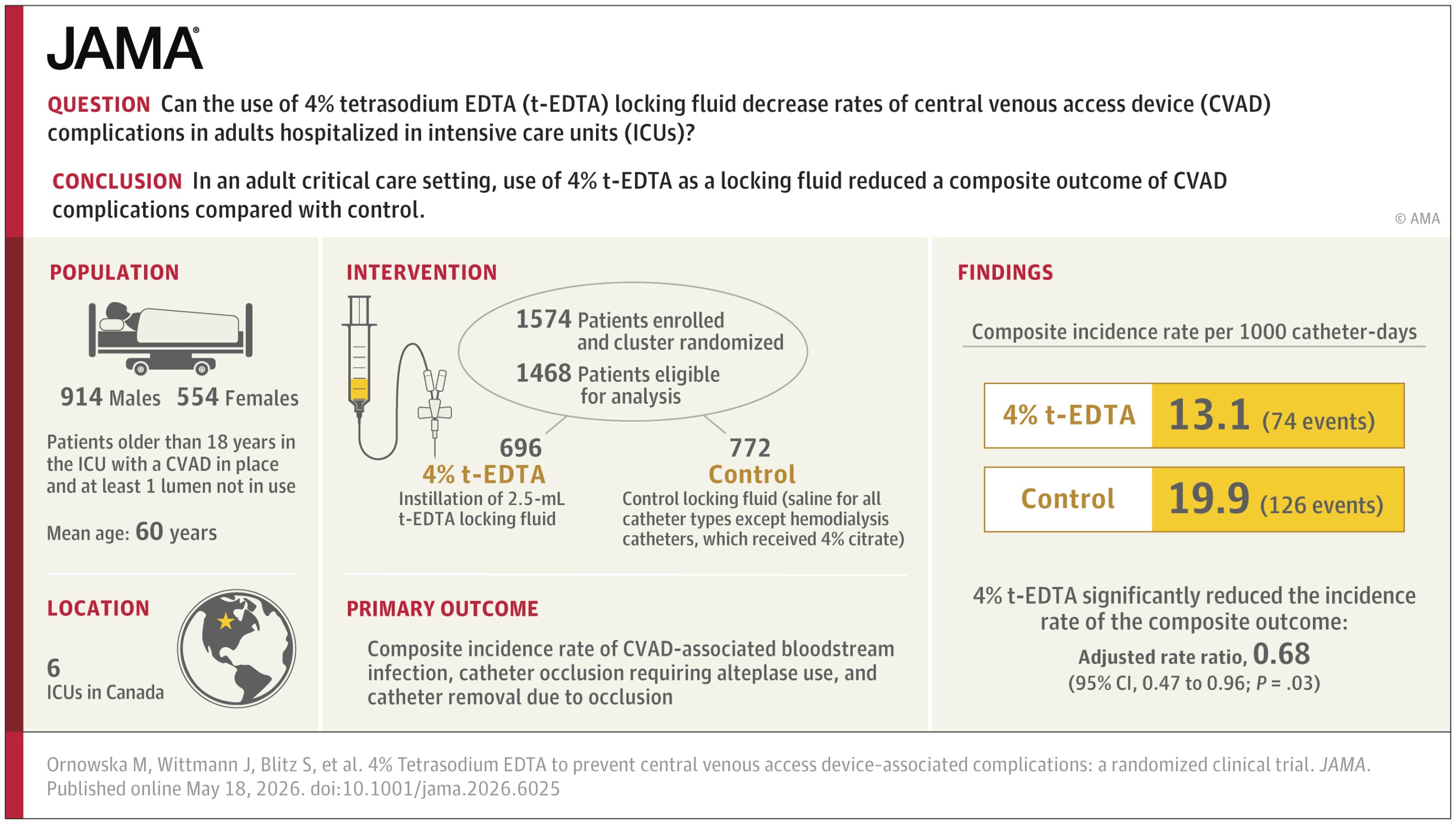
Visual Abstract. Credit: JAMA (2026). DOI: 10.1001/jama.2026.6025
A B.C.-led clinical research team is behind a study that could help improve care for critically ill patients in intensive care units worldwide. Researchers from Royal Columbian Hospital and Simon Fraser University have published findings in JAMA.
The study, known as the CLiCK trial, examined central venous access devices, often called central lines, in adult intensive care unit (ICU) patients, and was presented by senior author Dr. Steven Reynolds at the American Thoracic Society International Conference on May 18.
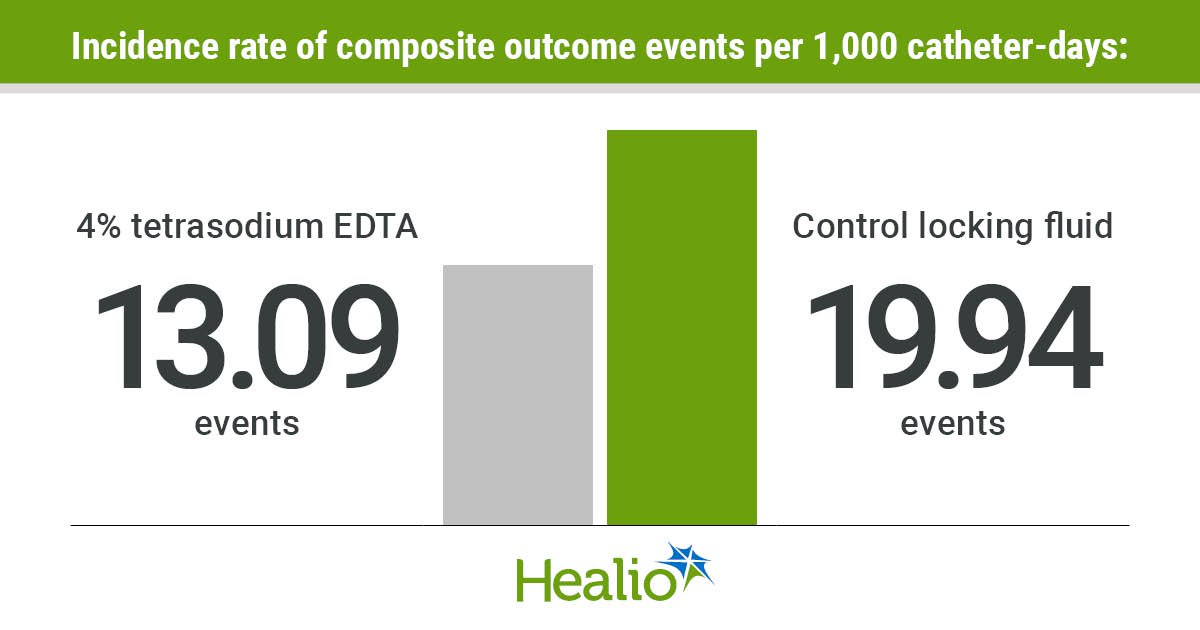
At issue are the catheters used to deliver fluids, medications, antibiotics, and nutrition to the majority of critical care patients in hospital ICUs. While central-line care is essential for many of these patients, their use may lead to the risk for infection and functionality may be impeded by clotting in the catheter lumen. When one of the line channels is not being used, clinicians place a small amount of fluid (called a "catheter lock") inside it to help keep the line open. A multicenter clinical trial found that adding a 4% tetrasodium ethylenediaminetetraacetic acid (t-EDTA) locking solution was associated with a significant reduction in a composite measure of these complications.