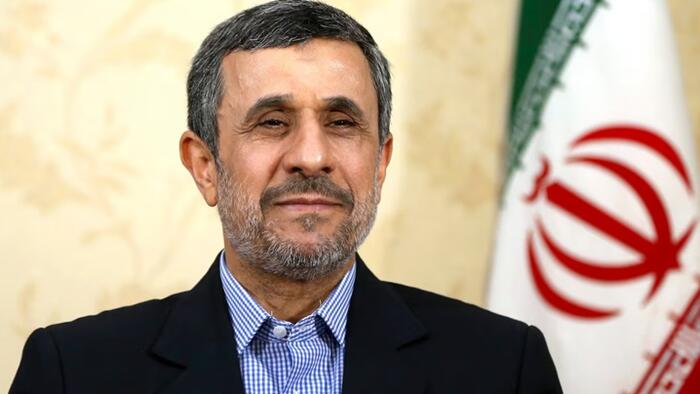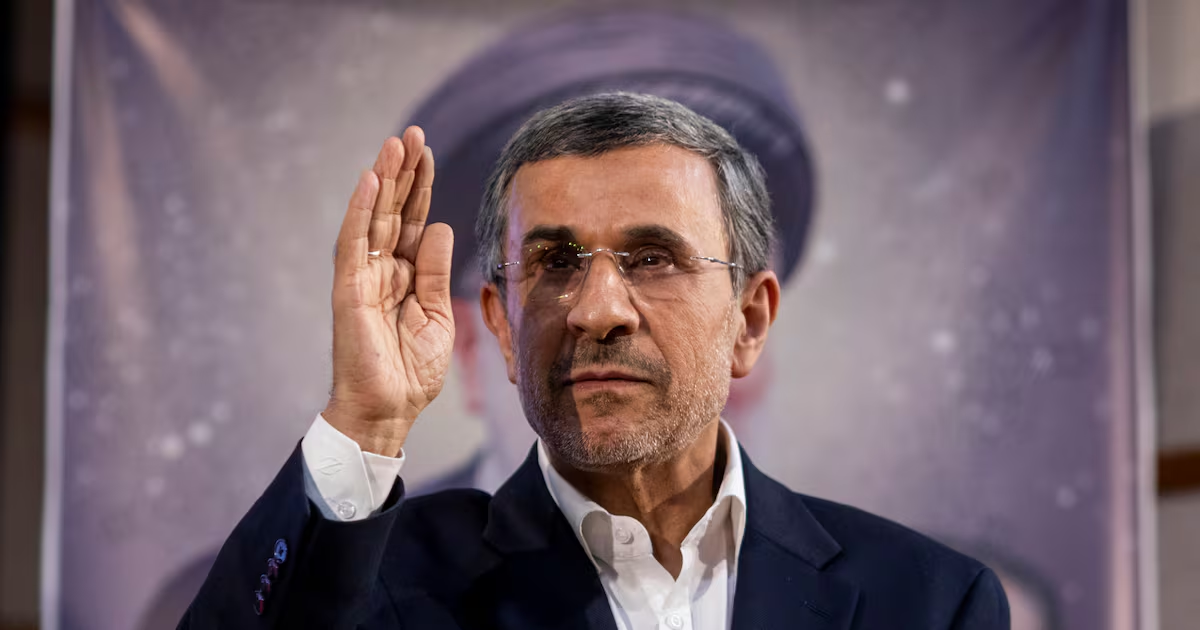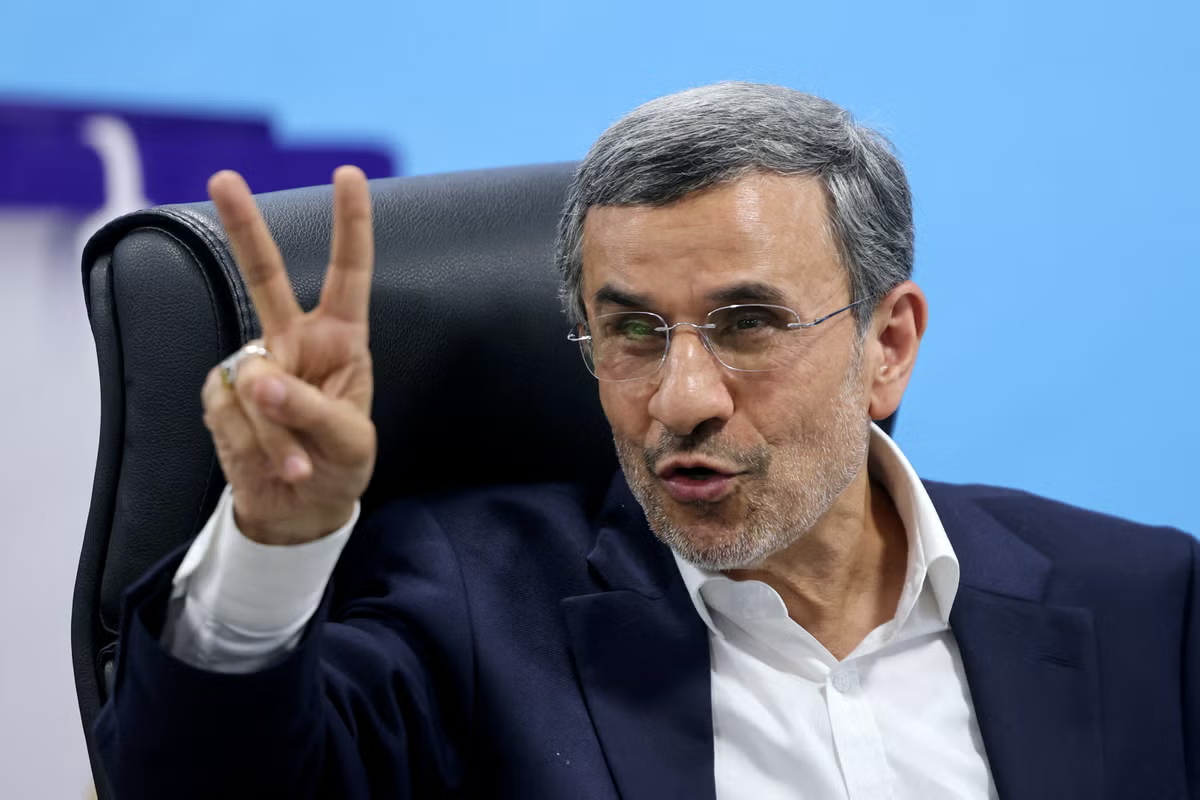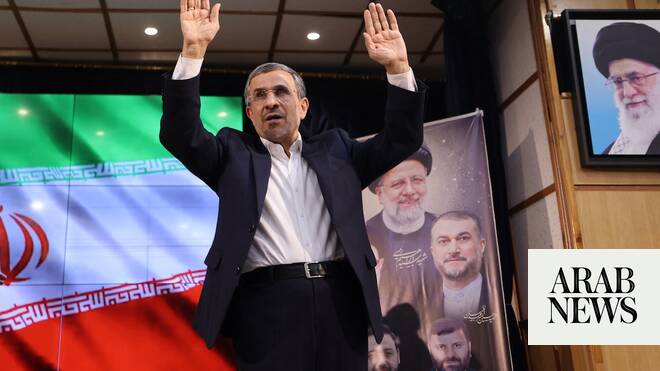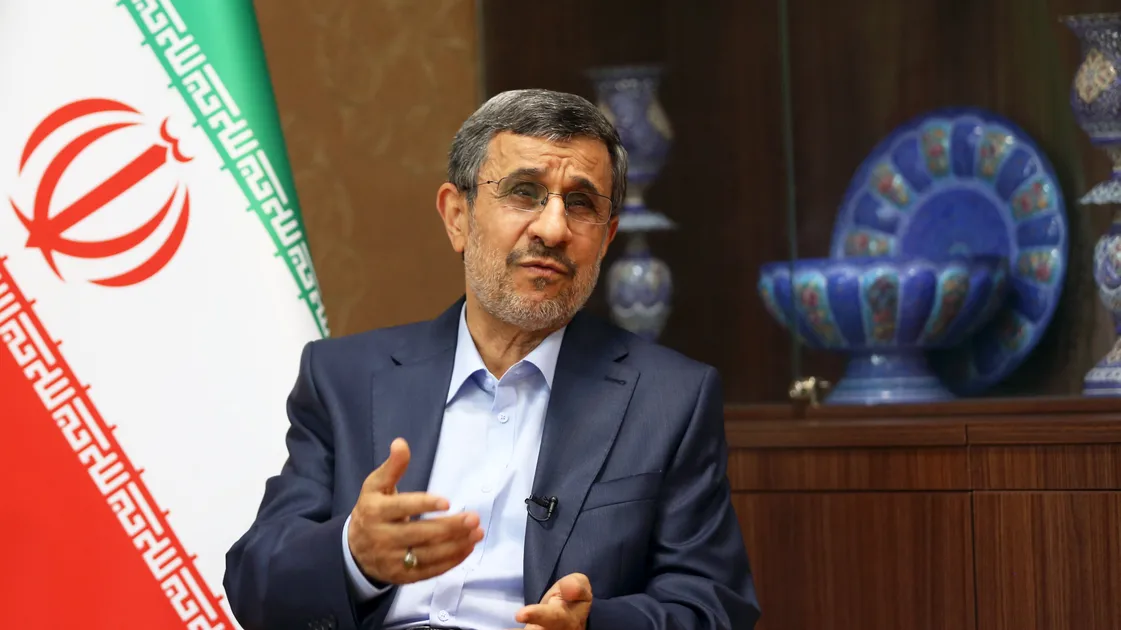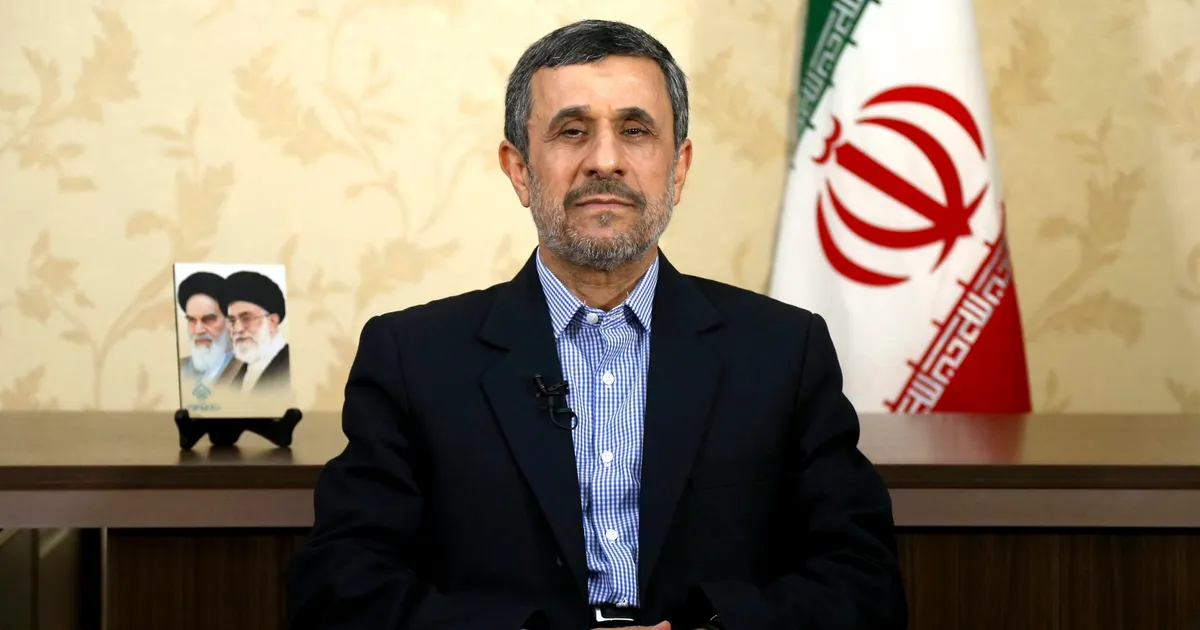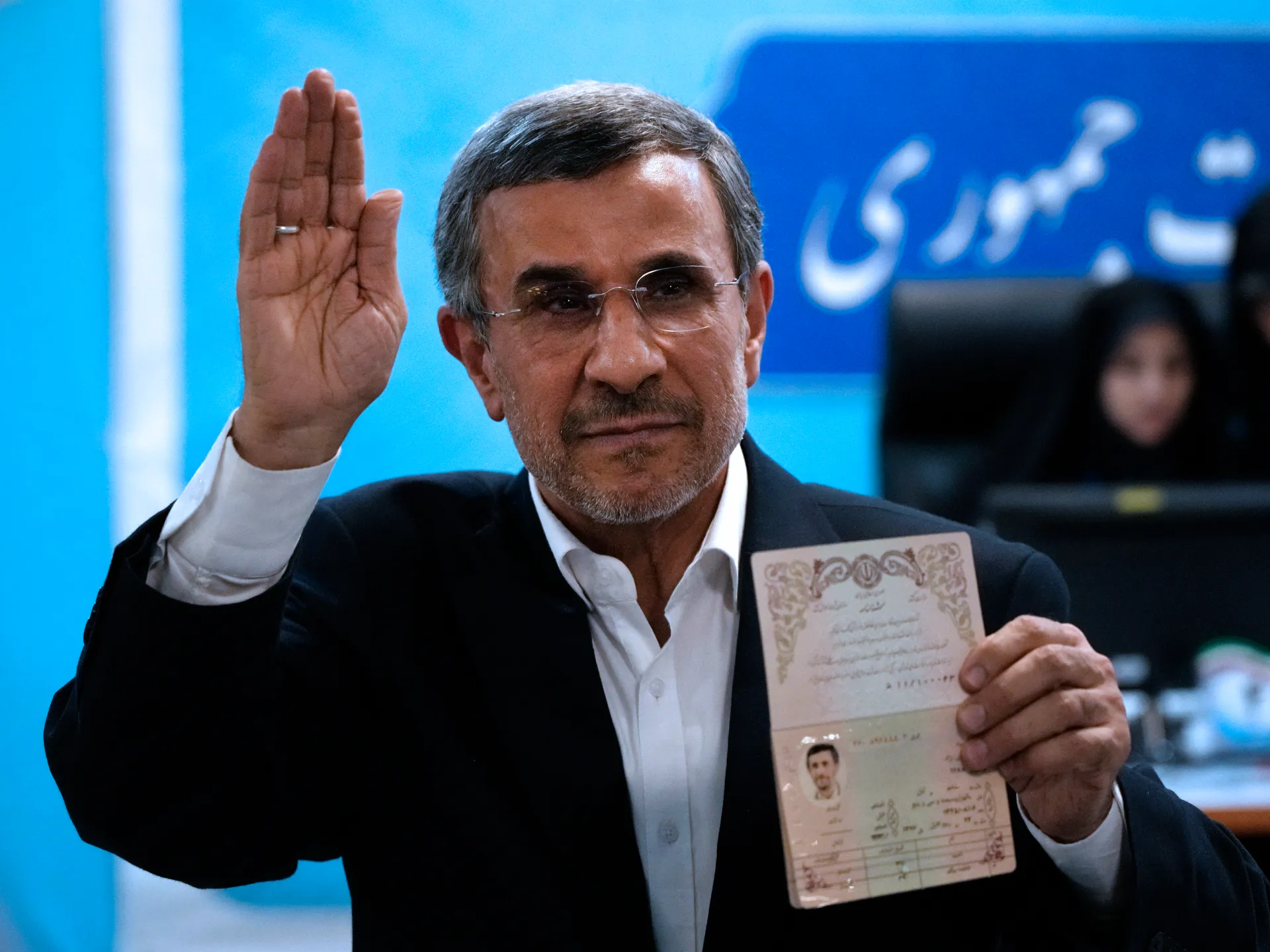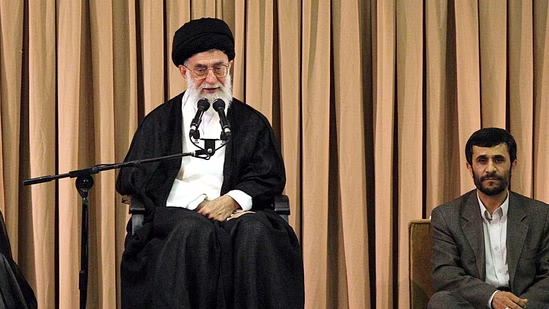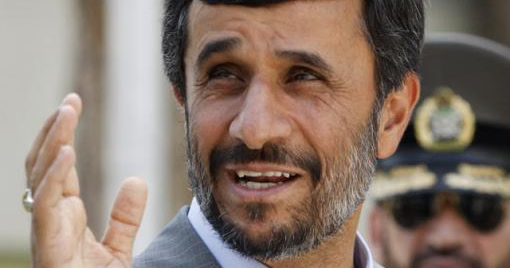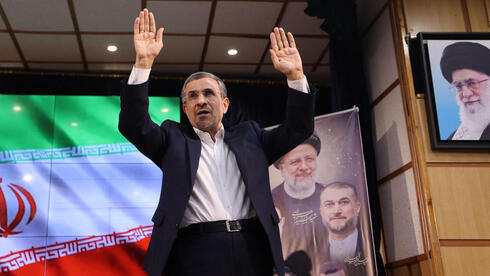
Strike on former president’s Tehran home reportedly meant to free him from house arrest, but after he was wounded, he backed away from coup plan, according to US officials cited by the New York Timesynet|The New York Times reported overnight Tuesday that the United States and Israel had an unexpected candidate for that “someone from within” — perhaps the last person anyone would have imagined as suitable, or willing: former Iranian President Mahmoud Ahmadinejad, long considered one of Israel’s bitterest enemies.3 View gallery (Photo: ATTA KENARE / AFP)According to officials in Washington, the extraordinary plan was developed by Israel and later joined by U.S. intelligence officials. But senior American officials said it quickly went awry. Officials briefed on the matter and a person close to Ahmadinejad told the paper that the Israeli strike on the first day of the war at Ahmadinejad’s home in Tehran was meant to free him from the house arrest he was under. But after he nearly was killed in the strike, and was wounded, he changed his mind and decided, at least at that point, not to take part in the coup operation.The American and Israeli choice of Ahmadinejad to replace Iran’s leadership was unusual, to say the least. During his presidency from 2005 to 2013, he repeatedly threatened to “wipe Israel and Zionism” off the map. He was known as a Holocaust denier and did not hesitate to use blatant antisemitic rhetoric.The Times noted that it remains unclear how Ahmadinejad was “recruited” for the plan. Many questions remain about how the United States and Israel planned to place him in power, as well as the circumstances surrounding the strike that wounded him. U.S. officials told the paper that the strike, carried out by the Israeli Air Force, was meant to kill the guards watching him in order to free him from house arrest.Ahmadinejad has not been seen in public since the strike, and his whereabouts and condition remain unclear. After the strike on his home, reports circulated that he had been killed, but those were denied shortly afterward. According to The New York Times, his home was not significantly damaged, but satellite images showed that the guard post at the entrance to the street where he lives was completely destroyed.White House spokeswoman Anna Kelly did not directly address the report, saying: “The U.S. military achieved all its objectives, and now negotiators are working on a deal that will end Iran’s nuclear capabilities for good.” Mossad declined to comment.3 View gallery Strike in Tehran (Photo: AP Photo/Vahid Salemi)U.S. officials spoke at the start of the war about plans developed with Israel to find a pragmatic replacement to lead the Islamic Republic. They insisted at the time that there was intelligence indicating figures within the regime would be willing to work with the United States, even if they were not necessarily “moderates.”In recent years, Ahmadinejad repeatedly clashed with regime leaders. He accused them of corruption, and many rumors spread about his loyalty. He was barred from running in several presidential elections, his aides were arrested and he was restricted to his home in eastern Tehran.About two months ago, The Atlantic reported, citing Ahmadinejad associates, that the strike on his home was in effect an operation to free him. After that article was published, a senior figure close to Ahmadinejad confirmed to The New York Times that the Trump administration saw Ahmadinejad as someone who could lead Iran. The associate said the Americans believed Ahmadinejad had the ability to manage Iran’s “political, social and military situation.”The associate said Ahmadinejad could “play a very important role” in Iran in the near future, suggesting that the United States saw him as similar to Delcy Rodriguez, who replaced Venezuelan President Nicolas Maduro after he was captured by the United States, and who now cooperates with Washington.3 View gallery (Photo: lev radin/shutterstock, Mandel NGAN / AFP)In a 2019 interview with The New York Times, Ahmadinejad praised Trump and even argued for renewed rapprochement between Iran and the United States. “Trump is a man of action,” he said. “He is a businessman and therefore capable of calculating cost-benefit and making a decision. We tell him: Let’s calculate the long-term cost-benefit of our two countries and not be shortsighted.”Iranian authorities have accused Ahmadinejad’s inner circle of having overly close ties to the West, and even of spying for Israel. His trips abroad in recent years, to countries with close ties to Israel, fueled that speculation. His former chief of staff, Esfandiar Rahim Mashaei, was put on trial in 2018 and questioned about his ties to Israeli and British intelligence agencies.Ahmadinejad returned from a visit to Hungary days before the start of the war with Iran. He had been invited there as a guest of a university close to then-Prime Minister Viktor Orban, who is close to Netanyahu and Trump. Since then, Ahmadinejad has kept a low public profile and issued only one statement on social media. His associates have maintained a similar silence.
Report: US, Israel planned to install Ahmadinejad in Iran and helped him escape country
Strike on former president’s Tehran home reportedly meant to free him from house arrest, but after he was wounded, he backed away from coup plan, according to US officials cited by the New York Times
830 words~4 min read