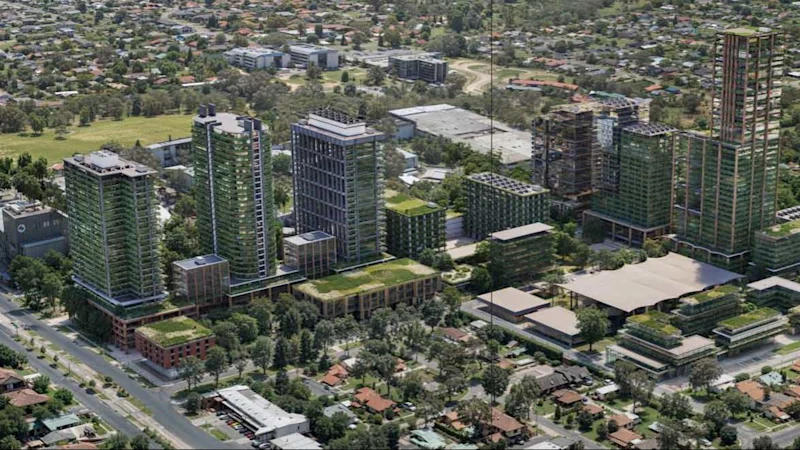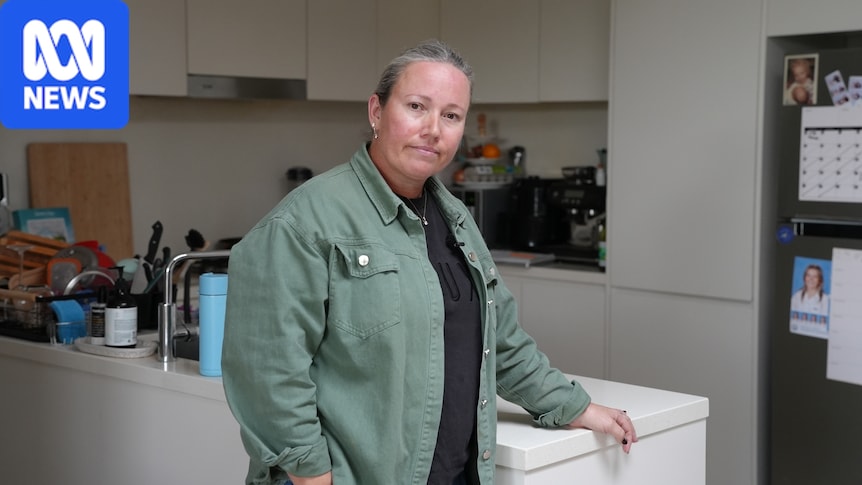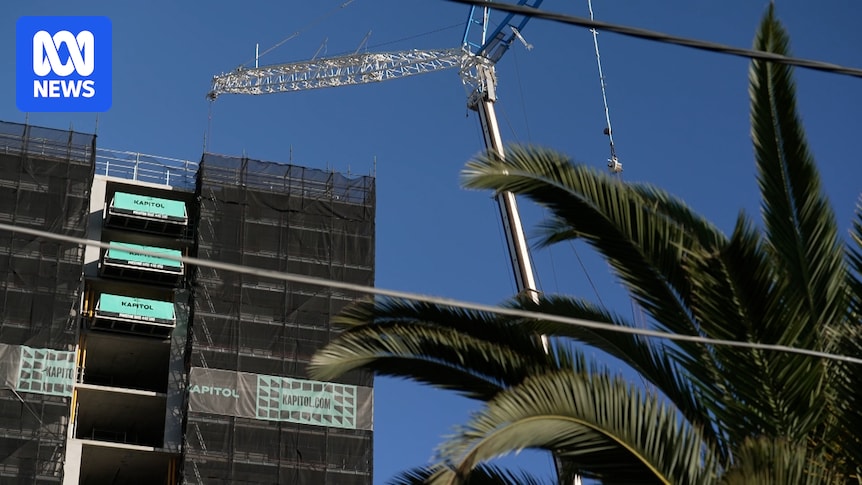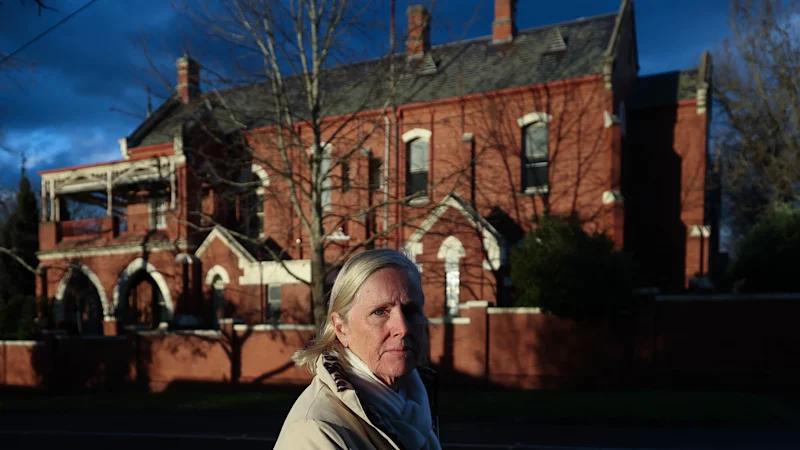
Property developers are offering cash to avoid including affordable housing in luxury Melbourne apartment builds under a controversial scheme which also allows them to bypass local planning rules.The proposals are being greenlit during a tidal wave of applications under a scheme that gives the Victorian government decision-making power over "significant" residential projects that contribute to affordable housing.The state government says thousands of below-market rentals will be constructed after receiving fast-tracked approval under this pathway over the past two-and-a-half years.However, developers can also qualify by agreeing to contribute funding, equal to 3 per cent of their construction cost, to the government's Social Housing Growth Fund.A premium Ivanhoe East retirement village that was previously refused under regular planning pathways and a $320 million tower on St Kilda Road are among the projects that have benefited from fast-tracked approvals by proposing a cash contribution.There is no guarantee the funding will be reinvested locally, and opponents of the scheme say it is being used to gain project approval in sought-after areas that might otherwise have hit hurdles or delays before a local council."A developer knows that they can make that promise of 3 per cent cash and buy themselves what is being touted as a faster approval," said Jane Oldham, a prominent critic of recent changes to state planning law who heads up the Boroondara Community Group.Jane Oldham has watched several proposals gain approval in the Boroondara area. (ABC News: Jesse Thompson)Woolworths has previously been accused of exploiting the same scheme to ram through new supermarkets and luxury apartment buildings. Another proponent vastly reduced the number of affordable homes in two projects in Brunswick and Coburg after they had been granted fast-tracked approval.Development size doubles in Melbourne's 'private school belt'The ABC met Ms Oldham outside a development that she says exemplifies questions around local benefit from the scheme. Surrounded by prestigious homes and an elite private school in the inner-east Melbourne suburb of Hawthorn, the site won council planning approval for 45 dwellings in 2015.Despite a sales campaign promoting boutique apartments at a $2.5 million price point, the ABC understands the project failed to generate enough off-the-plan sales to move past the planning phase.The existing permit was less than a year out from expiry when, under a new owner, approval was sought for a $316 million, 115 apartment project proposing a 3 per cent cash contribution.It was greenlit in March, with developer Sun Property Group now spruiking the project as a "refined luxury residential development" in Melbourne's "highly regarded private school belt".Real estate figures said the new configuration would make it easier to market and deliver the project. The Hawthorn project has an estimated value of $316 million. (Supplied: Sun Property Group)Local demand for this type of dwelling was said to be strong, particularly among downsizers.Sun Property Group was contacted for comment.Ms Oldham said the project was among several that appeared to benefit developers while failing to deliver immediate affordable housing."It should be delivering affordable housing for those who are waiting for it," she said."That's the promise that's being made: that there will be a faster approval on shovel-ready sites, so there is no need for a delay in the building of much-needed affordable housing." Hundreds of homes approved in affluent areaThe Hawthorn project is among about 800 homes fast-tracked across the City of Boroondara, an area that trails comparable municipalities in the provision of social housing. The latest, a four-building complex backed by billionaire James Packer, was approved despite local opposition last week. That project is set to deliver about 19 affordable homes, or 10 per cent of the planned 194 apartments.But three of the other four projects approved in the municipality have proposed making a cash contribution instead of alternatives. This means only about 59 affordable dwellings have been guaranteed across the Boroondara area out of about 800 homes approved so far.Affordable housing expert Kate Raynor, who leads the Centre for Equitable Housing at progressive think tank Per Capita, said any policy attempting to increase affordable housing should be welcomed.But she warned affordable housing policies with flexible contribution options had a history of failing to deliver affordable housing where it was needed at scale."If you don't have any guarantee that that funding needs to go into the [local government area] where the development is occurring, then we're likely to not see that development happen in Boroondara and other places that have high land costs," she said.Kate Raynor is the director of Per Capita's Centre for Equitable Housing. (ABC News: Jesse Thompson)"I think Boroondara's already having this problem: that they don't have a lot of key workers living in their neighbourhoods. They probably have a lot of people commuting long distances to get to work."The state government says Social Housing Growth Fund projects are allocated based on demand.Other affordable housing contributions available under the scheme include selling 10 per cent of a project's dwellings to a housing provider at a discounted rate or earmarking the same proportion for use as discounted build-to-rent housing.Rejigged project wins approval after rejection by council, VCATMore than 11,000 homes have been approved under the scheme so far.Of those, the state government says more than 20 per cent will be dedicated to social or affordable housing, which generally means homes rented at below the local median rate.It confirmed more than $25 million had so far been promised for its housing fund, which also received a $860 million boost in the recent budget."Planning reforms like the Development Facilitation Program are why Victoria continues to build and approve more homes than any other state," a government spokesperson said.Meanwhile, ABC analysis of more than 50 permit documents suggests about a dozen projects offering a total of more than 2,000 dwellings have been approved proposing a cash contribution.The scheme gives Victorian Planning Minister Sonya Kilkenny decision-making power over eligible projects. (AAP: Joel Carrett)The scheme is part of the Victorian government's Development Facilitation Program (DFP), which was expanded to include significant residential projects in September 2023 amid ongoing debate about the role of planning delays in the housing crisis.While there are up-front costs to qualify, the development sector says the pathway is popular because of the certainty it offers.As well as being fast-tracked, appeal rights are extinguished and certain planning scheme requirements, such as height limits, can be relaxed or waived.Several proposals have been greenlit despite objections from residents and councils.One proposal for a premium retirement village in Ivanhoe East had previously been rejected by the local council due to its scale — a decision later upheld by the Victorian Civil and Administrative Tribunal.This premium retirement village was approved after a different version of the project was refused by a local council and VCAT. (Supplied: Villa Maria Catholic Homes)But last August, it was given fast-tracked approval after being submitted to the DFP with design changes and a proposed cash contribution.Villa Maria Catholic Homes, the charity behind the project, declined to comment when approached by the ABC.In another case, on prime real estate in Camberwell, the pathway was used to pitch a mixed-use development that rose above the discretionary height limit.There were no objections, but months after winning approval with a proposed cash contribution last October, the permit approval and 14-storey views were used to promote the site when it was listed for sale.This 14-storey development on prime real estate in Camberwell was approved last October. (Supplied: Real Commercial)The ABC understands the proponent had to step back from the project due to an unforeseeable change in circumstances. The proposed payment will have to be made even if a new buyer is found.Michael Buxton, an emeritus professor of planning with RMIT, was highly critical of the public benefit residents received in exchange for planning scheme concessions offered by the cash pathway."We can have no faith that the contributions are going to be equal to the intended percentage of affordable housing in a development," he said."We just need more information on how much the cash contribution gains compared to the value of the affordable housing."This site on Burke Street in Camberwell was recently listed for sale. (ABC News: Jesse Thompson)In the case of a $320 million tower proposed for St Kilda Road, the cash contribution was estimated to be about $2 million cheaper than selling one in 10 apartments to a housing agency at a discount.Treasurer Jaclyn Symes told parliament last October that the government was working on public reporting arrangements for the payments, which she said would be finalised as the contributions were received.Government promises scheme will 'deliver homes in good locations'The cash contribution option has been welcomed by some industry groups who say it's a known expense in the face of persistent feasibility problems.The community housing sector says it also allows for high-end projects to contribute to affordable housing without involving social housing providers, who might be hit with unsustainable body corporate fees.Former property developer Robert Pradolin said the scheme's appeal to the sector was obvious."If the developer thinks the introduction of what they term affordable housing is the perception of social housing, rightfully or wrongfully, that creates a sales risk for their products," he said."They'd rather not have that risk and they'd rather pay to get rid of it."Rob Pradolin from Housing All Australians says feasibility is a critical issue for the development sector. (ABC Gippsland: Rachael Lucas)As the head of Housing All Australians, Mr Pradolin now works on unlocking private sector responses to the housing shortage. He said the critical question was whether the planning incentives offered by the DFP could fill gaps in project feasibility."There is a big disconnect between what the market's prepared to pay for housing now and what the costs are to deliver it," he said."Planning is a part of it, but there's a whole ecosystem of other authorities that need to be condensed to make things economically viable."In February, it was confirmed that only six homes had so far been completed under the scheme due to a two-year lead time between planning and approval on significant projects.A further 2,471 were under construction.Proposals under the pathway have surged recently, with the government approving nearly 7,000 homes in the 12 months to March and more than 3,000 this year alone.Despite holding decision-making power, Planning Minister Sonya Kilkenny was last week unable to say if she had rejected any proposals that had progressed through the affordable housing pathway.However, she said projects had been rejected in the pre-application stage."We get hundreds of applications coming through," she said."Each one is assessed individually, on its merits."But what's important about the DFP is it's an accelerated pathway to make sure that where we've got good projects that are going to deliver homes in good locations … we can get those projects through and they're not being upheld unnecessarily at local council and then at VCAT."
Luxury apartments greenlit under affordable housing scheme
Property developers are using an affordable housing scheme to bypass normal planning requirements and win fast-tracked approval for contentious projects across Melbourne.
1,790 words~8 min read