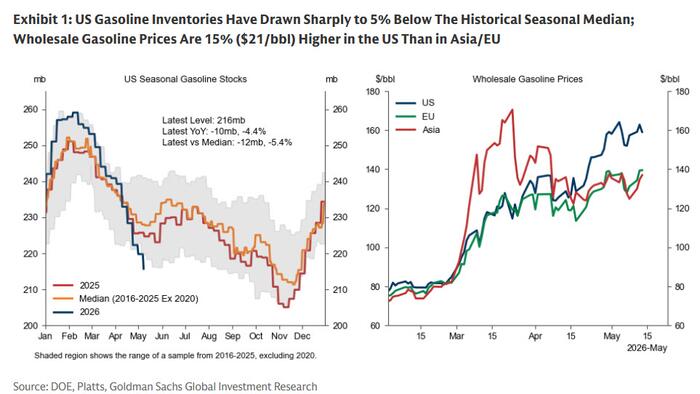
The US is entering peak summer driving season facing its most precarious transportation-fuels backdrop since the post-Covid-19 and post-Ukraine war dislocations of 2022. Gasoline, diesel and jet fuel markets are tightening simultaneously as the global refining system struggles to adapt to prolonged disruptions of Mideast trade flows. The central question for US petroleum markets is no longer whether supplies are tightening, but whether the strain becomes politically intolerable before the market can rebalance ahead of midterm elections in November. For now, officials are downplaying chances of drastic political actions, such as a ban on critical US exports. But the risks are rising rapidly. Global oil markets have impressed in absorbing the unprecedented Mideast supply shock through strategic stock releases, rerouted trade flows, emergency refinery yield shifts and demand displacement. Those mechanisms have so far prevented the outright shortages and panic buying in most markets that many feared earlier this spring. But the springtime "shoulder" season is ending, and signs are emerging that those temporary fixes are nearing exhaustion. US gasoline inventories are drawing sharply just as peak summer demand begins. Diesel stocks are hovering near 10-year lows and approaching what traders describe as "commercial minimums." Jet fuel inventories appear healthier, but only because refiners have aggressively maximized yields to historic levels — in some cases lifting them to 12%-13% of refinery output compared with a more normal 7%-10%. Combined US inventories of gasoline, diesel and jet fuel have fallen by 54 million barrels since the war's Feb. 28 start. That's equivalent to more than 700,000 barrels per day and represents the largest seasonal draw in more than two decades. Total stocks of gasoline, diesel and jet now sit 11% below the 10-year average, US government data shows.
Depleting Fuel Stocks May Test US Export Policy
US fuel stocks have shrunk rapidly ahead of peak summer travel season, potentially setting up further price spikes — and big policy decisions around exports.
287 words~1 min read