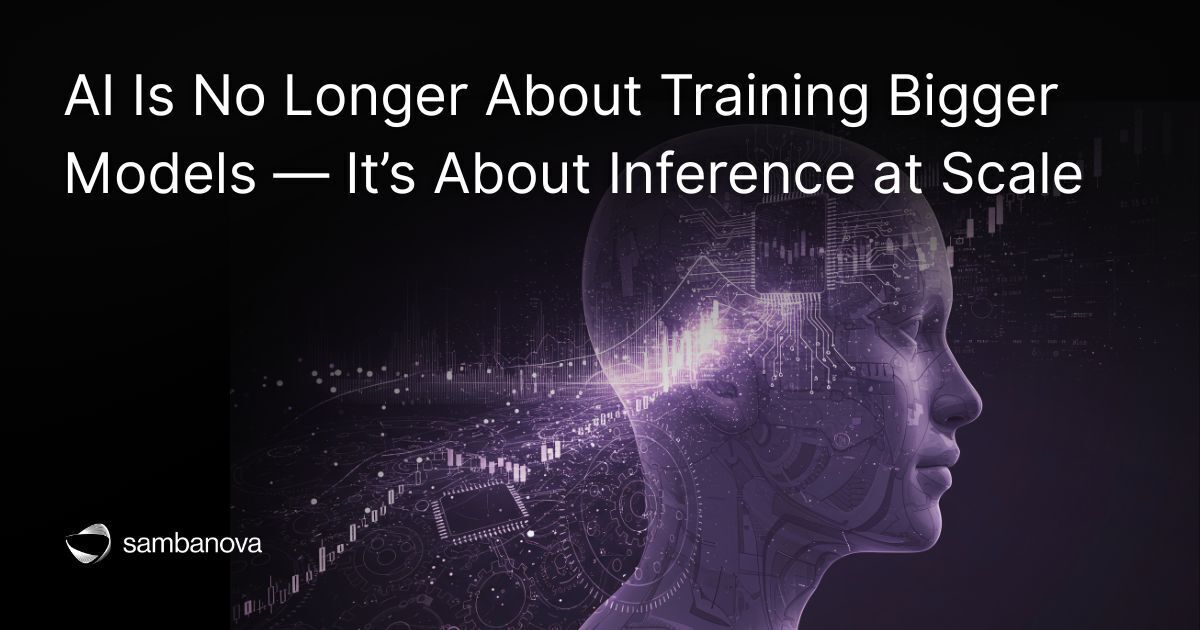
Large language model (LLM) development typically has been divided into two distinct phases: the massive, capital-intensive undertaking of training; and the operational utility of inference. For years, the industry’s focus — and investments — was dominated by the race to train larger models on larger datasets.
However, as we move from experimental chatbots to production-grade agents, the economic and technical perspective is shifting. We are entering an era where the value of AI is increasingly derived not just from the static knowledge ingrained during training, but from the compute applied at the moment of query. Understanding the mechanical differences between these phases, particularly the evolving complexity of inference, is critical for developers building the next generation of AI applications.
Deconstructing the Model Lifecycle
To architect efficient AI systems, it is necessary to distinguish between the learning phase and the execution phase.
Training is the process of teaching a model statistical patterns from data. In deep learning, this involves back-propagation and the optimization of model weights over many epochs.