view more
A colorful and diverse garden brings joy to any gardener, but the increased popularity of non-native plants in place of native species has brought about unprecedented changes in the local wildlife.
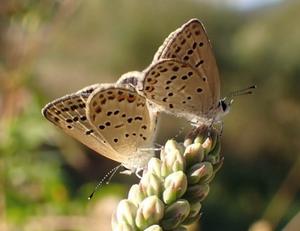
The Fischer’s Blue, Tongeia fischeri (T. fischeri), is a near-threatened butterfly species in Japan that has been reported to use both native and non-native plant species as hosts. Wing coloration is known to function as an important visual signal in butterfly mating behavior and has been theorized to vary depending on the host plant species they fed on during the larval stage. However, this hypothesis had not been tested previously in this species.
Therefore, a research team led by Professor Norio Hirai at Osaka Metropolitan University’s Graduate School of Agriculture hypothesized that feeding on non-native plants during the larval stage may influence adult wing coloration and, consequently, affect reproductive behavior. The team reared larvae of T. fischeri on the native host plant, Orostachys japonica, and an invasive plant species, Sedum sarmentosum, then compared traits related to their life-history characteristics. However, no significant differences in life-history traits, such as oviposition preference, growth, or pupal weight, were shown.