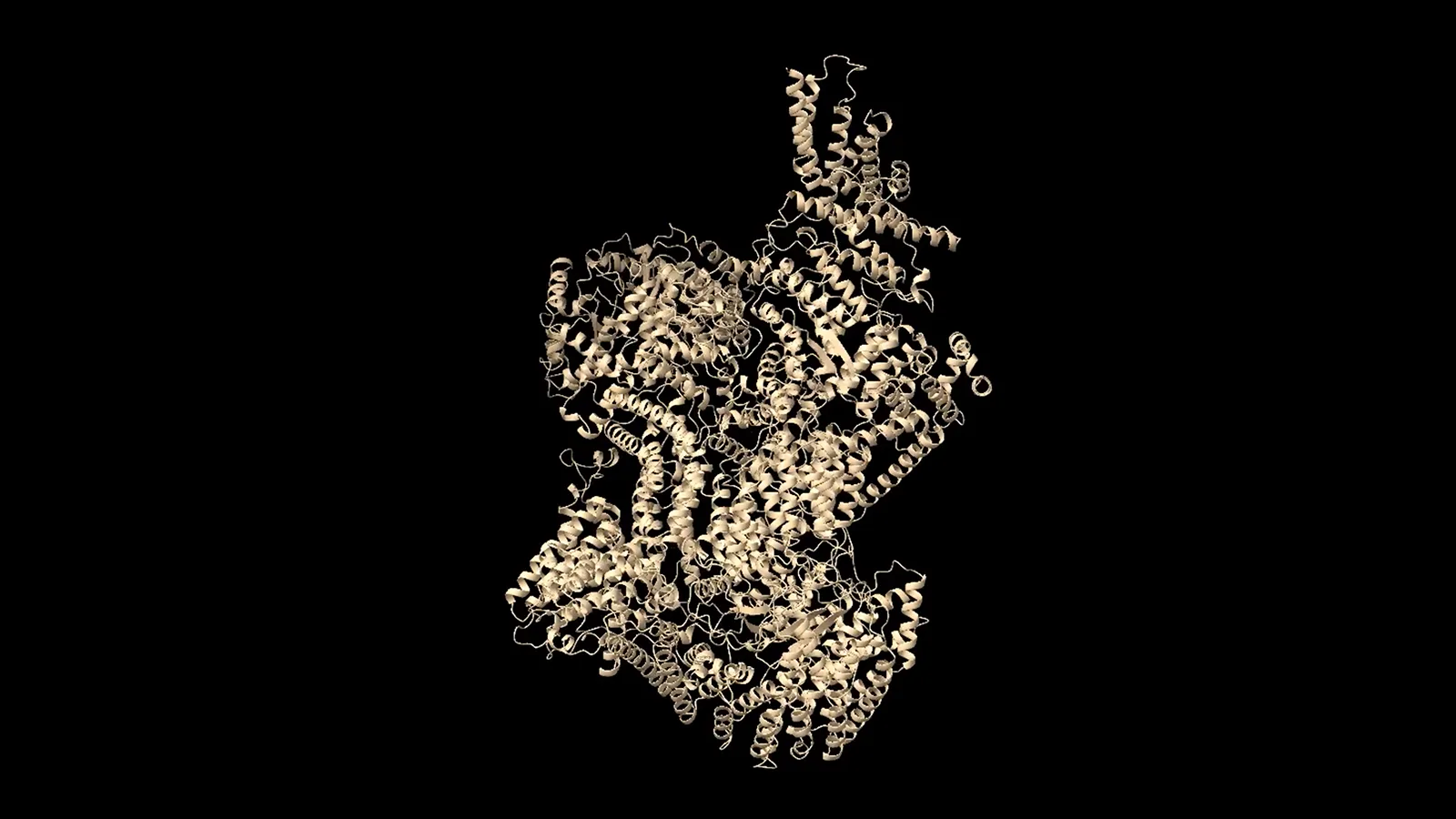
For decades, computational biology has operated under a reductionist compromise. To fit complex biological systems into the limited memory of a single GPU, researchers have had to deconstruct them into isolated fragments—single proteins or small domains. This created a context gap, where larger proteins or complexes could not be folded zero-shot due to GPU hardware memory constraints.
Now, a new context parallelism (CP) framework from the NVIDIA BioNeMo team is shattering the memory barriers of structural biology, enabling the holistic modeling of systems.
This post explains how to achieve CP in biomolecular architectures that diverge from standard Transformers. If you’re a structural biologist, computational chemist, or machine learning engineer seeking to model massive biomolecular complexes without sacrificing global context, read on.
To use the solution outlined in this post, you’ll need:
For more details, see Fold-CP: A Context Parallelism Framework for Biomolecular Modeling.