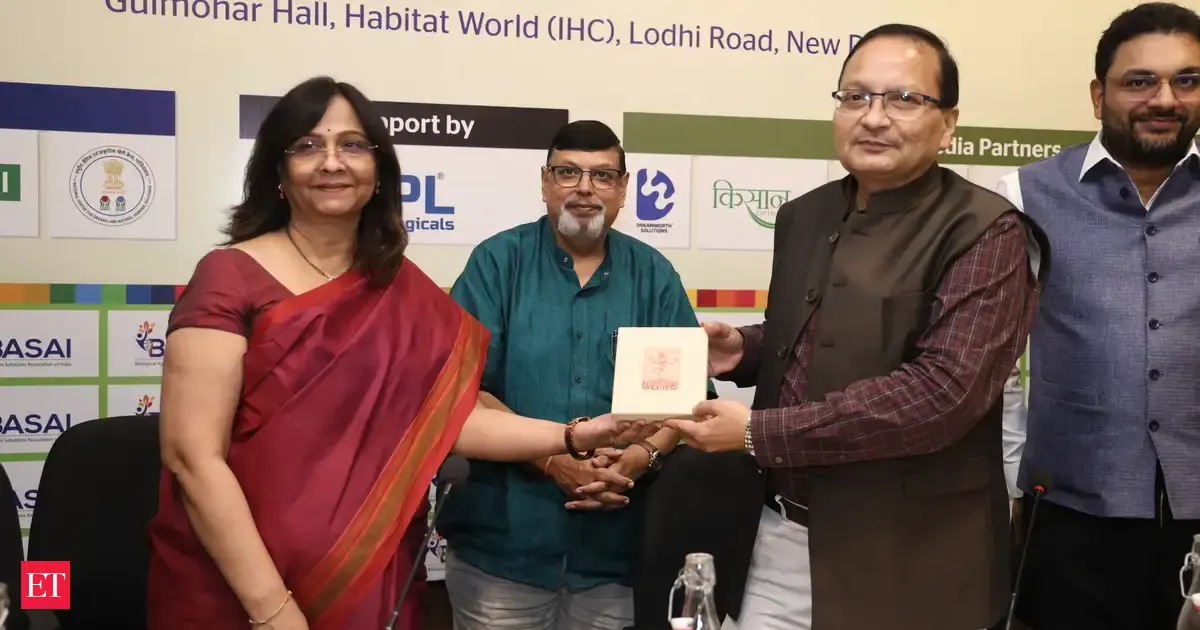
Bio-fertilisers hold an immense and largely untapped potential to reduce India’s dependence on imported mineral fertilisers, according to Suresh Kumar Chaudhari, Director General of the Fertiliser Association of India (FAI).Speaking at FAI’s training programme on ‘Bio-fertilisers for Agricultural Sustainability’ in Port Blair recently, he said that even a realistic 20 per cent nutrient supplementation target through bio-fertilisers could reduce greenhouse gas emissions from farmland by up to 40 per cent.Stating that integrated nutrient management combining mineral fertilisers, bio-fertilisers, and organic inputs in the right proportion is the only scientifically validated pathway to sustaining soil health and long-term agricultural productivity, he said this conclusion has been firmly established through six decades of long-term fertiliser experimentation in the country.Step up on 3 frontsHe called on industry to step up on three fronts. These included scaling up production capacity through greater private and cooperative investment; maintaining rigorous quality from manufacturing to the farmer’s doorstep; and developing innovative, location-specific microbial formulations. Unlike mineral fertilisers, bio-fertiliser efficacy is inherently soil and ecosystem-specific, and cannot be applied as a one-size-fits-all solution, he said.A media statement said that participants from 15 companies and institutions, including scientists from the ICAR system, fertiliser industry representatives, and government officials participated in the four-day residential training programme.Published on May 19, 2026
Fertiliser Association of India asks stakeholders to explore potential of bio-fertilisers
A realistic 20% nutrient supplementation target through bio-fertilisers can reduce greenhouse gas emissions from farmland by up to 40% , says the association director-general SK Chaudhari
210 words~1 min read