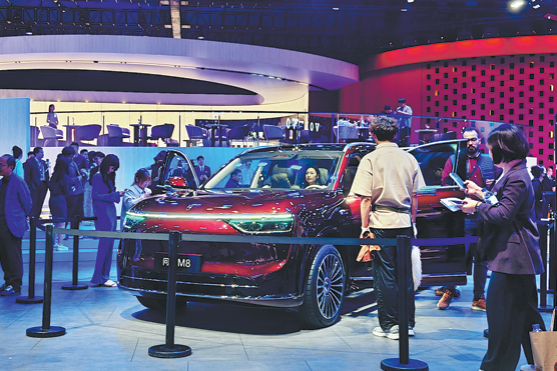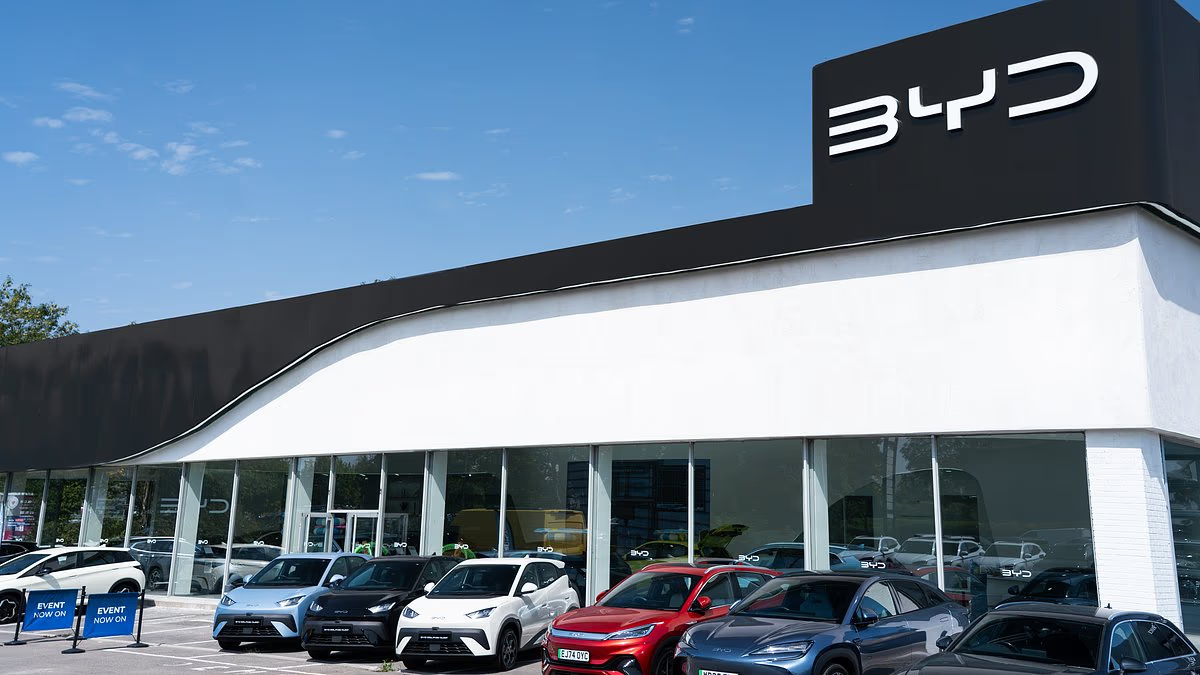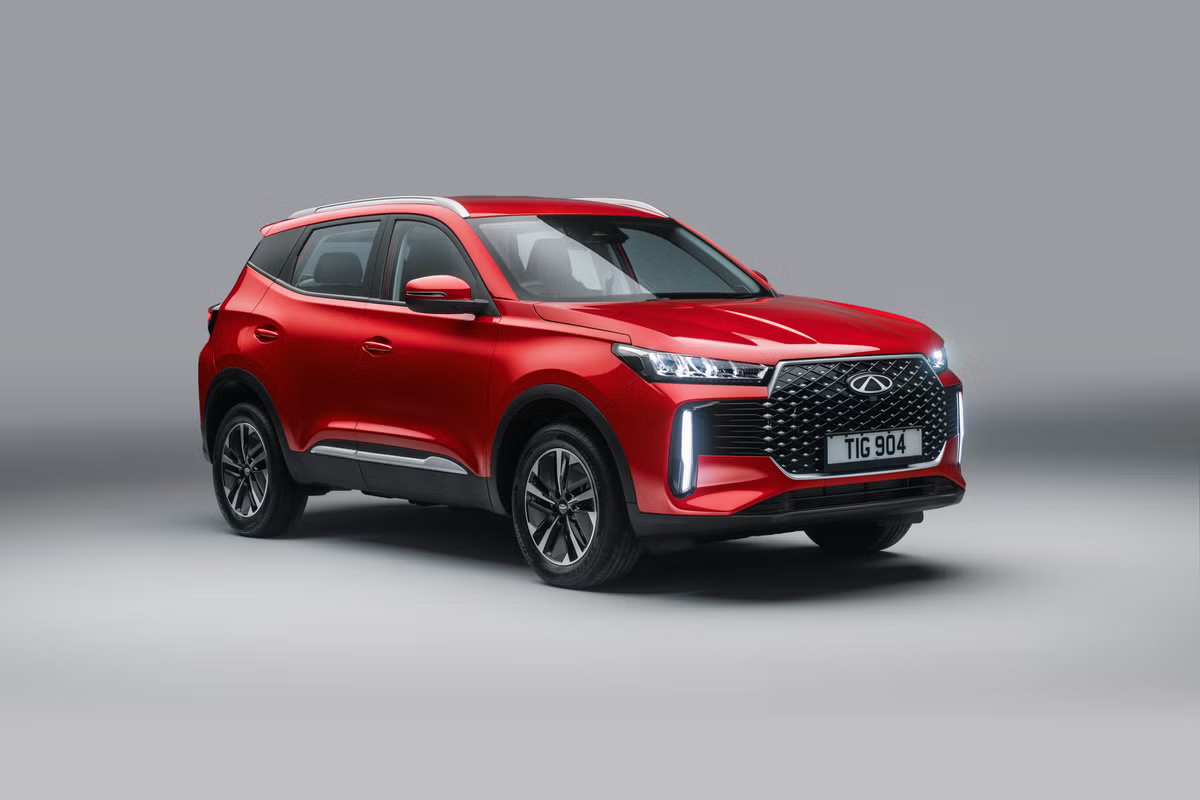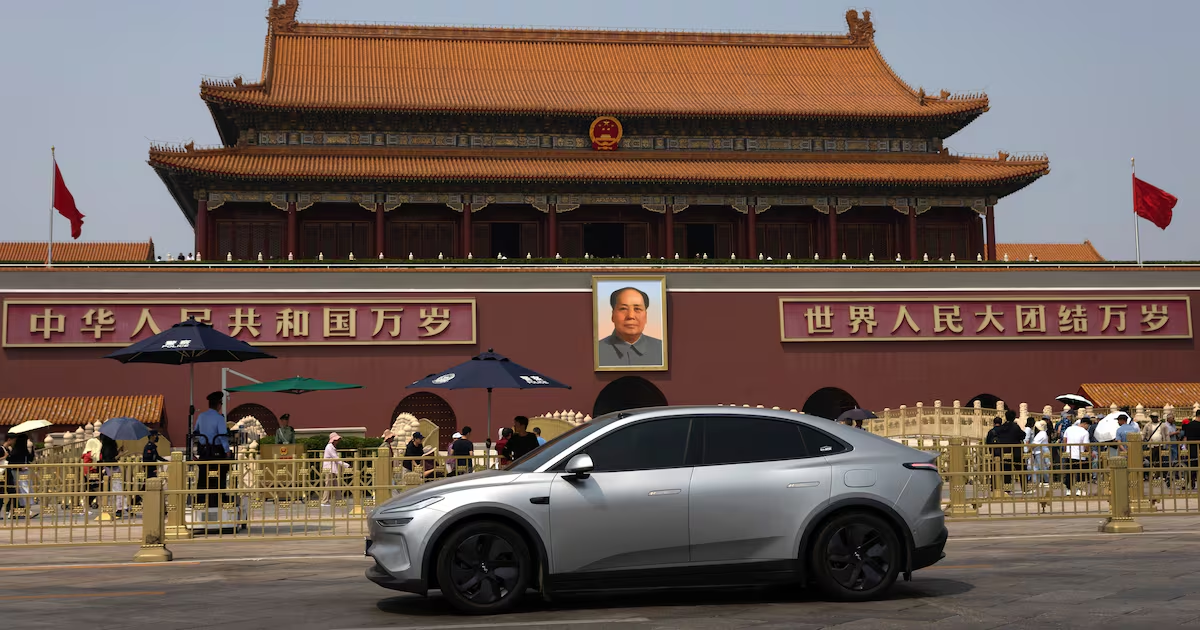
Why are people spending double the money on BMW, Mercedes, Volvo, etc, when similar quality and better tech is available in the Chinese brands? Are the big premium brands on their way out? Will they pivot to re-establish themselves? Or are the Chinese brands a fad?From Keith, Co Dublin Well, I think we can safely say two things. One is that Chinese brands are most definitely not a fad. Secondly, the big established premium brands are not on their way out, although they may well have a rocky few years ahead.The rise and rise of the Chinese brands will probably take one of two broad paths. On one path, their incredible industrial base and the fact they are effectively backed by government cash means they can outbuild and outsell European, Japanese, Korean and American brands. It could lead to a situation where, potentially, all cars on the road will be Chinese, or at least brands owned by Chinese conglomerates.That’s the apocalyptic outlook and it’s one I don’t share – possibly foolishly.In my mind, the more likely outcome is the second path. As with the influx of Japanese brands in the 1970s (which triggered some similar protectionist trading regulations at the time) and, to a slightly lesser extent, the Korean brands in the 1990s and 2000s, China’s brands will see big successes. This may be followed by some retrenchment and then an eventual finding of their level in the market. In doing so, they may well pinch quite a bit of market share from existing big brands, which we’re already seeing play out in various financial crises at some major car makers.Along the way, we will see casualties. Opel has recently laid off 600 of its engineers and the Stellantis Group – which owns Opel along with a bulging portfolio of other car brands – has announced that a major next-generation Opel SUV model will essentially be a badge-engineered version of a Leapmotor. Leapmotor is a fast-growing Chinese brand, in which Stellantis cannily invested some years ago.Opel isn’t a casualty yet, but it looks increasingly like Stellantis – swollen with too many brands – will, in the coming years, either sell off or shutter some of them. At the same time, they may have to sell spare factory space to Chinese brands keen to start building cars in Europe to avoid import tariffs.Opel faces into an uncertain future Ford is also going down this route. It is reportedly about to ink a deal with China’s Geely Group to lease or sell some of its spare factory space in Valencia, Spain. Such a deal will start the rumour mill spinning again about whether Ford is really committed to competing in Europe, or whether it will retrench to its strong home base across the Atlantic – a move they have continually denied.So, China wins then? Well, not necessarily . . .We’re already starting to see some problems with overcapacity in the Chinese home market, which is in large part driving the scramble for exports to the rest of the world. Some Chinese brands have said they’re actually struggling to turn a profit in the home market, such is the intense price competition. If, as reported, some Chinese dealers are swimming in stock because the factories have to be kept turning, they are vulnerable to any future economic shocks – whether cars are selling or not. Such an economic shock could perhaps take the appearance of a slowdown or even recession in the Chinese economy. It seems likely that we’re entering something of a Darwinian period for the Chinese car industry. We’ve already seen some Chinese brands go bust – remember HiPhi Motors, anyone? – and it’s probable that once the dust settles, we’ll be left with the big, recognisable brands such as BYD, Geely, MG (SAIC) and the like.When it comes to the premium car brands from Europe – and really, when we say premium, we mean the three big German brands of BMW, Audi and Mercedes, with cameo performances from Volvo (which is Chinese-owned) and Lexus – I don’t think it’s likely that Chinese competition will wipe them out. Certainly not yet, anyway.So far, the big appeal of the Chinese brands has been value-based. Just as Nissan and Toyota did 50 years ago, Chinese car makers are currently offering more standard equipment and longer warranties at more tempting price points than their competition. At the premium level, that kind of appeal wanes quickly. As many brands have learned to their cost – Infiniti, Genesis, even Jaguar and Lexus – it can be very hard to break through the wall of brand equity which insulates the big German trio.Not that they’re going to have an easy ride of it. All three brands have issued various profits and earnings warnings of late as they, as with every car maker, try to navigate the choppy shoals of the current motoring world. This means dealing as much with competing political ideologies as with technical regulations and the whims of the buying public. Right now, Audi is probably the most vulnerable of the three, exposed as it has been of late to faltering sales in the Chinese domestic market and having to deal with US tariffs imposed by the Trump administration, which have seriously punctured the company’s bottom line.Audi has been exposed to faltering sales. Photograph: John MacDougall/AFP via Getty Images Mercedes too has warned of tempestuous trading conditions, but as the company that effectively invented the modern car passes into its 140th year, it’s hard to see the appeal of that three-pointed star fading any time soon.BMW appears to be in the best position, not least as it seems to be among the first of the big car makers to crack the electric car code. Its impressive Neue Klasse iX3 SUV is proving so popular that BMW simply can’t make enough of them at the moment, but even then, the Munich brand’s recent profits announcement was relatively flat. However, the premium brands have one big advantage – they make cars that are great to drive, and by and large, Chinese brands don’t (so far). This matters. Even if people generally say they only buy a car to go from A to B, a car’s dynamic performance – both in terms of handling and comfort – is a big deal. It will be interesting to see how the customers who’ve flocked in the UK market to the likes of the aggressively-priced Jaecoo 7 will come back in three years’ time for another, given that it’s utterly mediocre to drive.Equally, a recent online comment on a piece about Mercedes’ new electric CLA had it that “BYD or similar can give you the same car, so why pay three times as much for the Mercedes?”.Well, for a start, in terms of comparable range on one charge, the Mercedes isn’t three times the price of an equivalent BYD Seal EV saloon, and equally, good though the BYD is, it’s nothing like as good to drive as the Mercedes. It’s a similar story elsewhere. This week, I’m driving an MG S6 EV SUV, which looks good, has a gorgeous cabin and decent real-world range. But every time it hits a bump, it sounds as if the suspension is going to come off. European car makers, premium ones especially, do this kind of thing better.There’s another issue – image. Chinese brands are scrambling to build up a desirable image, but because their appeal is almost entirely based on value, that’s hard to do. So, no, the premium brands aren’t going anywhere for now. This is not least because a big part of their appeal lies in how they drive and how they make the driver feel. Pin-sharp driving dynamics seems to be, for now, a code that the Chinese car makers for the most part can’t crack. Put it this way: when Chinese giant Geely wanted to get into the premium car market, rather than doing its own thing, it simply bought Volvo. When Toyota wanted to get into the premium market, it created the quite brilliant Lexus brand from scratch, and four decades on Lexus – in spite of having the engineering and marketing might of Toyota behind it – still struggles to match BMW or Mercedes for global sales.Mind you, ask me again in five years and I might have a different answer.
Will the Chinese brands roll over the big premium players? It could go one of two ways
Motors help desk: Practical advice on your motoring queries, from buying and selling to issues you have with your current car
1,393 words~6 min read