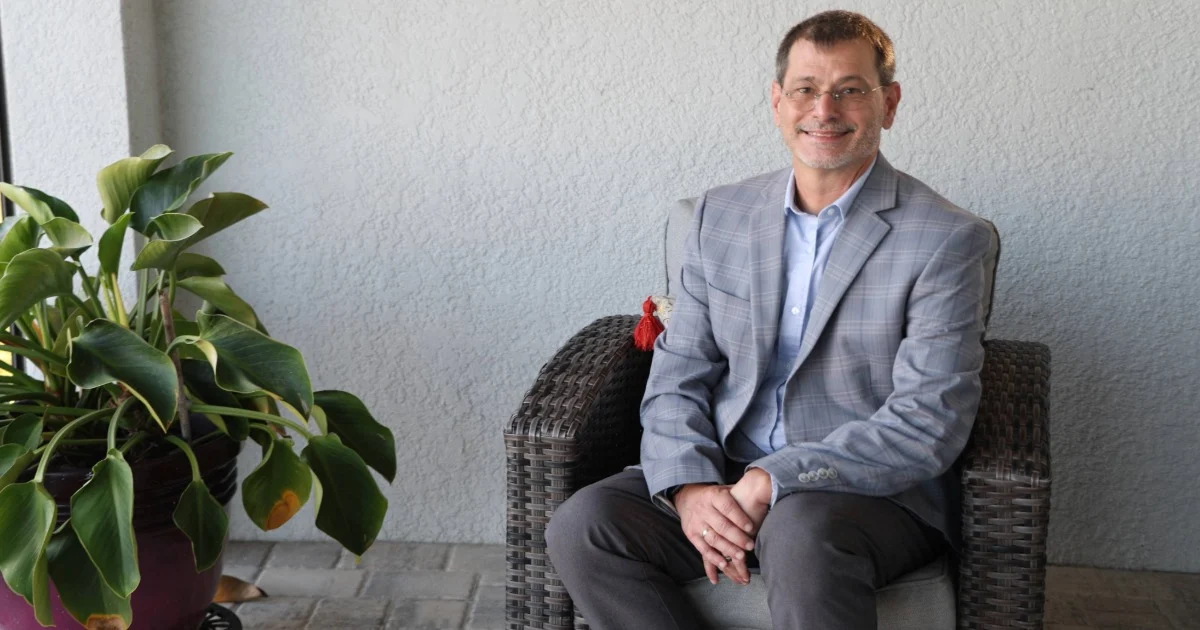
At 10 o'clock on a Sunday night in rural Indiana, a patient with a urinary tract infection usually has bad choices. They could wait until Monday and hope a clinic can squeeze them in. Or perhaps drive to an emergency room, sit for hours and pay hundreds of dollars for a prescription that could have been handled in minutes.Dr. Tod Stillson spent more than three decades watching that scene repeat itself across the Midwest. The frustration stayed with him long after individual patient visits ended."Neither option was acceptable, but those were the choices the system offered across the rural Midwest," said Stillson.That frustration is what encouraged Stillson to develop the foundation for ChatRx, a 24/7 telemedicine platform designed to treat common conditions like ear infections, sinus infections and UTIs through asynchronous virtual care. Stillson is CEO and founder.Fast-moving careThe model was meant to move fast. Patients complete an AI-assisted intake, physicians review the case, and treatment decisions are made without appointments or waiting rooms. But early on, Stillson discovered a major bottleneck sitting at the end of the process: prescriptions."The prescribing problem became concrete very quickly," he said. The original workflow relied on eFax routing to pharmacies, and the process was slow and unreliable. Prescriptions failed. Patients waited. Trust eroded.For a healthcare platform trying to serve patients scattered across Indiana, Illinois and Michigan, that kind of delay threatened the entire idea."We needed prescribing to be fast, reliable and embedded before we could responsibly expand," Stillson said. ChatRx eventually integrated DoseSpot, an e-prescribing technology from Interra Health, directly into its clinical workflow. The goal was simple: connect diagnosis and pharmacy transmission in one continuous process instead of bouncing providers between disconnected systems.Real-time prescriptionsToday, when a physician authorizes medication through ChatRx, the prescription is routed electronically to the patient's chosen pharmacy through SureScripts in real time.Stillson said the results were immediate. Before the integration, prescriptions often took 15 minutes or more to process and still carried the risk of failure. After the change, prescribing time dropped to between six and 10 minutes, and "the prescription failure rate dropped to zero."The speed matters because the platform is built around urgency. ChatRx now has completed more than 5,000 clinical assessments across the Midwest while expanding through partnerships with pharmacy networks, employers and rural health systems. According to the company, the full treatment cycle – from symptom intake to transmitted prescription – now takes six to 10 minutes around the clock.Stillson argues that pace changes the equation for rural patients who often live far from urgent care clinics and cannot afford emergency room visits for low-acuity infections. "For the rural Midwest patient who works a shift job, has no urgent care within 45 minutes, and cannot afford an ER visit for a sinus infection, that gap is not a statistic," he said. "It is the reason we built this."A physician-governed systemHe is quick to stress that physicians remain at the center of the process. "ChatRx is not a consumer AI tool that happens to generate prescriptions – it is a physician-governed clinical operating system in which AI assists the clinical intake and the technology supports the asynchronous physician-directed care," Stillson said.The company says its platform now supports more than 39 conditions with diagnostic pathways, red flag detection and structured medication routing built into the system.For Stillson, the larger mission goes beyond software or workflow efficiency. After decades practicing medicine in small-town America, he sees the platform as an attempt to close a widening healthcare gap that traditional systems have struggled to solve.In many parts of the Midwest, getting care quickly can still depend on how far a patient lives from a clinic, how flexible their work schedule is, or whether they can afford to sit in an emergency room for hours. ChatRx, he believes, was built to change that equation.Follow Bill's health IT coverage on LinkedIn: Bill SiwickiEmail him: [email protected]Healthcare IT News is a HIMSS Media publication.WATCH NOW: The cost savings of SDOH
Virtual platform offers a valuable lifeline for rural primary care patients
An Indiana doctor built ChatRx, with e-prescribing built into its workflow, as an alternative to the long-drive, long-wait and high-cost alternative of in-person care delivery.
659 words~3 min read