For a child with dyslexia, the struggles are not just limited to reading and understanding words or comprehension, but over time their challenges are mistaken for poor academic ability, and they grow up with a diminished sense of self-worth.
This is the experience of thousands of children who struggle with the learning disorder that is notoriously hard to diagnose and tackle in conservative education systems like India’s.
IIT-Madras, an institute that has given India some of its finest technologists and most innovative start-ups, has now geared up to address this very challenge.
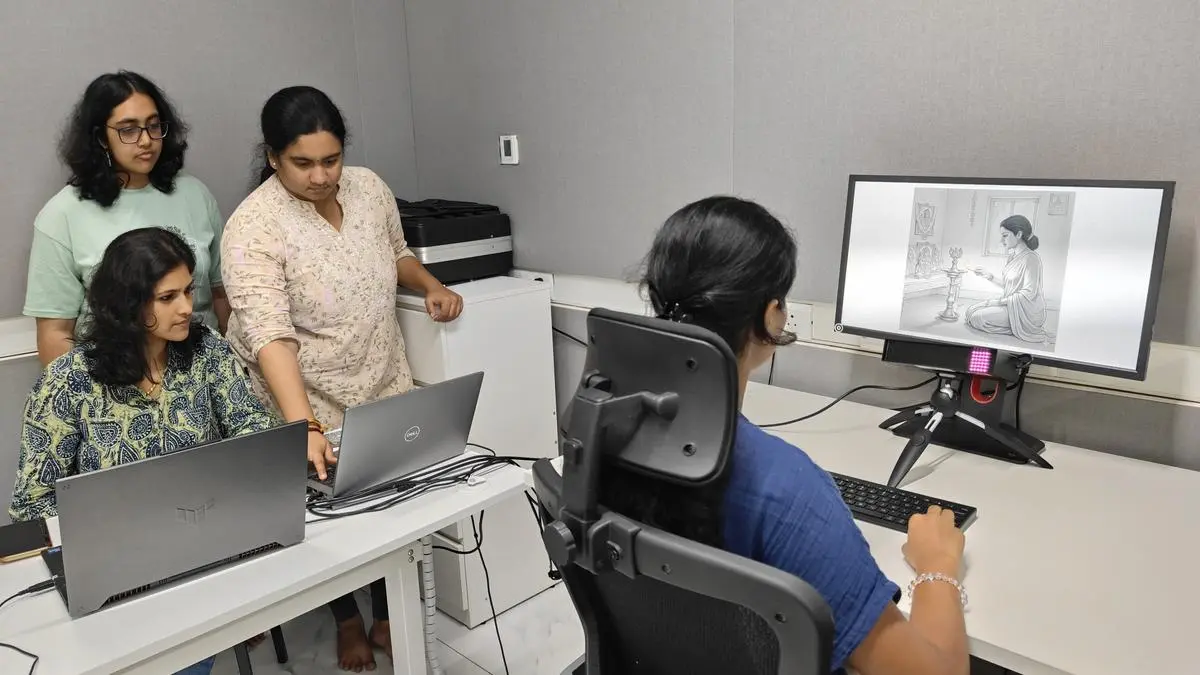
The institute’s Language and Cognition lab, set up in November last year, aims to use eye-tracking technology to study how people process language. Anindita Sahoo, a faculty at the Department of Humanities and Social Sciences in IIT-Madras, heads the lab along with a youthful team of 10 researchers.
“The underlying idea is the eye-mind hypothesis. Using the device we track pupil movement, fixations and blinking patterns while a person reads to analyse how they process and understand words. The harder the word is to process, the more time they fixate on it,” Sahoo explains.