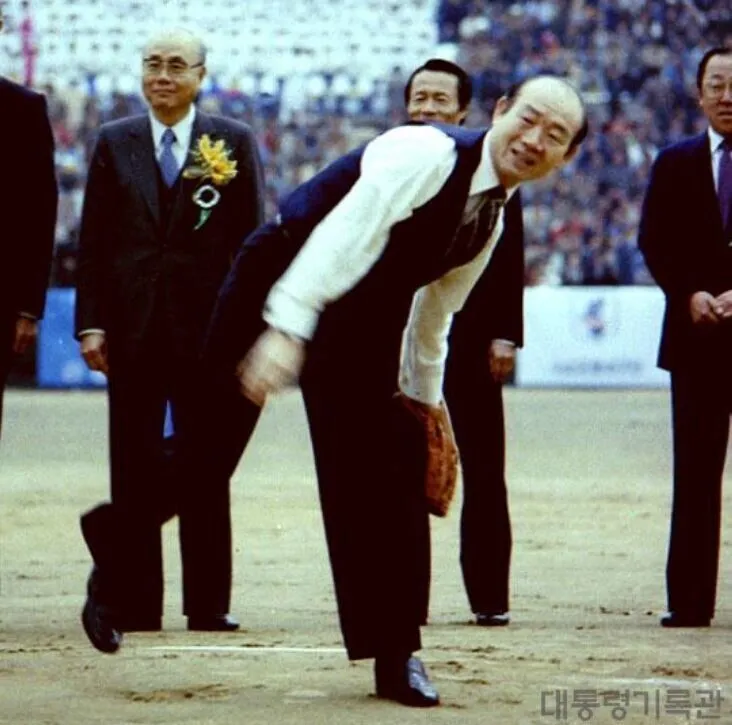
Chun Doo-hwan throws out the inaugural pitch of the first game of Korea’s professional baseball league. (courtesy of the Presidential Archives)
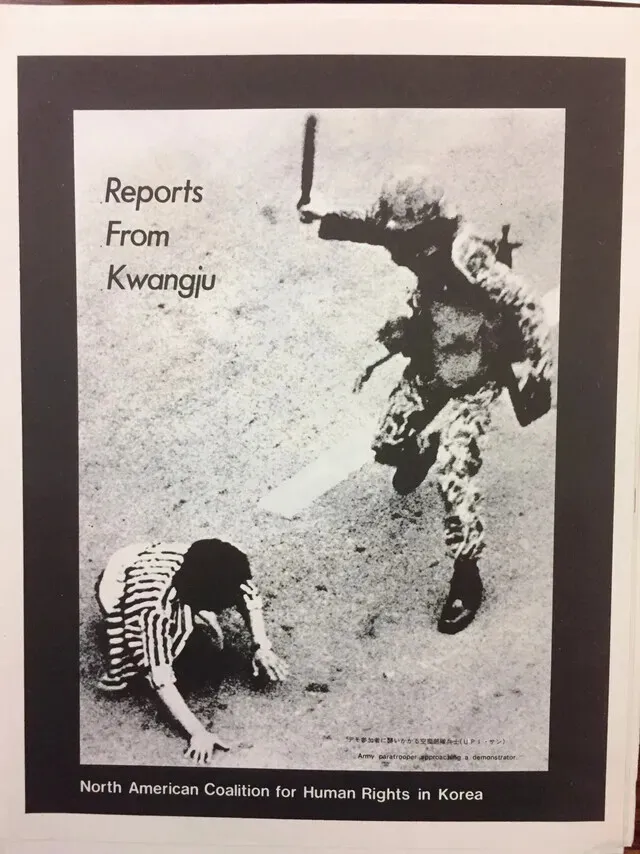
Memories of the Gwangju massacre were more than a thorn in the side of Chun Doo-hwan, they were something that needed to be erased. It was no coincidence that then-Blue House press secretary Heo Mun-do scheduled the start of the massive Gukpung 81 festival to fall 10 days after the first anniversary of the Gwangju Uprising. The festival featured singing contests and theater competitions, an academic forum, and exhibitions of traditional arts such as nong-ak farmers’ music, talchum mask dancing and archery. Gukpung 81 had international food stalls and performances by top musicians such as Cho Yong-pil and the Great Birth, Shin Jung-hyeon and Music Power, Song Chang-sik, and Kim Chang-wan. A Seoul National University band won the grand prize at its singing competition, in which 6,000 students in 250 clubs representing 197 universities across the country participated. The government had manufactured this event in order to be remembered as having put on a world-class festival and to shift public attention away from politics.Ironically enough, Chun — a man who rather than seek legitimacy for his rule, began it with a massacre — brought about diverse changes to Korean culture. He intended to distract the people by implementing a policy known as the “Three S’s” — sex, screen and sports — which involved establishing professional sports leagues, easing censorship in extra-political domains, and lifting the nighttime curfew. This plan did not go as intended, however. Relaxing these strictures did not make the populace complacent or docile, but rather whetted their appetite for freedom and democratization.