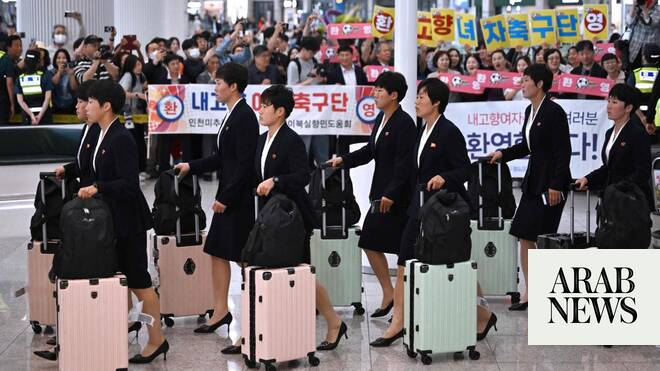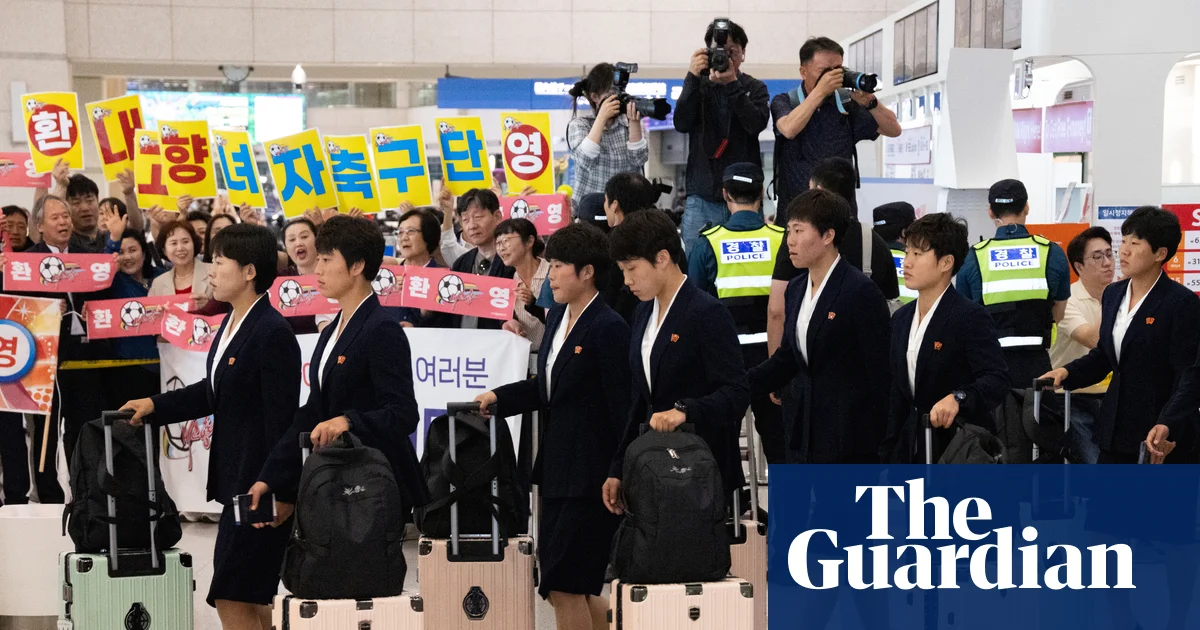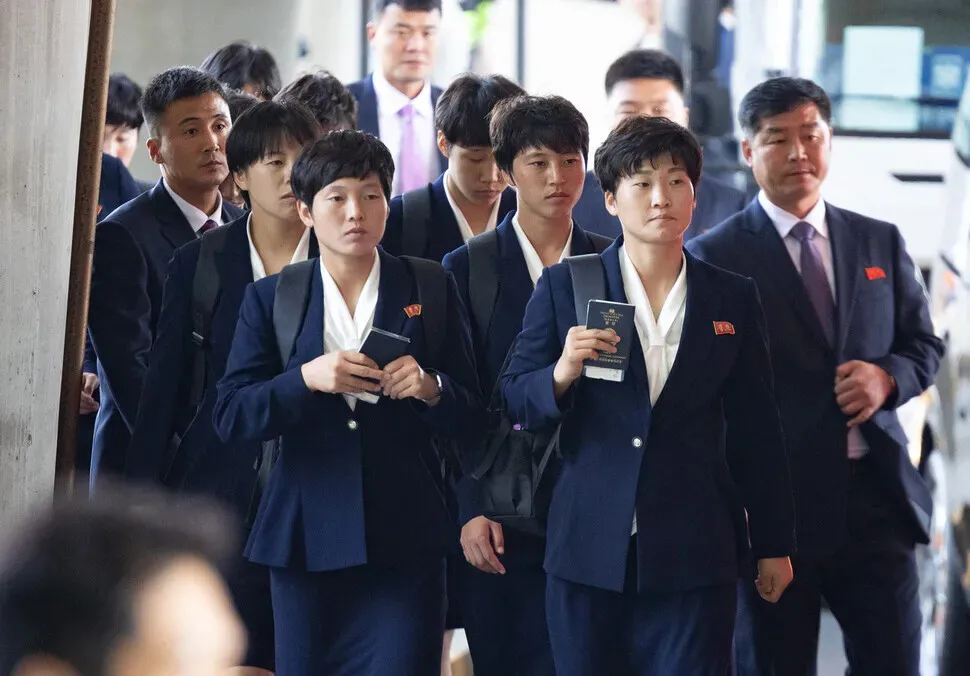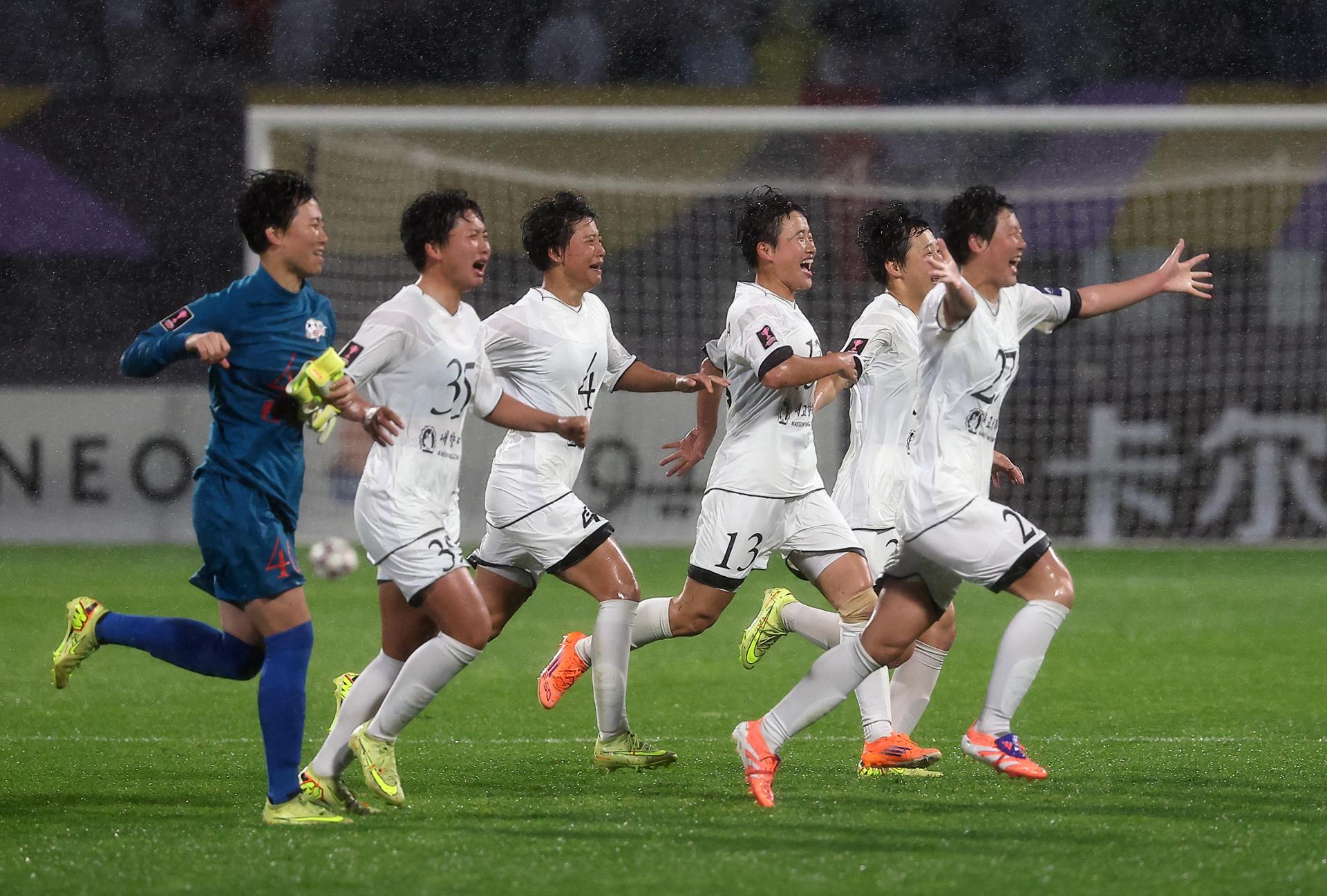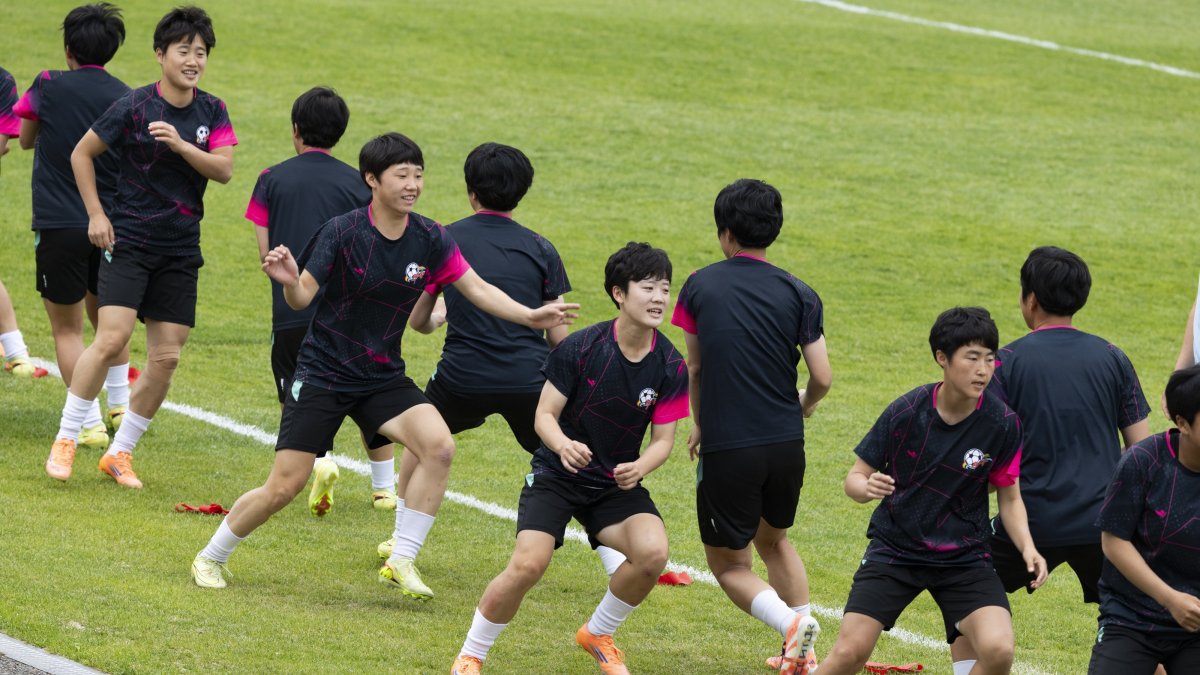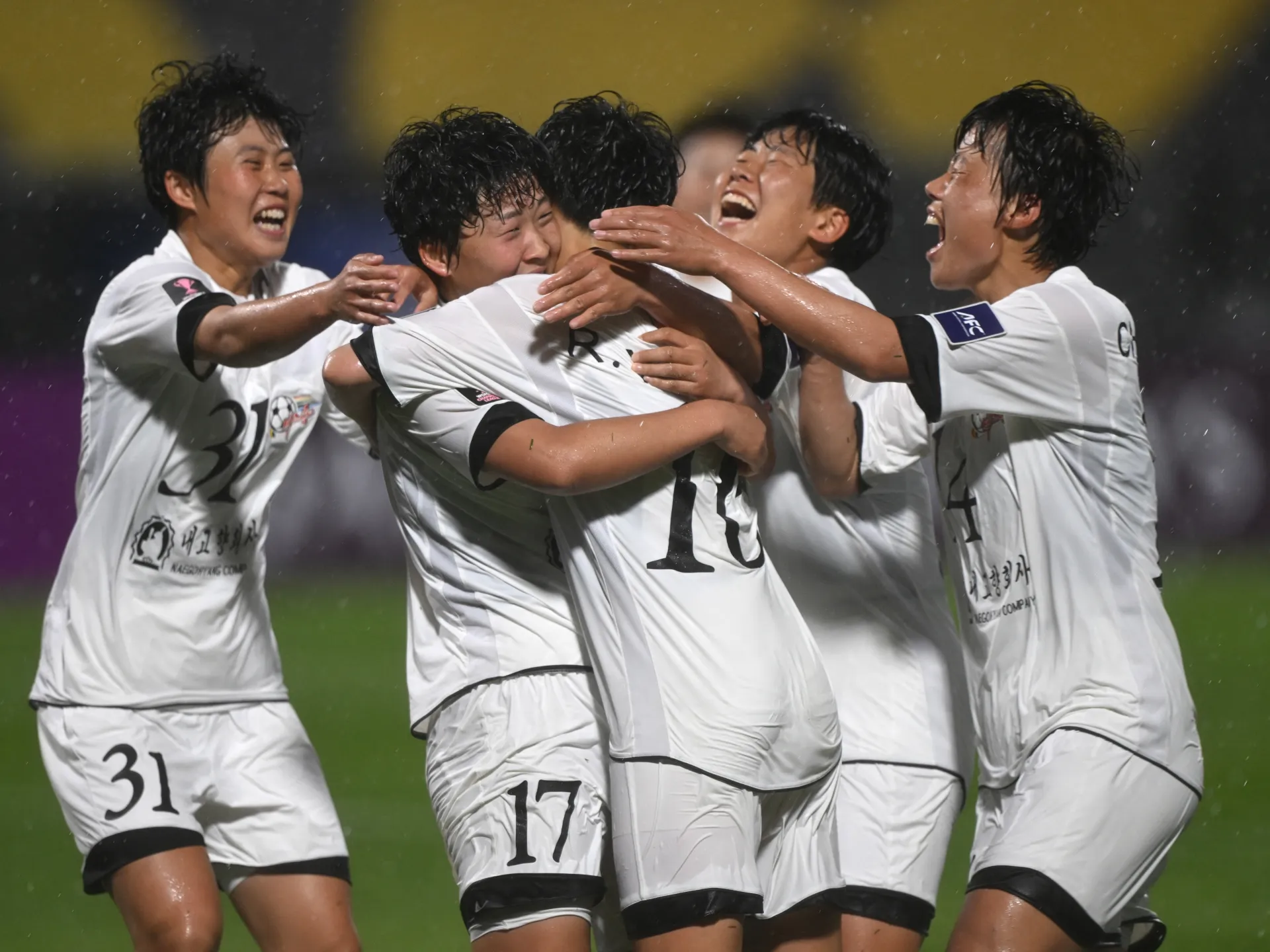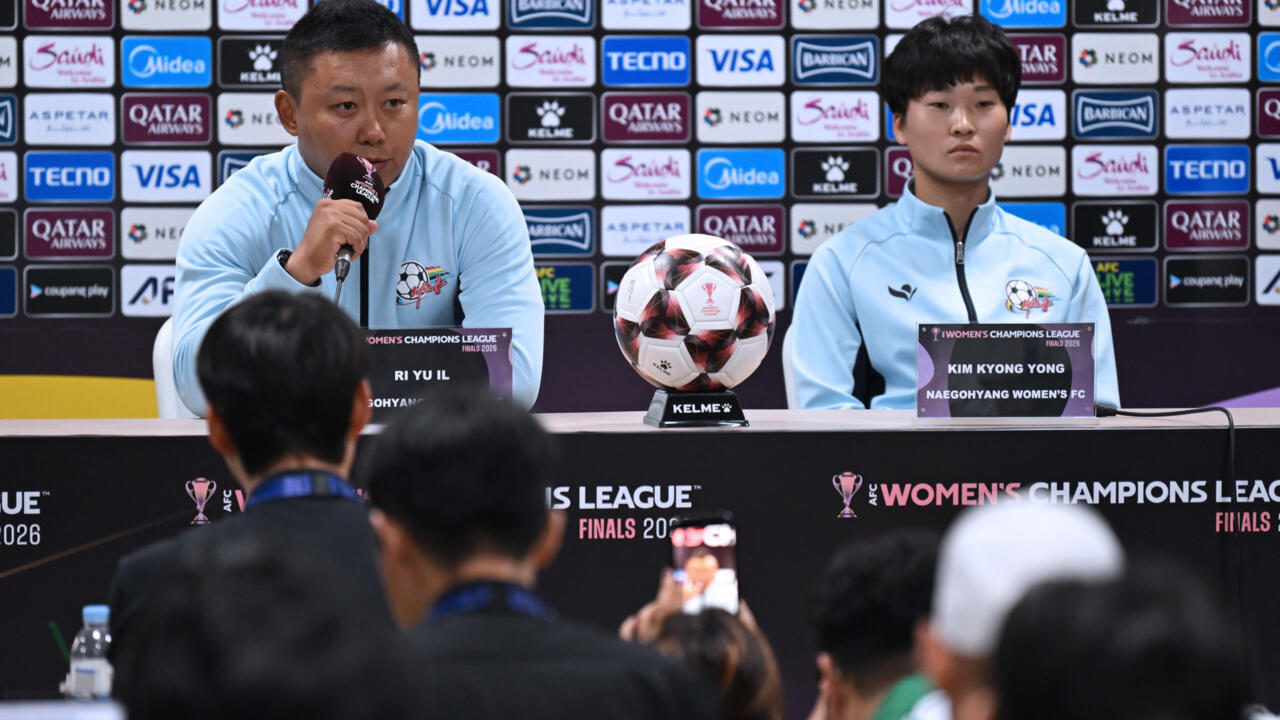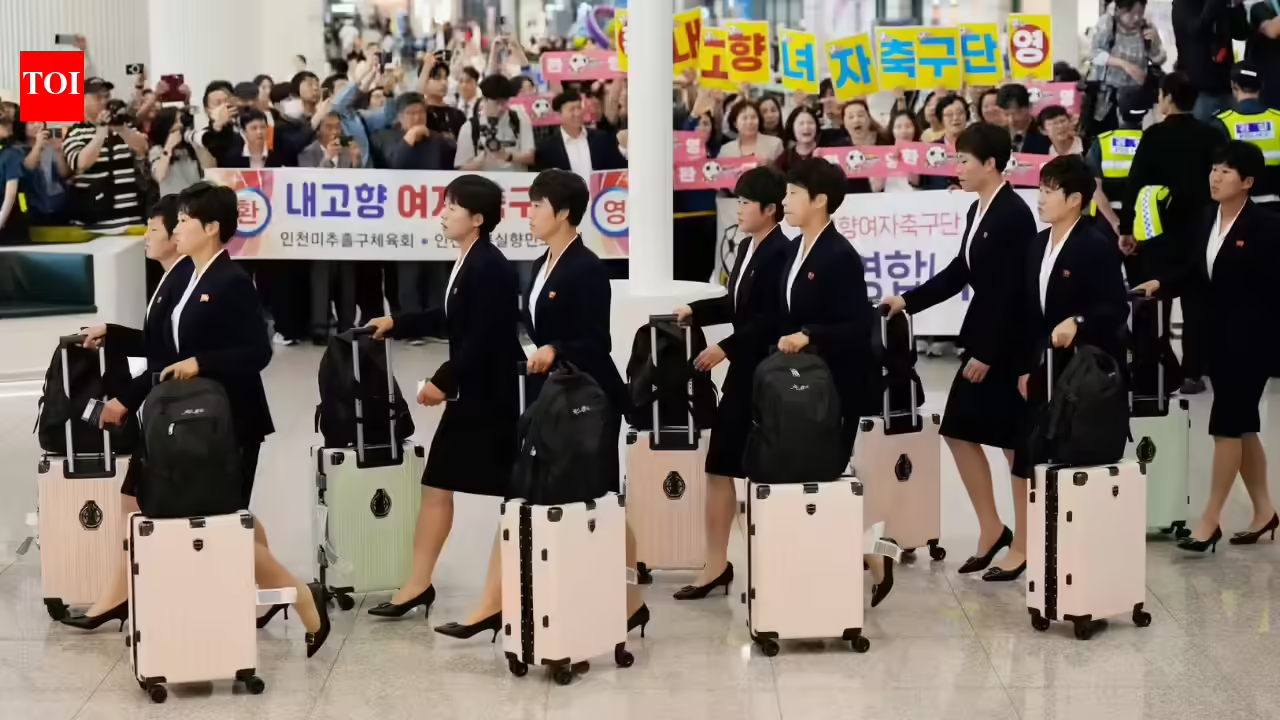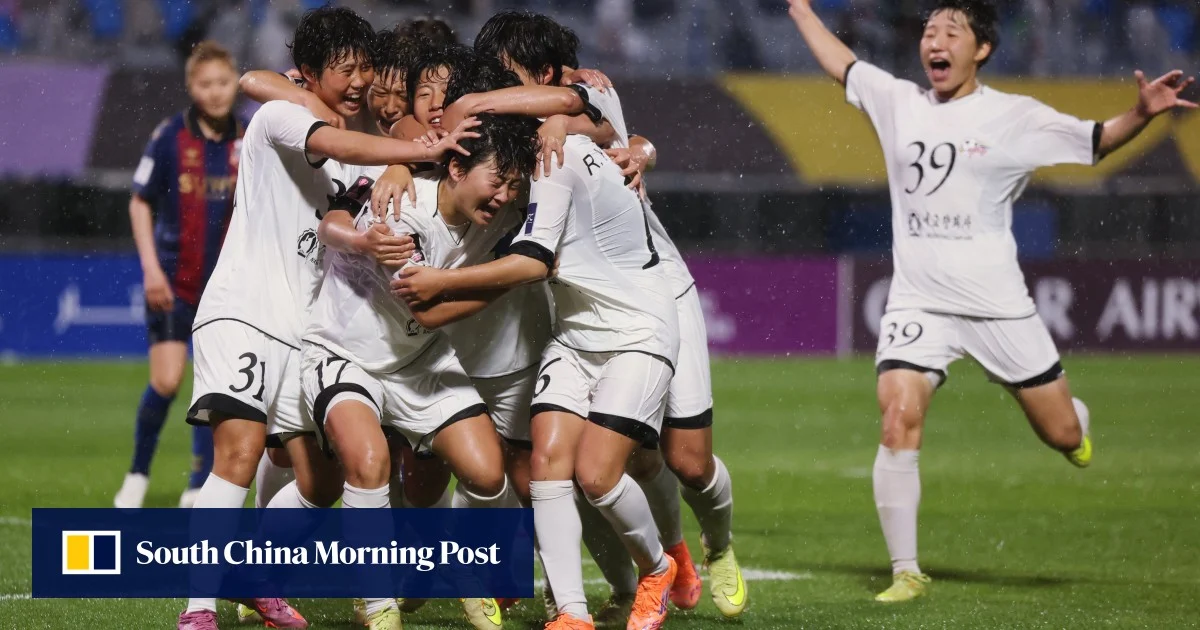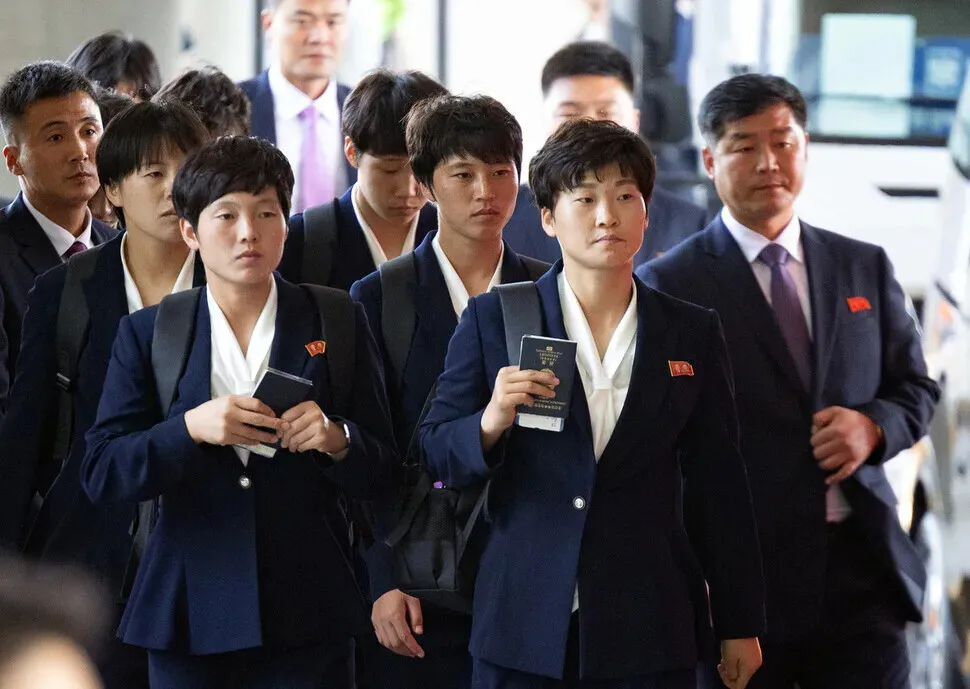
Players from North Korea’s Naegohyang Women’s FC arrive in South Korea via Incheon International Airport on May 17, 2026, ahead of their semifinal match in the AFC Women’s Championship League. (pool photo)
The North Korean women’s soccer team Naegohyang Women’s FC arrived in South Korea on Sunday to compete in the Asian Football Confederation (AFC) Women’s Champions League, their tense expressions at the airport a testament to the strained relationship between the two Koreas. Naegohyang’s arrival marks the first time in eight years that a North Korean sports team has visited South Korea, the last having been during the International Table Tennis Federation World Tour Grand Finals in December 2018, during a relative thaw in inter-Korean ties. When the North Korean women’s soccer team appeared in Incheon International Airport’s Terminal 1 arrival hall on Sunday afternoon, sporting navy skirt suits adorned with pins of the North Korean flag, cheers from members of organizations for North Koreans displaced by the Korean War, organizations dedicated to Korean reunification, and ordinary South Koreans echoed throughout the airport. A considerable number of people held banners that read “Welcome, Naegohyang Women’s FC,” and others held smaller signs that simply said “Welcome.” However, the players, who filed behind general manager Hyon Chol-yoon and head coach Ri Yu-il, walked by swiftly with stony faces. When asked by the press to elaborate on how he felt upon his arrival in South Korea and to share his strategies for the game, Ri responded with silence. It took the team approximately one minute to exit the airport, board their bus, and head to their accommodation in Suwon, Gyeonggi Province. Members of the press and others gathered at the airport to welcome the team asked players to wave, but the athletes’ expressions showed no signs of softening. A total of 35 North Koreans entered the country, including 23 athletes and 12 support staff. The players also submitted their passports during immigration processing, demonstrating the new state of inter-Korean relations following North Korean leader Kim Jong-un’s 2023 declaration that the two Koreas shared relations of two separate and distinct “hostile” states.