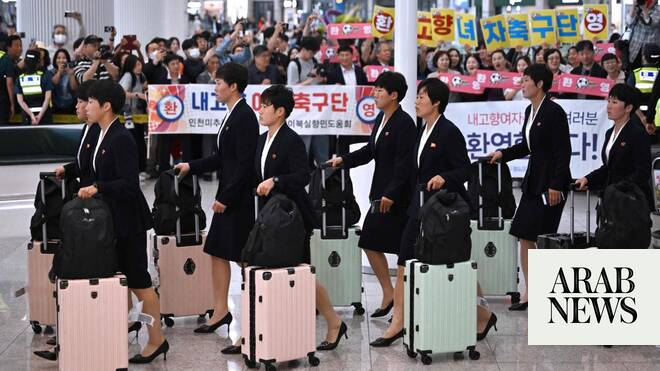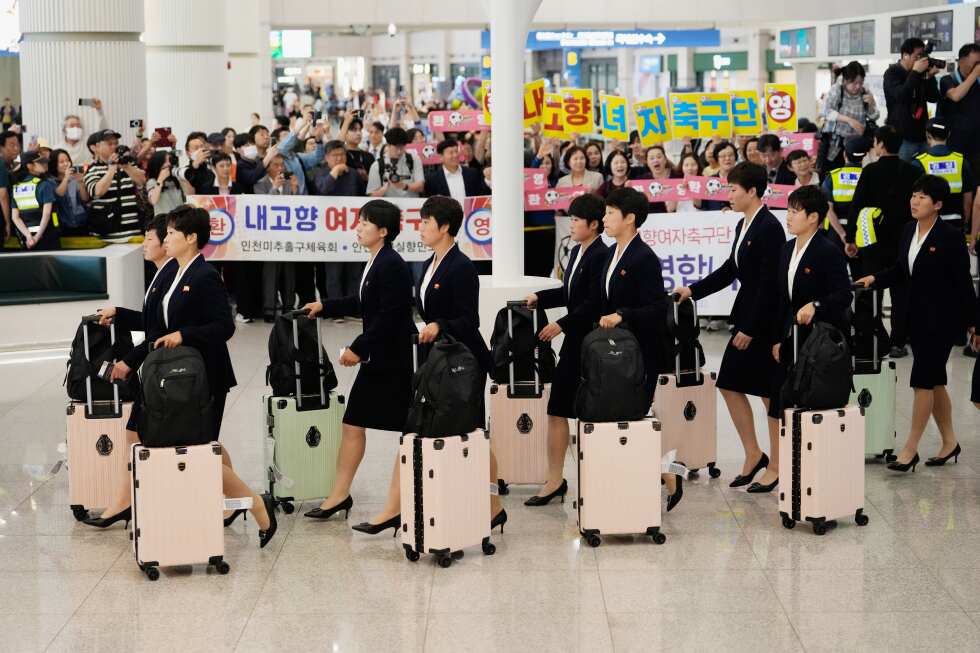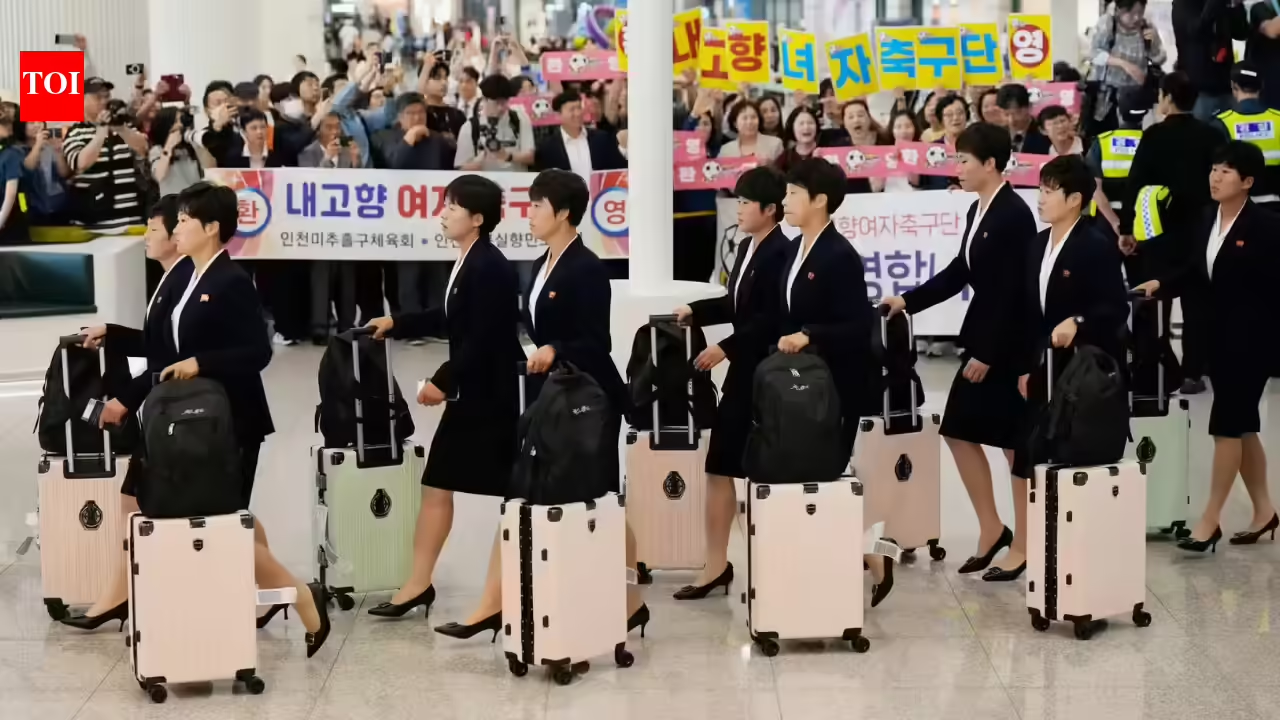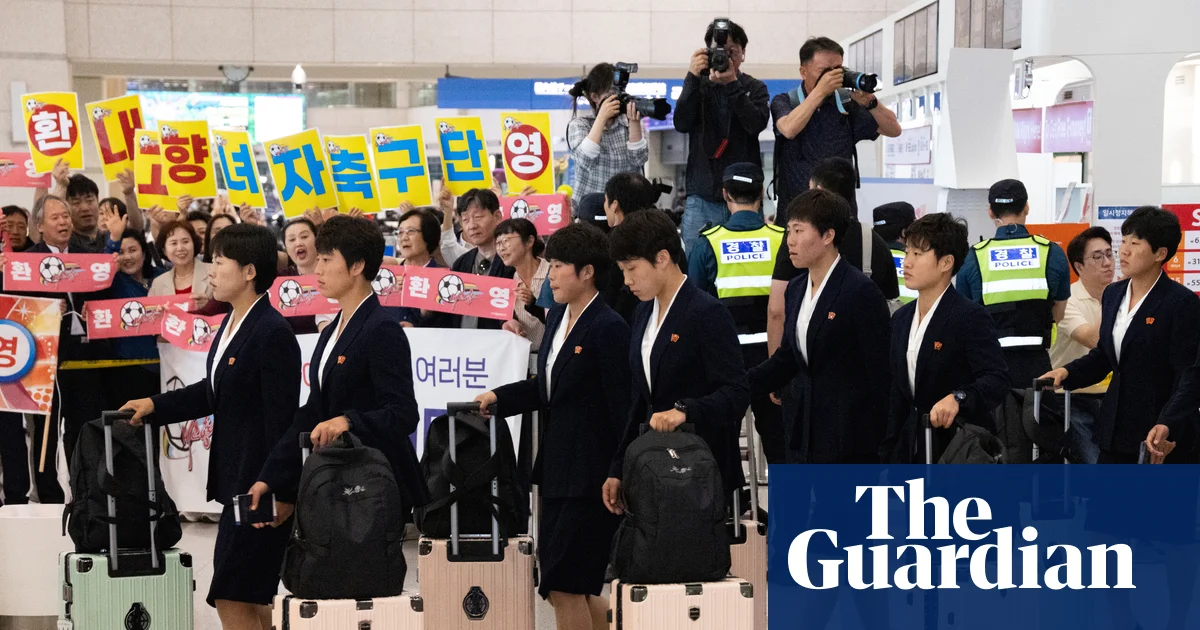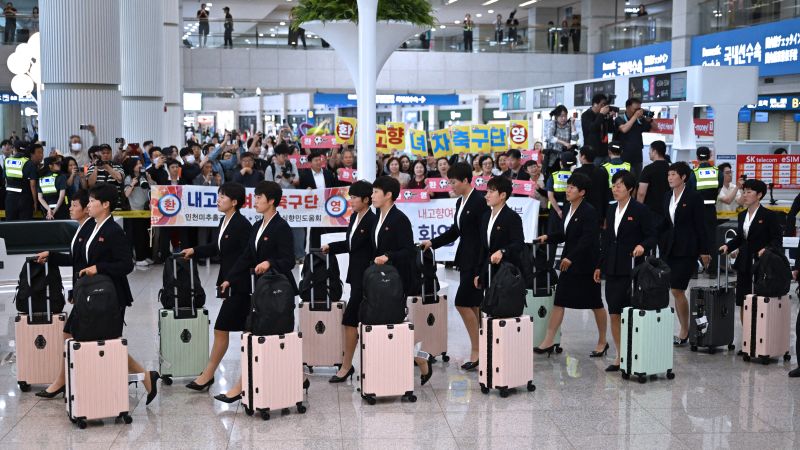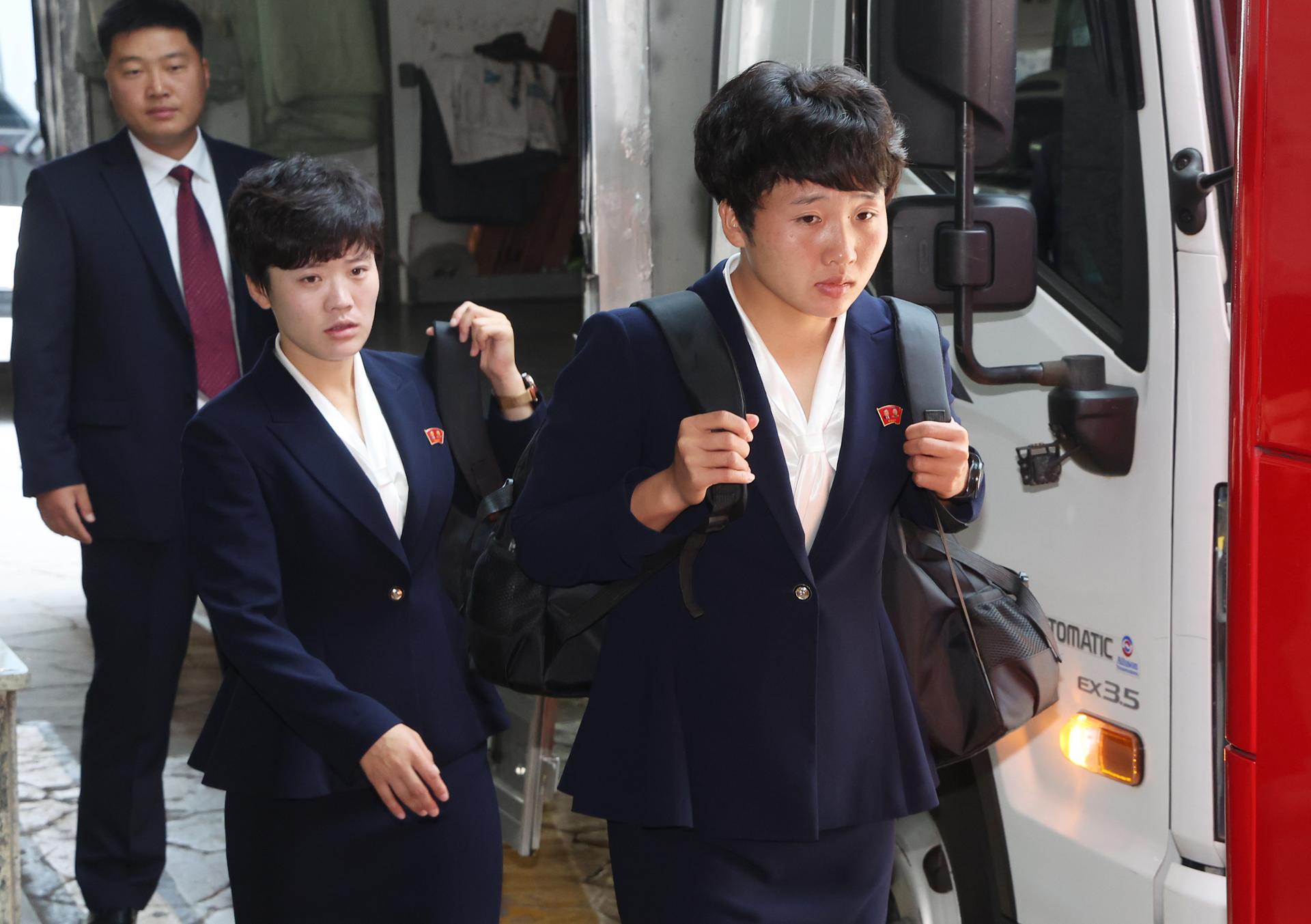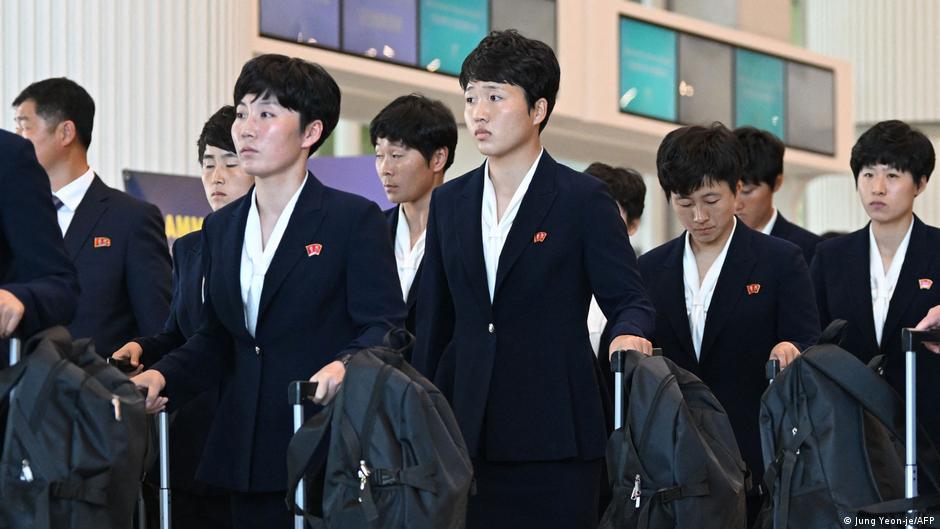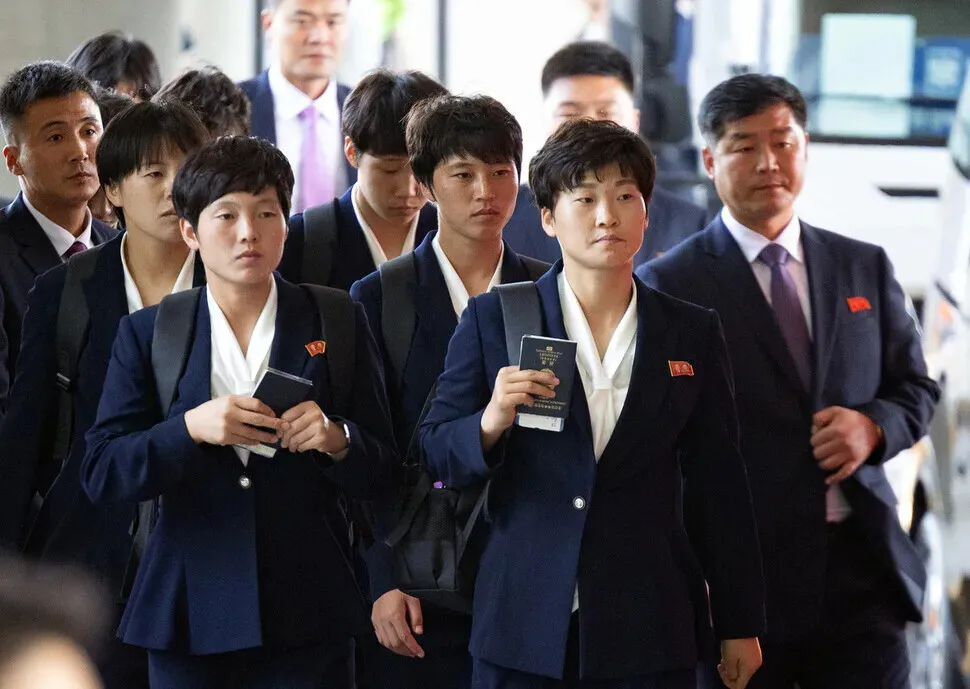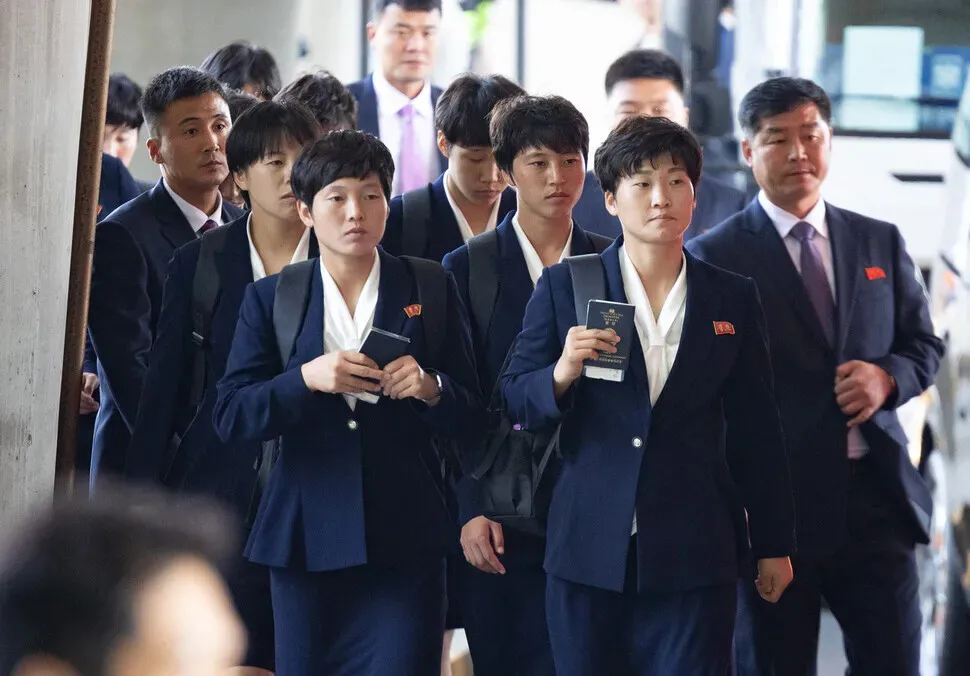
Players from North Korea’s Naegohyang Women’s FC arrive in South Korea via Incheon International Airport on May 17, 2026, ahead of their semifinal match in the AFC Women’s Championship League. (pool photo)
On Sunday, 35 athletes and coaching staff associated with the North Korean soccer team Naegohyang Women’s FC landed at Incheon International Airport ahead of their semifinal match in the AFC Women’s Champions League.Passing through immigration, the team members submitted their passports, rather than the “visitation certificates” that South and North Koreans have long used in inter-Korean visits. That change echoes an amendment to North Korea’s constitution enshrining the two-states doctrine.South Korean officials skirted a potential dilemma by treating the passports as reference materials without officially acknowledging the North Korean position. That clears the way for our North Korean guests to compete in the tournament. But considering that the passport issue is bound to arise at every instance of inter-Korean exchange, we need to start pondering how to handle it.In March, North Korea formally declared that South Korea is a separate state with an amendment to the territorial clause in its constitution. As if underlining that shift, the North Korean soccer players submitted their Democratic People’s Republic of Korea passports when they arrived in South Korea, instead of the visitation certificates issued by Seoul.The move is evidently a request for South Korea to treat the North as a separate state, rather than as a party of the “special interim relationship stemming from the process towards reunification” outlined in the Inter-Korean Basic Agreement of 1991.Faced with an awkward situation, South Korean government officials only treated the passports as reference materials for confirming the North Korean visitors’ identities and did not issue entry visas. Issuing visas would have meant recognizing North Korea as a separate country, which would clash with the South Korean constitution.In effect, Seoul was forced to find a political compromise that would comply with our constitution without rejecting the North Korean request outright.The North Korean soccer team will remain in Korea for five to seven days, depending on the outcome of its match with Suwon FC Women in the semifinal on Wednesday evening. After the South Korean Ministry of Unification agreed to provide 300 million won from the Inter-Korean Cooperation Fund to groups planning to send cheerleaders to the match on Wednesday, conservative political parties slammed the ministry for “squandering taxpayers’ money on pro-North Koreans cheering on the North Korean team.”What is the point of criticizing the government for disbursing funds legally allocated for inter-Korean cooperation to groups planning to cheer not only the North Korean team but the South Korean team as well? Besides, the funds reportedly cover not only the ticket prices and cheering expenses but also the administrative costs of the groups involved.North Korea must have carefully mulled the decision to send a sports team to South Korea after all its rhetoric about the “hostile” relationship between the two sides.But the athletes’ presentation of passports upon entering the country is a serious matter. There’s no telling whether North Korea will tolerate the same compromise next time, and South Korean athletes may be asked to present their passports when they visit the North.Careful deliberation and strategic consideration are needed to refine protocols that will reflect the altered terrain of inter-Korean relations without clashing with the South Korean constitution or public sentiment. Please direct questions or comments to [english@hani.co.kr]