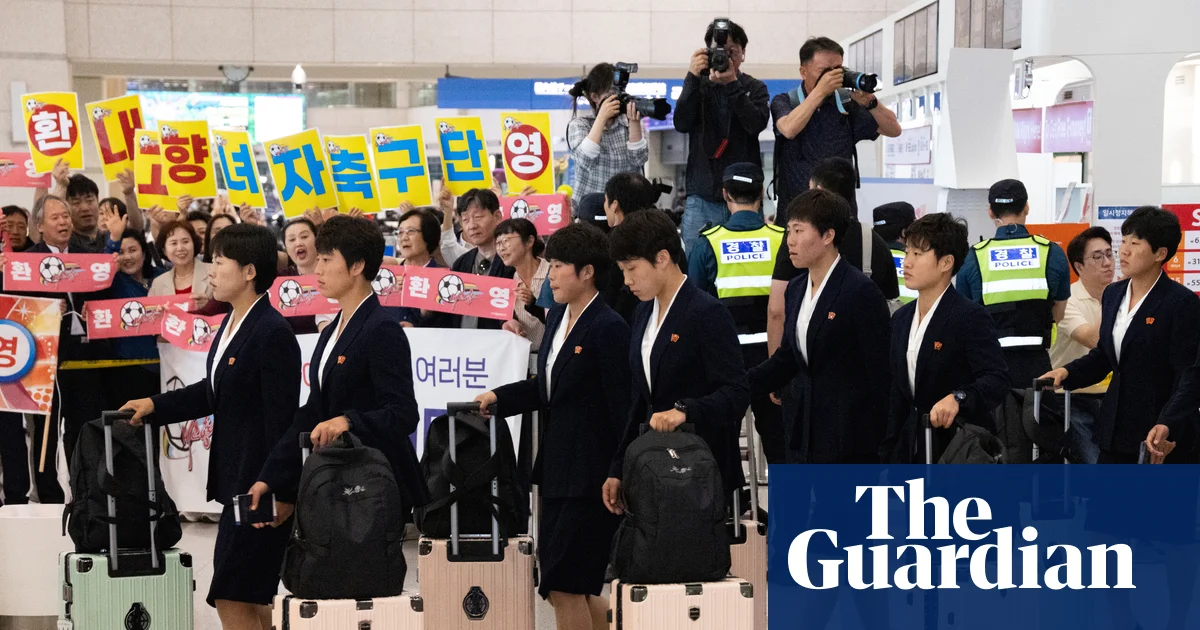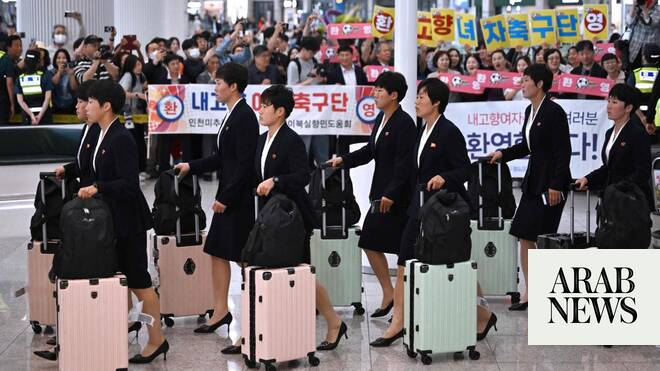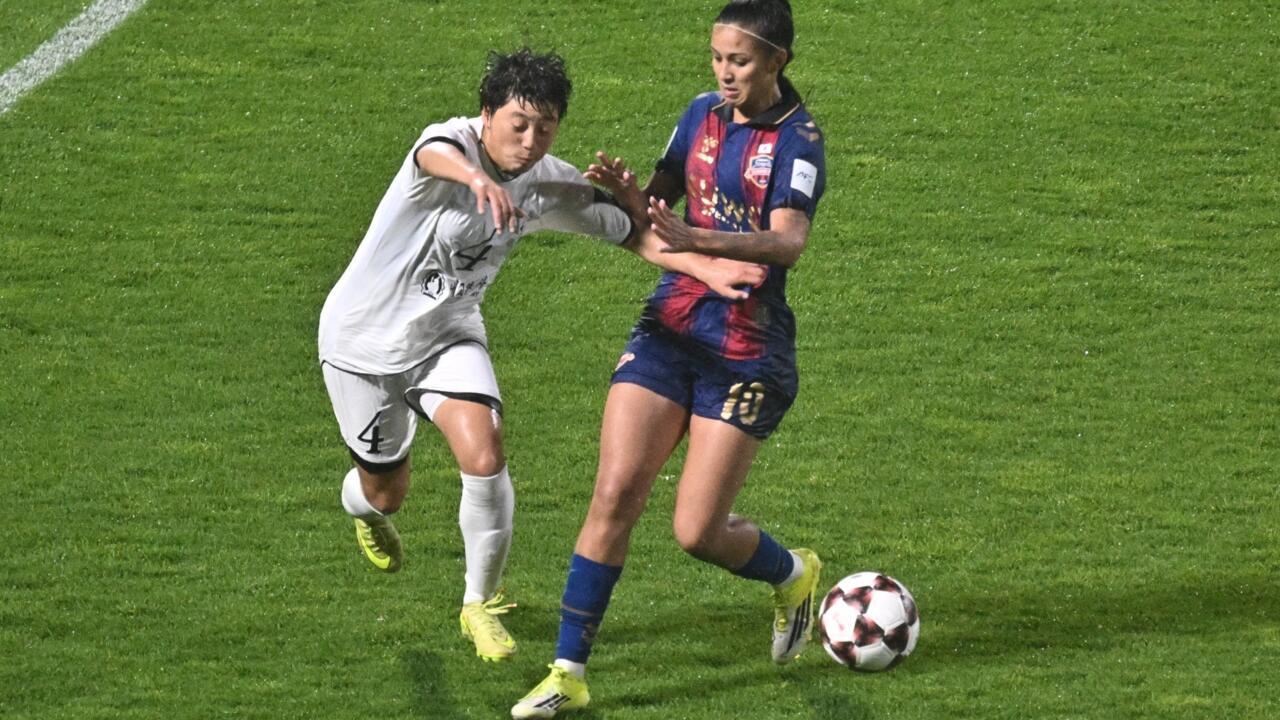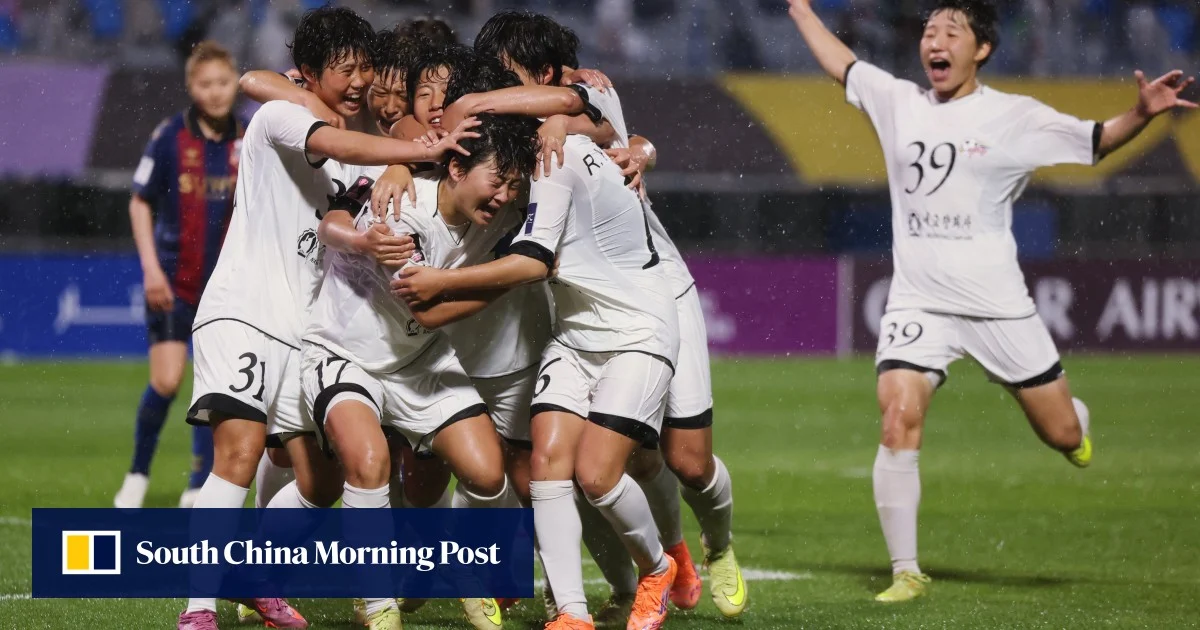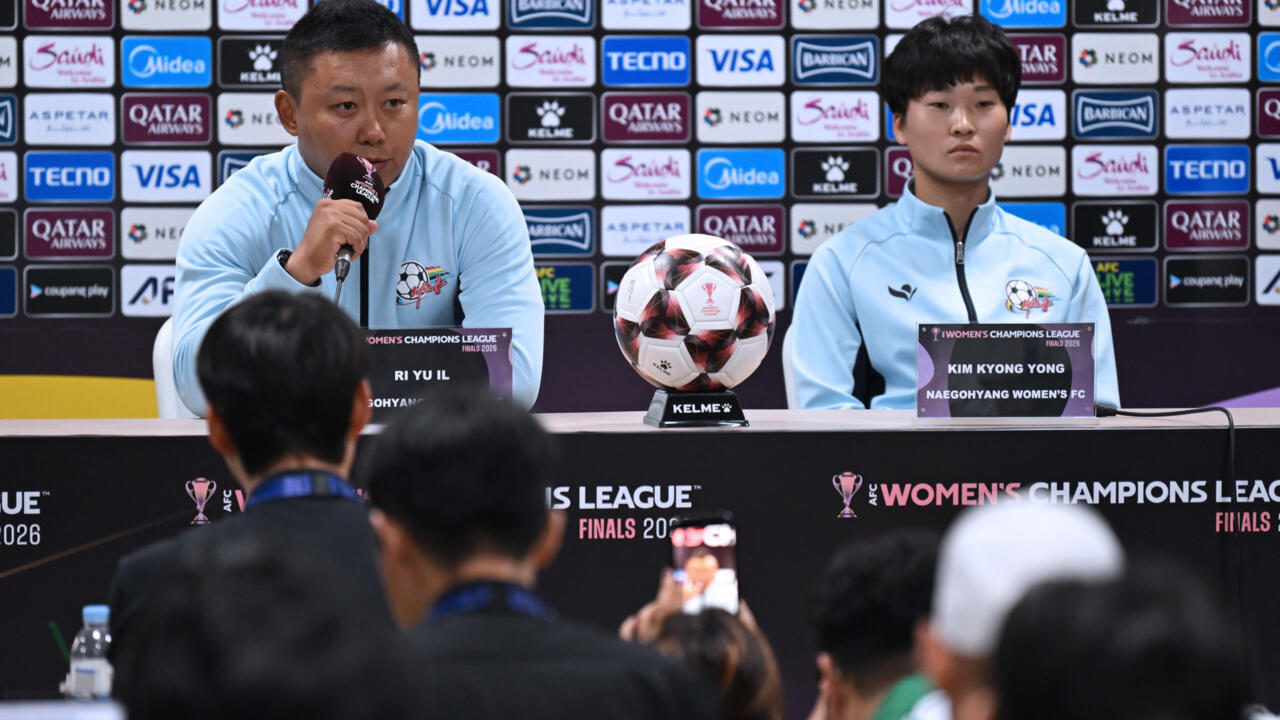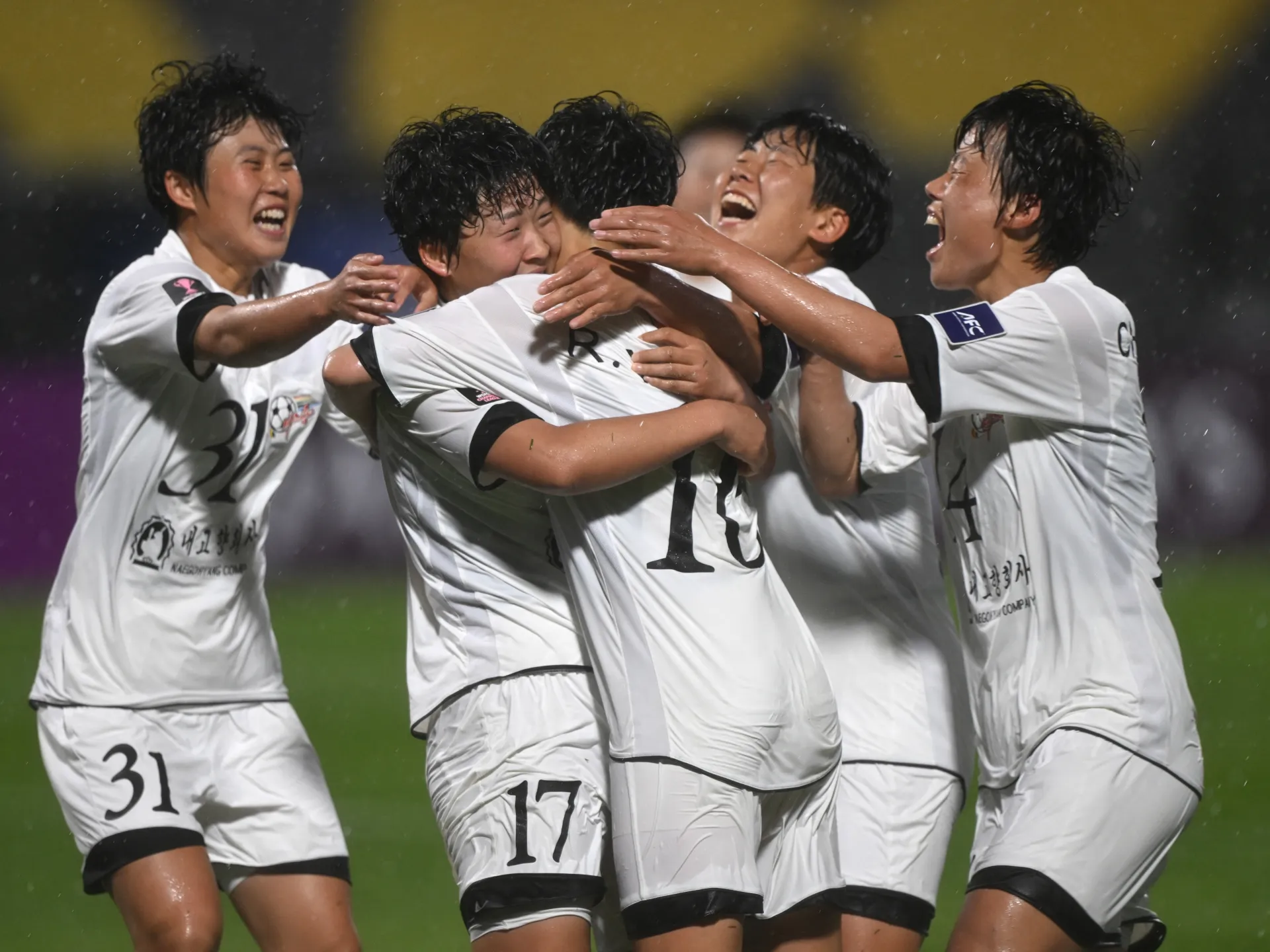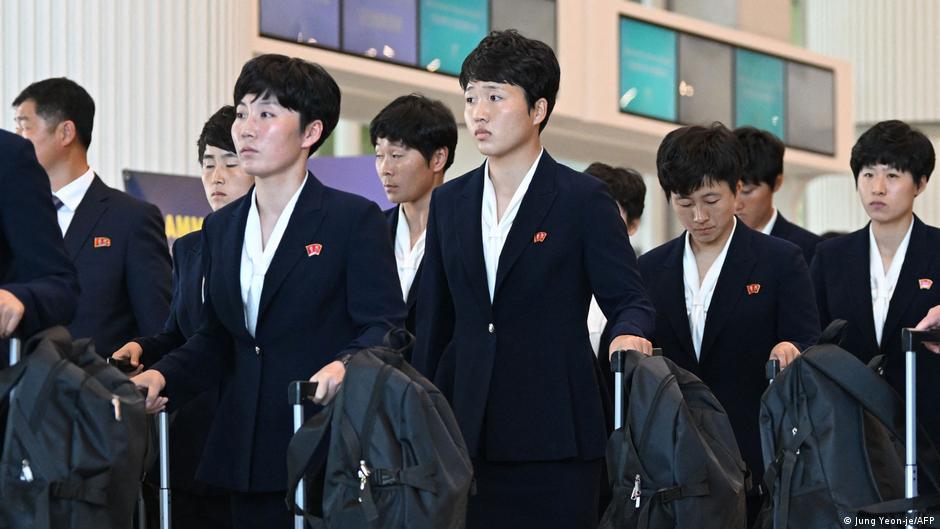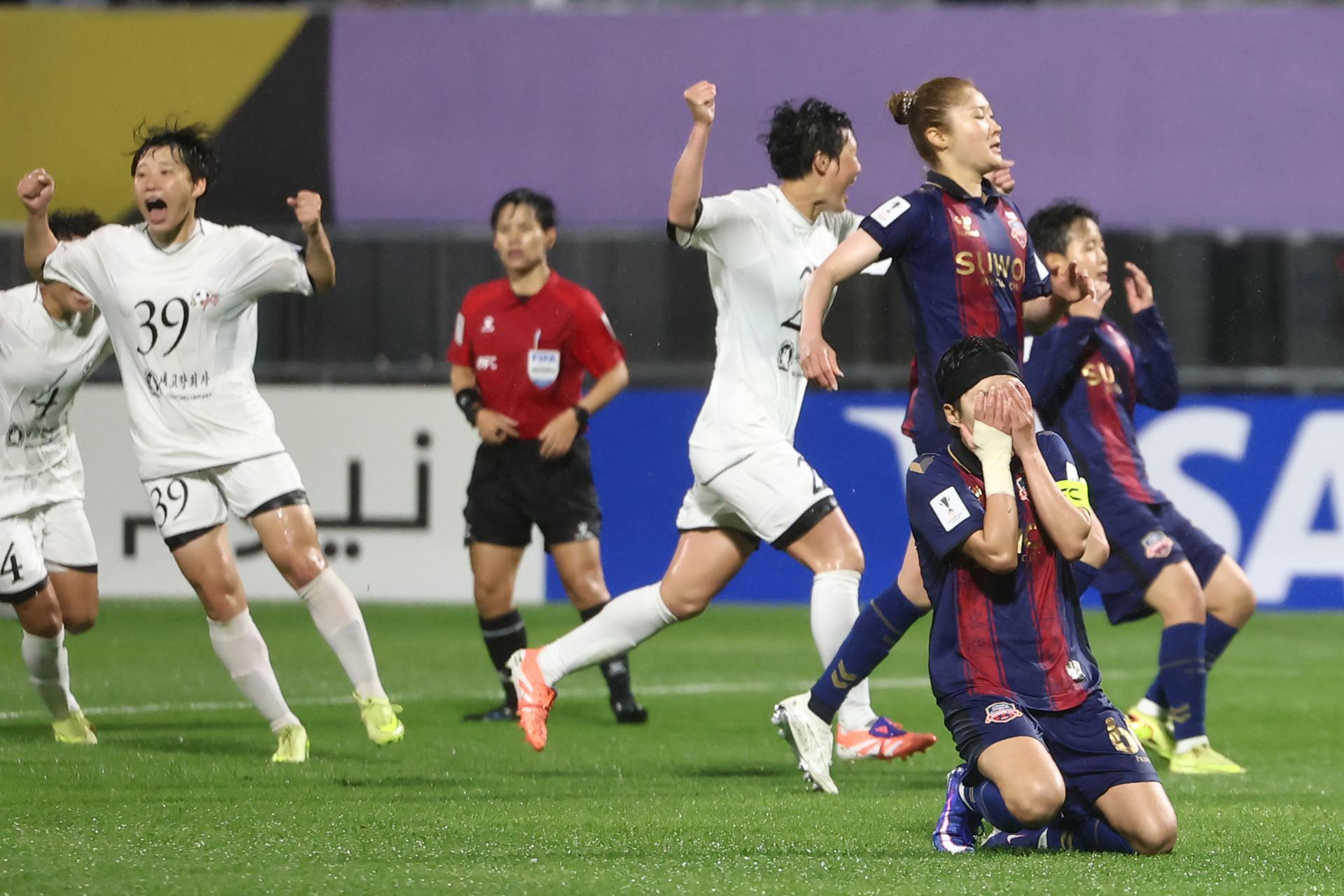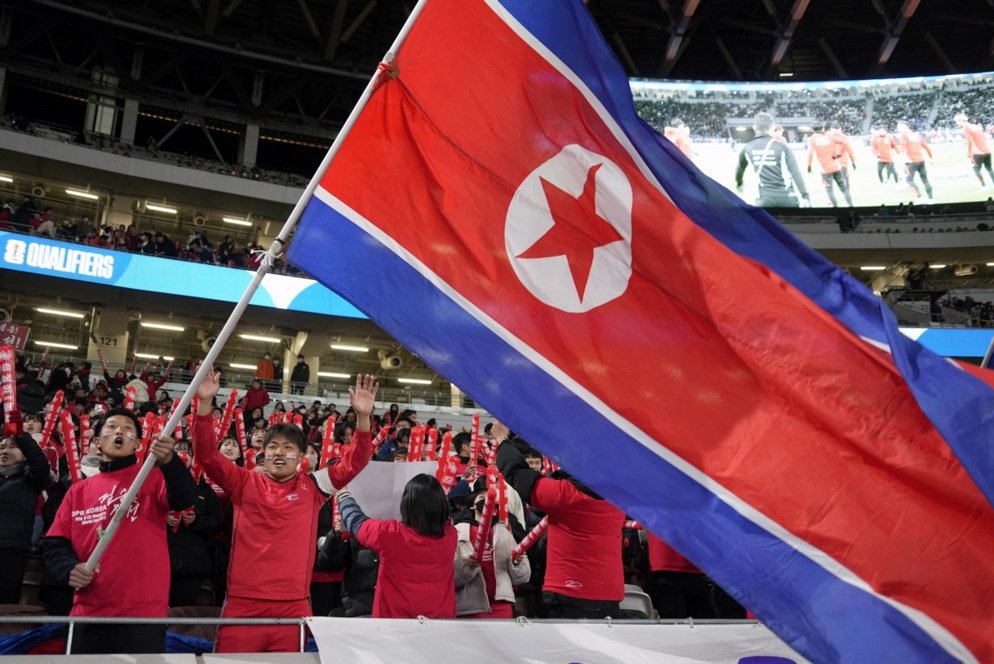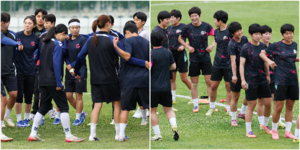
Suwon FC Women (left) and the Naegohyang Women’s FC practice at Suwon Stadium in Suwon, Gyeonggi Province, Tuesday, ahead of their Asian Champions League semifinal on Wednesday. (Yonhap) The match between Suwon FC Women and Naegohyang Women’s FC on Wednesday will be the first time women’s football clubs from the two Koreas have played each other on South Korean soil.While both teams have vowed to focus only on the match, an Asian Champions League semifinal, South Korean civic groups have held out hopes that the game could help ease tensions on the Korean Peninsula.The group's have formed a joint cheering squad to support both sides, while the Unification Ministry is providing financial support.Athletic events have historically served as rare channels of engagement between the two Koreas, which remain technically at war because the 1950-53 Korean War ended in an armistice rather than a peace treaty.The South and North Korean teams will be opponents on Wednesday, but previous inter-Korean sports events have been less adversarial, with cooperation ranging from joint marches at international events to unified Korean teams.First joint event in 1990South and North Korea had remained openly hostile after the Korean War, but fleeting signs of reconciliation emerged in the 1980s. The two sides held the first state-organized reunions for families separated by the war in 1985, followed by inter-Korean sports exchanges in the early 1990s.In 1991, the two Koreas agreed to participate in the World Table Tennis Championships in Chiba, Japan, as a unified team. They competed under the name “Korea,” used the Korean Unification Flag and played the traditional folk song “Arirang” instead of either side’s national anthem.The women’s team defeated the heavily favored Chinese team in the final to win gold, a story later adapted into the 2012 film “As One,” starring Bae Doo-na and Ha Ji-won.Despite hopes that such exchanges could lead to broader reconciliation, the death of then-North Korean leader Kim Il-sung in 1994 suspended communication between the two sides for a time.Sports cooperation since 2000Sports exchanges resumed momentum in the late 1990s as North Korean leader Kim Jong-il made gestures toward easing tensions, while the newly elected South Korean President Kim Dae-jung pursued an engaement policy toward Pyongyang.The first inter-Korean summit in 2000 paved the was for further cooperation, including in sports.At the 2000 Summer Olympics in Sydney, the two Koreas made their first joint march at an Olympic opening ceremony, the first of several joint entrances at sporting events throughout the decade. Suwon FC Women train in Suwon, Gyeonggi Province, Tuesday. (Yonhap) North Korea sent athletes and supporters to the 2002 Asian Games in Busan, the first time Pyongyang dispatched a delegation to an international sporting event in South Korea.North Korea's sinking of the South Korean Navy corvette Cheonan in 2010 led to a sharp deterioration in relations. Communication between the two Koreas was mostly severed in the early 2010s, though Pyongyang did participate in the 2014 Asian Games in Incheon and sent high-ranking officials for talks.The 2018 Winter Olympics in PyeongChang marked the most active sports-related engagement between the Koreas in recent years. The two sides marched together, held joint practices and formed a unified women’s ice hockey team.The Olympics were followed by inter-Korean summits and meetings between US President Donald Trump and North Korean leader Kim Jong-un, raising hopes for a thaw after years of hostility driven in part by Pyongyang’s nuclear and ballistic missile programs.But those hopes faded as tensions returned, and no North Korean sports delegation had visited South Korea since 2018 until Naegohyang arrived for this week’s match.Last year, President Lee Jae Myung’s administration began removing anti-North Korean propaganda loudspeakers along the border as part of efforts to reduce tensions. Naegohyang Women’s train at Suwon Stadium in Suwon, Gyeonggi Province, Tuesday. (Yonhap)
How athletes have helped bridge the inter-Korean divide
The match between Suwon FC Women and Naegohyang Women’s FC on Wednesday will be the first time women’s football clubs from the two Koreas have played each other
625 words~3 min read