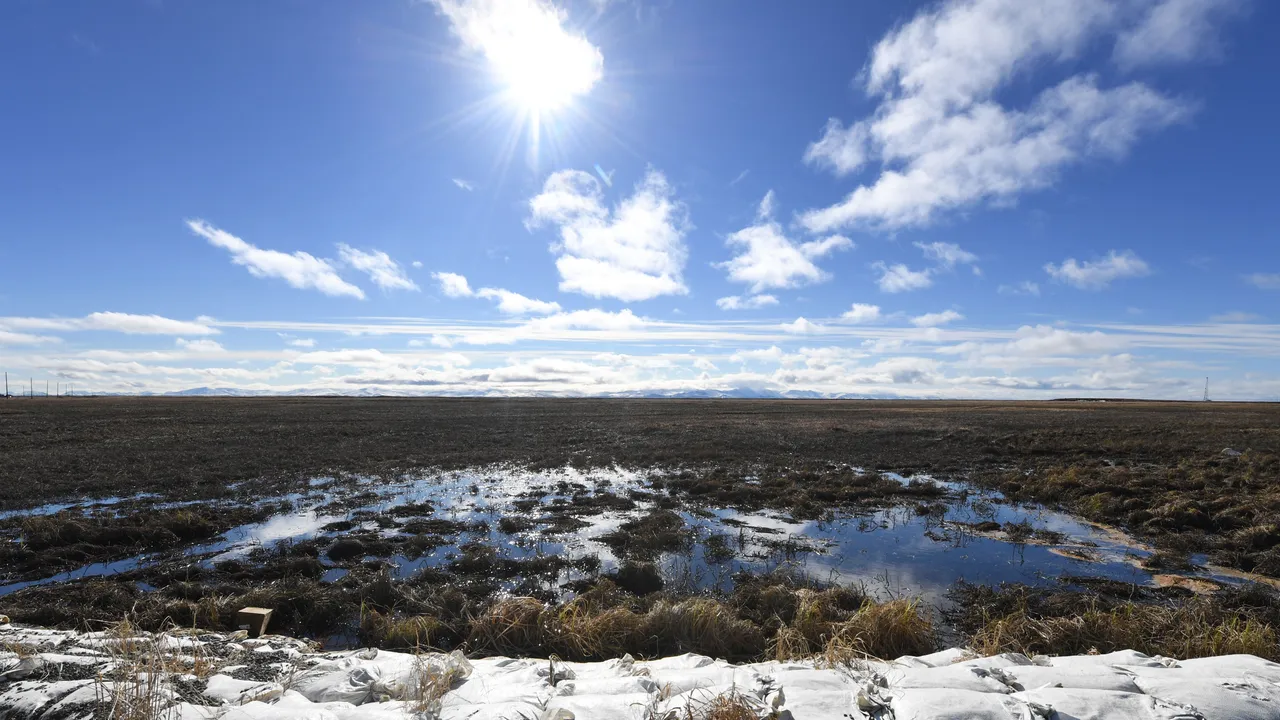
Permafrost, ground that is continually frozen, appears to be an unlikely place to find life. In recent years, however, scientists have discovered an abundance of micro-organisms frozen in the permafrost, many of which are still alive.
A wide range of viruses have been found, including those called Pandoraviruses, which were found frozen in 30,000-year-old permafrost in Siberia. The researchers were able to revive one frozen Pandoravirus that, thankfully, only infects amoeba.
Other more concerning viruses have also been found, including the strain of influenza that caused the 1918 pandemic and a relative of the smallpox virus that was found in a 300-year-old Siberian mummy.
In both cases, the genomes of the viruses had broken down and the viruses were no longer infectious.
Fortunately, most viruses don’t survive long outside of their hosts so finding a still-infectious human virus in the permafrost is unlikely.