“[Revolutionary tracts tend] to become mere annals of complaints about existing conditions…I thought, on the contrary, that a revolutionary paper must be…a record of those symptoms which everywhere announce the coming of a new era, the germination of new forms of social life, the growing revolt against antiquated institutions…To make one feel sympathy with the throbbing of the human heart all over the world, with its revolt against age-long injustice, with its attempts at working out new forms of life… It is hope, not despair, that makes successful revolutions.”
–Pyotr Kropotkin, 1899
*Article continues after advertisement
You almost certainly live in a nation-state. Like 99.75 per cent of our species.
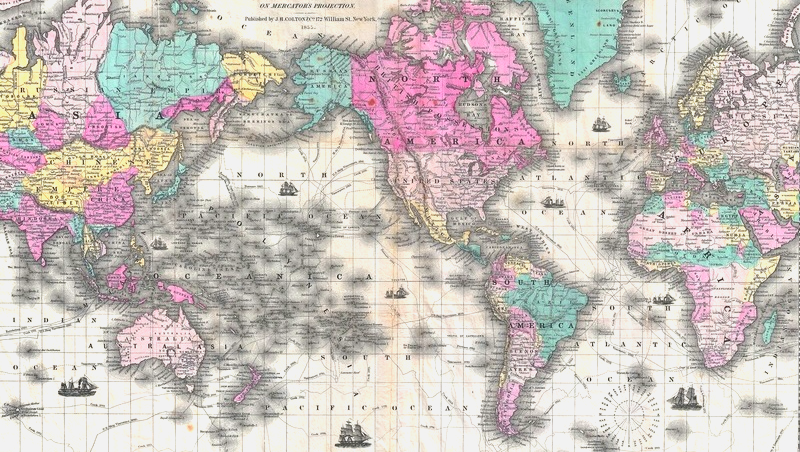
This is recent. In 1900, only about 25 per cent of the world’s population lived in a recognizably ‘national’ state, of which there were no more than fifty (compared to nearly two hundred today). These were concentrated in Europe and Latin America. In Asia, we might count six—Japan, Siam, Nepal, Bhutan, Afghanistan and Persia—though the last two had lost much of their sovereignty to imperial powers. Africa boasted two: Liberia and Ethiopia (though the latter had been a multinational empire, and was still in the early stages of setting up the institutions of a modern state).