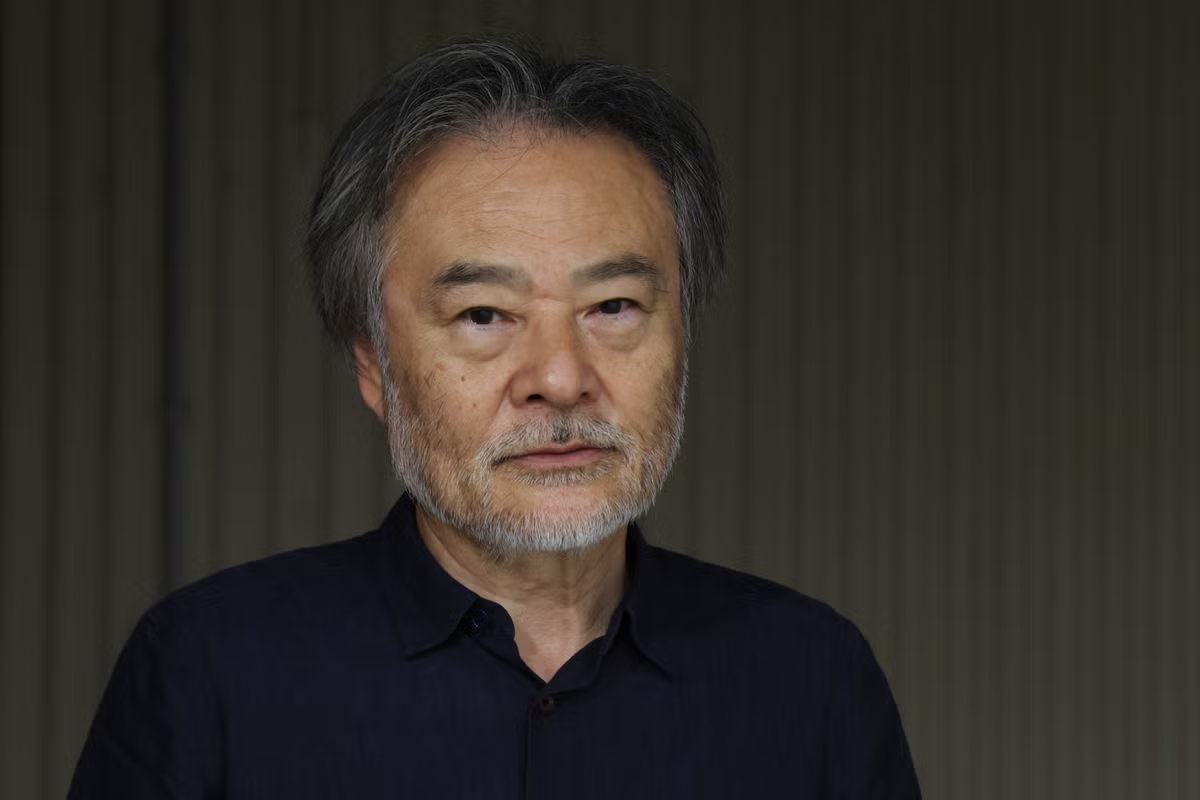
If there’s a great crime of recent world cinema, it’s that Kiyoshi Kurosawa hasn’t been granted bigger budgets. The 70-year-old Japanese auteur has consistently spun masterful moviemaking from a relative shoestring over the four and a half decades of his prolific and deeply influential career.
Kurosawa has explored genres with a restlessness and inventiveness few directors of his generation can match: from the now-classic serial killer procedural Cure (1997) to the dread-soaked J-horror landmark Pulse (2001), the lacerating family drama Tokyo Sonata (Cannes’ Un Certain Regard Jury Prize winner of 2008), the haunting wartime mystery Wife of a Spy (best director at Venice in 2020), and most recently Cloud, the psychological action film that landed on numerous critics’ 2025 best-of lists. In nearly every case, he has worked on production budgets that would barely cover the catering costs on a Hollywood feature of comparable ambition.
Kurosawa came of age during an era of sharp contraction for the Japanese film business, after the rise of television had eroded the dominance of the country’s once-fabled movie studios. The film business responded to the period’s challenges with the rise of “pink eiga,” a soft-core erotic genre that trafficked in the nudity and violence that couldn’t be shown on TV, becoming one of Japan’s most bankable production engines through the 1970s and into the 1980s. The genre also proved an unexpectedly fertile training ground for a generation of Japanese directors — among them future Oscar winner Yojiro Takita (Departures), Masayuki Suo (Shall We Dance?), Koji Wakamatsu — and Kurosawa, whose 1983 feature debut Kandagawa Pervert Wars was characteristically trashy but also a highly film-literate riff on Rear Window by Hitchcock, the filmmaker who would later come to be seen as his greatest influence.