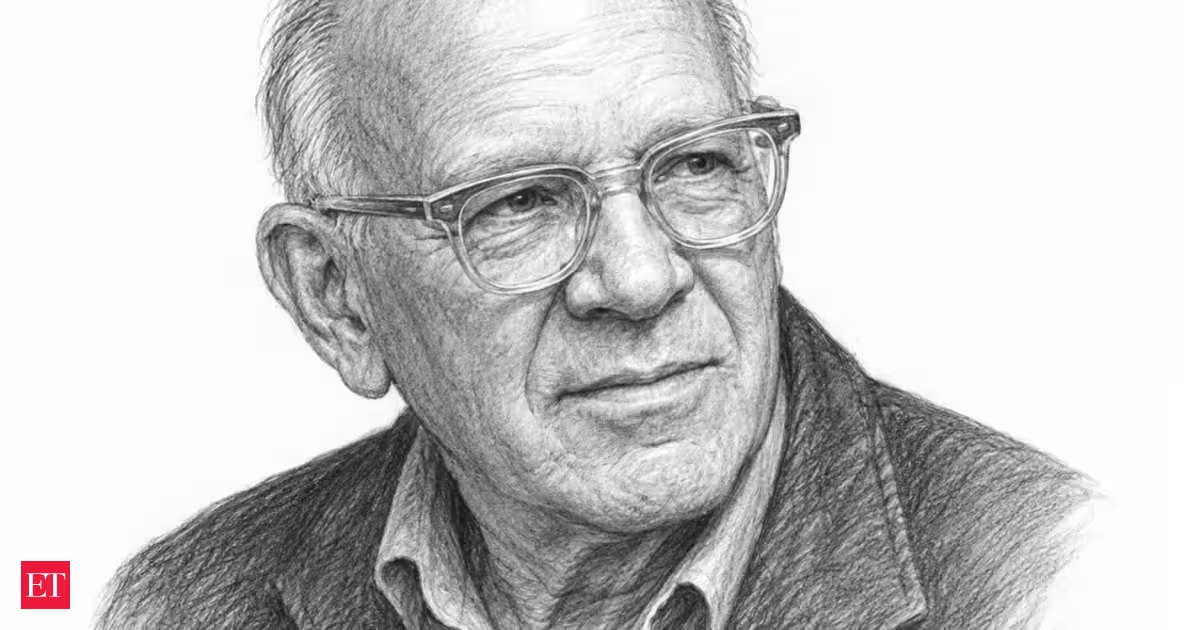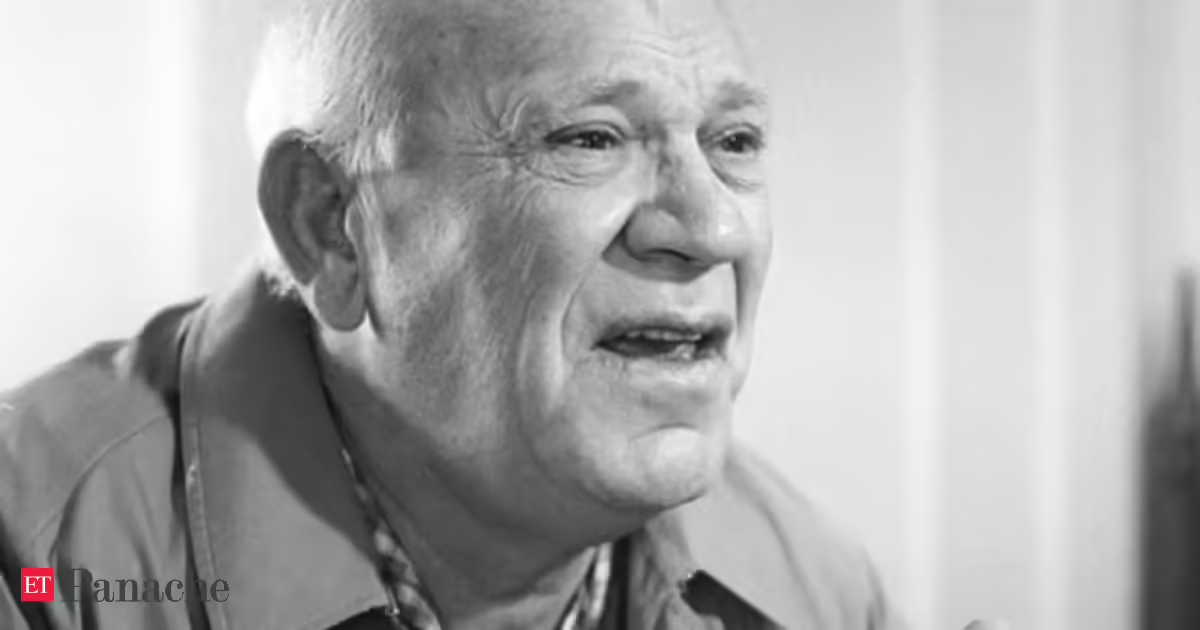
Eric Hoffer, an American social writer and thinker known for observing human behavior in a very direct way, once gave a line that still gets quoted in discussions about loyalty, power, and human nature. His words often came from watching ordinary life closely rather than academic study, and this particular quote reflects that same grounded thinking. The quote reads:The quote of the day goes: “People who bite the hand that feeds them usually lick the boot that kicks them.”At first reading, the line feels sharp and even uncomfortable, but it is meant to describe a pattern in human behavior that appears in different situations of power, dependence, and control.Meaning Behind this Quote of the DayThis quote points toward a contradiction in how people sometimes behave when it comes to authority and dependence. On one side, there are individuals who show anger, rebellion, or ingratitude toward those who support or help them in some way. This “biting the hand that feeds them” part suggests rejection of support systems, sometimes even when those systems are beneficial.But then Hoffer brings in a second layer that makes the observation more complex. He suggests that the same individuals, who reject one form of support or kindness, may still end up submitting to harsher authority or pressure. The phrase “lick the boot that kicks them” is used to describe situations where people accept domination or control from those who are more forceful or oppressive.You Might Also Like:Put simply, the quote highlights how human behavior is not always consistent. A person might resist care or help from one side, but still accept control or pressure from another side without resistance. Hoffer is pointing to the psychological confusion that can happen when people struggle between independence and submission.A Deeper Look at Human BehaviorThe quote also suggests something about respect and power. Sometimes people reject support not because it is bad, but because it comes with expectations or emotional tension. At the same time, they may end up tolerating stronger pressure from authority figures because it feels unavoidable or because fear replaces choice.Hoffer’s observation is not just about individuals, but also about society. It reflects how groups of people can behave when they are influenced by authority, dependence, or social pressure. It shows how human decisions are not always based on logic alone, but often shaped by emotion, insecurity, and the need to belong somewhere, even if that “somewhere” is not healthy.Eric Hoffer: Life of Struggle and Self-LearningTo understand this quote better, it helps to look at Eric Hoffer’s own life. Born in the late 19th century in New York City, Hoffer did not follow a traditional academic path. His early life was marked by hardship, poverty, and uncertainty. He even experienced a period of partial blindness in childhood, which affected his education and early development.You Might Also Like:When his vision returned, he developed a strong habit of reading. Books became his main source of learning and curiosity. After losing his parents early in life and facing financial struggle, he moved to California as a young man and worked various manual jobs, including migrant labor and longshore work.For many years, he lived a working-class life without formal higher education. Yet during this time, he continued reading and thinking deeply about society, politics, and human behavior. His routine was unusual—working physically demanding jobs while spending his free time reading and writing notes on human nature.This self-driven learning eventually led him to write his first major work, The True Believer, which gained attention for its insight into mass movements and why people follow strong ideologies. From there, Hoffer became known as a thinker who understood ordinary people and their psychological struggles.His Thinking and Major IdeasHoffer’s writing often focused on power, belief, identity, and change. He was less interested in academic theory and more interested in real-life behavior. He tried to explain why people join movements, why they follow leaders, and why they sometimes act against their own interests.A major theme in his work is the idea that people look for meaning outside themselves when they feel uncertain inside. This can lead them to follow strong leaders or systems without questioning them deeply. His work suggests that human beings are often searching for stability, even if it comes at the cost of freedom or independent thinking.He also wrote in short, clear statements that were easy to remember. His ideas were not heavily technical but were meant to reflect everyday human behavior. That is one reason his observations are still widely quoted and discussed.The quote about biting the hand that feeds and licking the boot that kicks continues to feel relevant because it reflects patterns that still exist in modern life. People still struggle with authority, dependency, and self-worth. They still sometimes reject support while accepting pressure from stronger forces.
Quote of the day by Eric Hoffer: 'People who bite the hand that feeds them usually lick the boot that kicks them...' - Why humans sometimes reject help but accept control easily explained by the American philosopher
Eric Hoffer, a self-taught American thinker known for observing everyday human behavior, highlighted a striking contradiction in how people respond to support and authority through his famous line. The quote of the day reflects how individuals may sometimes reject or resist those who offer help or care, yet still submit to harsher or more oppressive forces. Hoffer uses this observation to show that human behavior is often inconsistent, shaped by emotion, fear, and dependence rather than logic alone.
797 words~4 min read