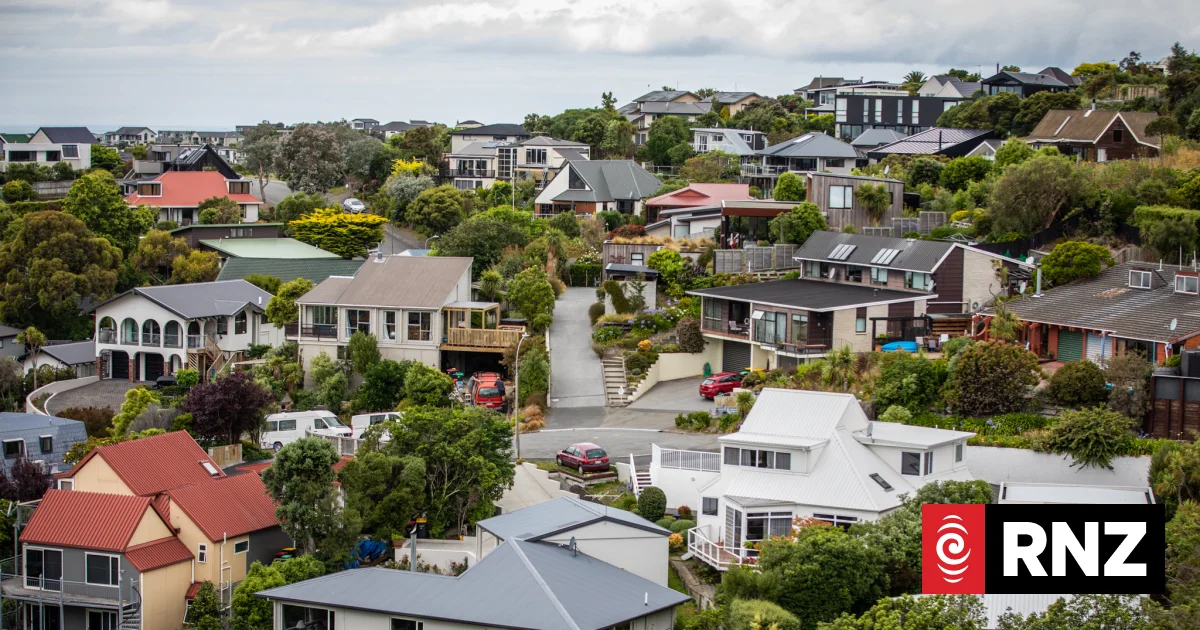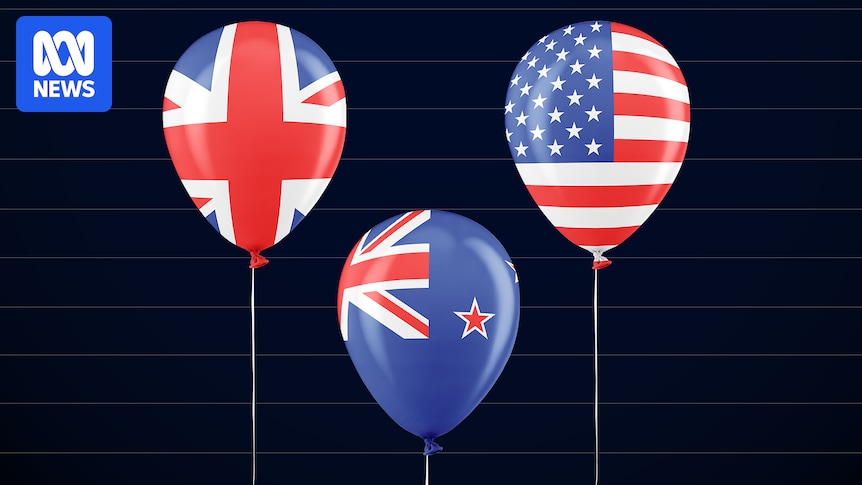
As Australian mortgage holders grapple with rising repayments, some countries have not seen interest rate rises in years.The United States, the United Kingdom, and New Zealand have not increased rates since 2023, while Japan has had decades of low, and in some cases negative, interest rates.The Reserve Bank raised Australia's cash rate by 25 basis points to 4.35 per cent on May 5, citing concerns about inflation amid the war in the Middle East.While it might appear that borrowers have it easier in other countries, it's not that simple.Observers say some of Australia's closest neighbours and partners are deciding interest rates based on higher unemployment, weak currencies, or after lowering rates less aggressively.Here's what's happening with interest rates overseas, the economic conditions influencing them and what the future might hold for mortgage holders.New ZealandAcross the ditch, New Zealand's official interest rate is 2.25 per cent, after the central bank lowered it steadily from a post-COVID peak of 5.5 per cent, set in 2023.But compared to Australia, New Zealand's unemployment rate is higher and its economic growth weaker, a major reason for the record number of Kiwis moving across the Tasman Sea for work."The fact that interest rates are high in Australia reflects the fact that actually [its] economy is performing better," said Christina Leung, deputy chief executive at the NZ Institute of Economic Research.New Zealand's property market is forecast to soften this year with rates expected to rise. (Reuters: Lucy Craymer)"The central bank in Australia is responding by lifting interest rates because they're seeing less slack in the Australian economy and with it upward inflation pressures."But New Zealand's central bank appears poised to raise the cash rate, Ms Leung said.The bank is monitoring how the high cost of fuel due to the effective closure of the Strait of Hormuz will affect prices and wages across New Zealand."What our central bank will be doing will be very much dependent on whether we see these high fuel prices spill over to more generalised inflation," she said.Ms Leung said she expected inflation would rise to more than 4 per cent for the June quarter on the back of surging fuel prices.With New Zealand's interest rate stimulating the economy and contributing to inflation, it was a question of when its Reserve Bank would begin increasing rates, Ms Leung said."We expect that they'll commence the tightening cycle in the July meeting," she said.United KingdomThe UK is also feeling the effects of the energy crisis, but the Bank of England (BoE) chose to maintain the interest rate at 3.75 per cent in April, the lowest point since it peaked at a 16-year high of 5.25 per cent in 2023.Interest rates had been tipped to keep falling in the UK this year because signs suggested inflation was decreasing.The Bank of England has grappled with soaring inflation in recent years. (Reuters: Maja Smiejkowska)Taking that into account, University of Oxford economics professor Michael McMahon said the BoE's decision to maintain the interest rate was not so dissimilar to the Reserve Bank of Australia's decision to increase."They actually hadn't been bringing them down that aggressively [like Australia had]," he told the ABC."So, although it looks like they haven't increased, relative to the path they were expected to go on, by not changing, they have effectively increased."Inflation has risen to 3.3 per cent, compared to the UK government's target of 2 per cent, and is tipped to keep rising as higher energy prices continue to hit.The BoE has warned the country to brace for higher interest rates.But like in Australia, fixed mortgage rates have already started to increase in the UK as lenders eye global energy market instability and the possibility of the BoE lifting rates in June.United StatesThere are signs that higher energy prices from the Middle East conflict are driving inflation in the US, just as a new chairman takes the helm at the central bank.The Federal Reserve's preferred inflation measure showed prices grew by 3.5 per cent over the year to March, compared with a target of 2 per cent, the largest increase in three years.The US central bank sets an interest rate band, which it chose last month to leave at 3.5 to 3.75 per cent.Inflation has risen faster in the US since the start of its war with Iran. (AP: Mohsen Ganji)"The expectation is for inflation to pick up in the US … [the Federal Reserve is] more likely to raise interest rates than to cut interest rates in the future," said Luke Hartigan, a senior lecturer in economics at the University of Sydney.However, compared to Australia's interest rate, the rate has a less immediate impact on home owners in the US, where the vast majority of mortgage holders have long-term fixed-rate loans, he said.The outgoing Federal Reserve chairman, Jerome Powell, had faced pressure from US President Donald Trump to lower interest rates.Australian National University professor of international relations Wesley Widmaier said as the US faced higher energy prices and broader supply shocks, the Federal Reserve was also in a difficult position as it tried to respond to inflation while under political pressure."[The Iran conflict] has, from the supply side, taken the dry kindling of steadily mounting demand over the last three years … and kind of lit a fire under that," he said.JapanJapan's central bank started raising interest rates in 2024, even as other countries were cutting theirs.But the rate has risen from a much lower base compared to Australia, reaching 0.75 per cent when the Bank of Japan (BoJ) last increased the interest rate to a three-decade high in December.The central bank has kept interest rates low ever since Japan's "lost decade": a period of economic stagnation in the 1990s, starting when its asset bubble burst due to over-investment in land and stocks.Japan has had low or negative interest rates for decades. (Reuters: Issei Kato)More recently, it used low or negative interest rates to combat weaker consumer spending and labour shortages stemming from an aging Japanese population.While the BoJ has paused rate hikes in its two meetings since the outbreak of the Iran war, a split emerged over whether to raise interest rates at its most recent board meeting last month.Some members said the BoJ should monitor the conflict's potential damage to the economy, while others warned of mounting price pressures, news wire agency Reuters reported.The country's inflation rate in March was 1.5 per cent, and lead economist at Oxford Economics Japan, Norihiro Yamaguchi, predicted it would rise to the central bank's target figure of 2 per cent later this year.Japan's interest rate would continue to rise too, but gradually, he said.The Japanese yen has fallen to historic lows this year. (Reuters: Kyodo)The Japanese yen remains weak, which Mr Yamaguchi said was the BoJ's biggest headache.A weak currency can add to inflation by making imported items more expensive."If [the BoJ] choose to keep the interest rate low or unchanged, then the Japanese yen will depreciate even more and that will create further pressure on the inflation," Mr Yamaguchi said.IndonesiaFor Indonesia's central bank, the nation's interest rate of 4.75 per cent is part of a balancing act, said Abdul Manap Pulungan, a researcher at the Jakarta-based Institute for Development of Economics and Finance.Bank Indonesia is trying to support economic growth while also protecting the nation's currency from dropping in value."Bank Indonesia is still holding interest rates to help drive the domestic economy amid highly uncertain global economic volatility," Mr Pulungan said.Indonesia's central bank has kept its interest rate steady. (ABC News: Mitch Woolnough)If the interest rate rose too high, banks were likely to increase deposit and lending rates, making credit more expensive for households and businesses, potentially slowing economic activity.Mr Pulungan said Bank Indonesia also had limited room to cut rates further because the rupiah had weakened."[The rupiah] exchange rate has been very volatile and has even experienced significant depreciation over the past few months," he said.Mr Pulungan said he expected Bank Indonesia might have to raise rates if pressure on the rupiah intensified."I think rates could rise toward the end of the year," he said."If they are not increased, the pressure on the rupiah could become even greater."
Why the US, UK and NZ haven't raised interest rates in years
As Australians pay more on their mortgages, some countries have had no rise in their interest rate in recent years. So what's going on?
1,354 words~6 min read