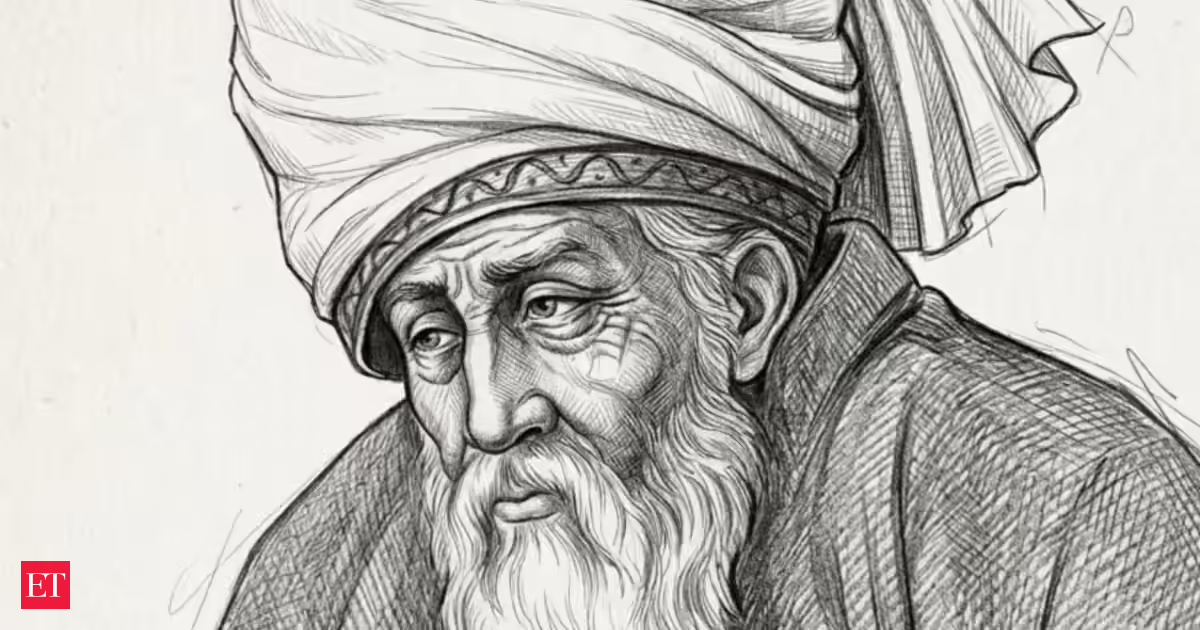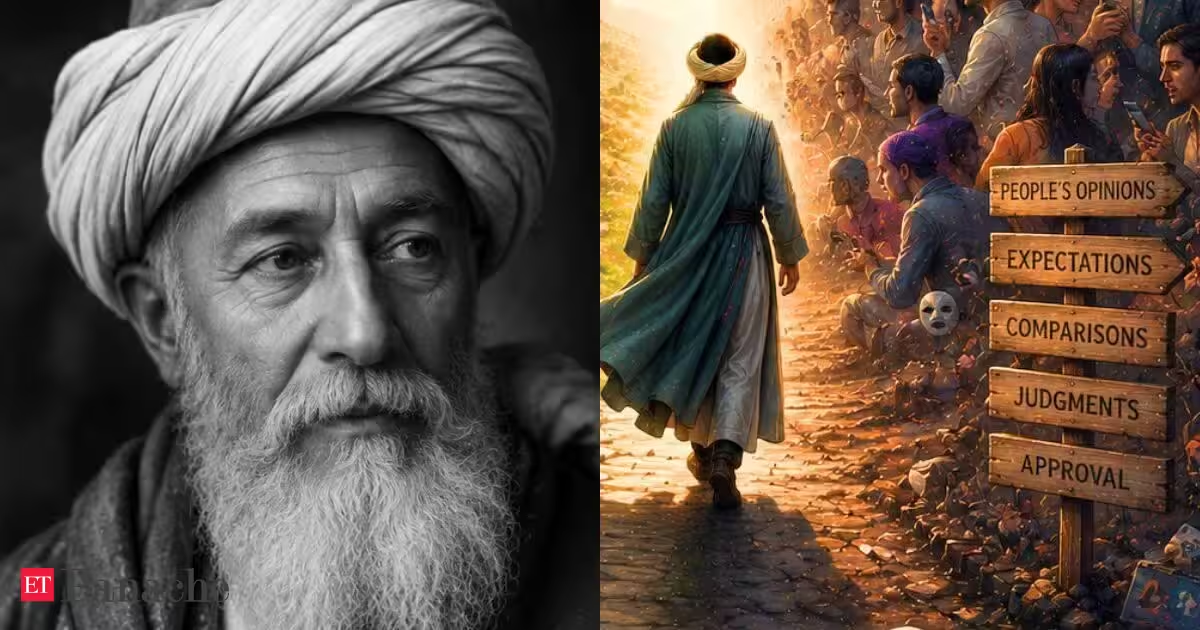
Some poems stay alive for centuries because they speak to emotions people still struggle with today. Love, heartbreak, longing, regret, distance between two people, these things do not really change with time. One such line comes from the 13th-century Persian poet and Sufi mystic Rumi, whose words are still quoted across the world even after hundreds of years. His famous line from the poem A Great Wagon reads, “Out beyond ideas of wrongdoing and rightdoing, there is a field. I’ll meet you there.” The quote has become one of the most widely shared pieces of poetry about love, separation, healing and human connection.The line carries a quiet sadness that many people connect with after experiencing lost love or emotional distance. On the surface, it sounds simple. But the meaning behind it feels much deeper once a person sits with it for a while. Rumi speaks about a place beyond blame, arguments, ego and judgment. In relationships, people often spend too much time deciding who was right and who was wrong. That usually becomes the reason why relationships slowly break apart. Through this poem, Rumi imagines another space altogether, one where two souls can meet without carrying anger, guilt or pride. The “field” in the poem becomes a metaphor for peace, understanding and emotional honesty.It does not speak only about romantic love; it also speaks about emotional healing. Sometimes two people drift apart even when love once existed strongly between them. Sometimes apologies come too late. Sometimes words fail completely. Rumi’s lines capture that strange emotional place where language itself feels useless. In the poem, he later writes, “When the soul lies down in that grass, the world is too full to talk about. Ideas, language, even the phrase each other doesn’t make any sense.” The feeling he describes is one where connection becomes bigger than explanations. That is why many readers interpret the poem as a reflection on unconditional love, spiritual peace and the human wish to reconnect with someone beyond pain.The poem behind the famous quoteThe widely known English version of the poem is associated with interpreter Coleman Barks, who helped introduce Rumi’s work to many Western readers. The famous passage comes from the poem often titled A Great Wagon. Over the years, these lines have appeared in books, films, speeches, relationship discussions and even mental health conversations because of how open-ended and emotionally relatable they feel. Different people take different meanings from the poem depending on what stage of life they are in.Why Rumi’s poetry still feels modernEven though Rumi lived in the 13th century, his writing often feels surprisingly current. Much of his work explored themes like love, loss, spirituality, longing, self-discovery and human connection. He wrote about emotions in a direct and deeply personal way. That is one reason younger audiences still discover his poetry through social media posts, relationship pages and modern translations.Rumi, whose full name was Jalāl al-Dīn Muḥammad Rūmī, was born in 1207 in Balkh, a region that is now part of modern-day Afghanistan. Later, his family moved across the Middle East before eventually settling in Konya, in present-day Turkey. He became known not only as a poet but also as an Islamic scholar and Sufi mystic. His teachings and writings later influenced spiritual thought and literature across many parts of the Muslim world.His life changed significantly after meeting the wandering dervish Shams of Tabriz in 1244. Historians and literary scholars often describe this meeting as the emotional and spiritual turning point of Rumi’s life. Their connection deeply influenced his poetry. After Shams disappeared, Rumi’s grief and longing transformed into thousands of verses exploring divine love, separation and spiritual awakening.The idea of love beyond egoOne reason A Great Wagon continues to resonate is because it moves away from the idea of winning emotional battles. Modern relationships often become trapped in proving points, defending opinions and keeping emotional score. Rumi’s poem suggests something very different. He imagines love as a space where people stop trying to defeat each other emotionally.In one interpretation of the poem, the “field” represents a state where human labels disappear. Good and bad, right and wrong, blame and pride no longer matter there. This idea connects strongly with Sufi philosophy, which often focuses on unity, compassion and the dissolving of ego.Another line from the poem says, “The breeze at dawn has secrets to tell you. Don’t go back to sleep.” Many readers see this as a reminder to remain emotionally awake instead of becoming trapped in bitterness, routine or emotional numbness. The poem repeatedly encourages openness, honesty and emotional awareness.More than a love poemAlthough many readers connect the quote with romance and heartbreak, literary experts often describe A Great Wagon as both spiritual and philosophical. The poem encourages people to move beyond rigid thinking and experience life with greater compassion and presence.Rumi also writes about communication in relationships. One section says, “Ask for what you really want.” The line sounds simple, but it reflects something many relationships struggle with — honesty. In many cases, people avoid saying what they truly feel because of fear, ego or uncertainty. Rumi’s poetry repeatedly returns to the importance of emotional truth.Another memorable line reads, “The door is round and open. Don’t go back to sleep.” Readers often interpret this as a call to remain emotionally and spiritually aware, especially during difficult periods of life.Rumi’s global influenceCenturies after his death in 1273, Rumi remains one of the most widely read poets in the world. His poetry has travelled far beyond Persian literature and Sufi traditions. Today, his work is quoted in books, films, therapy discussions, music and social media posts across different countries and cultures.His major works include the Masnavi, often described as one of the great works of Islamic mystical literature, and the Divan-e Shams-e Tabrizi, a collection of lyrical poems inspired by his relationship with Shams. His followers later formed the Mawlawiyyah order, known in the West as the Whirling Dervishes because of their spiritual dance practices.Over time, Rumi’s poetry travelled far beyond Persian literature and Sufi traditions. Today, his lines appear in books, films, social media posts, relationship discussions and mental health conversations across different cultures and countries.
Timeless poetry of the day on lost love: 'Out beyond all the ideas of wrong and right, there is a field. I’ll meet you there...'
Rumis famous line from A Great Wagon resonates centuries later because it captures emotions that remain deeply human, love, heartbreak, distance and the desire for peace beyond conflict. The poem imagines a space beyond blame, ego and emotional battles, where people can reconnect with honesty and understanding. Through simple yet deeply reflective lines, Rumi explores themes of healing, unconditional love, spiritual awakening and emotional truth, which is why readers across generations still find personal meaning in his work.
1,026 words~5 min read