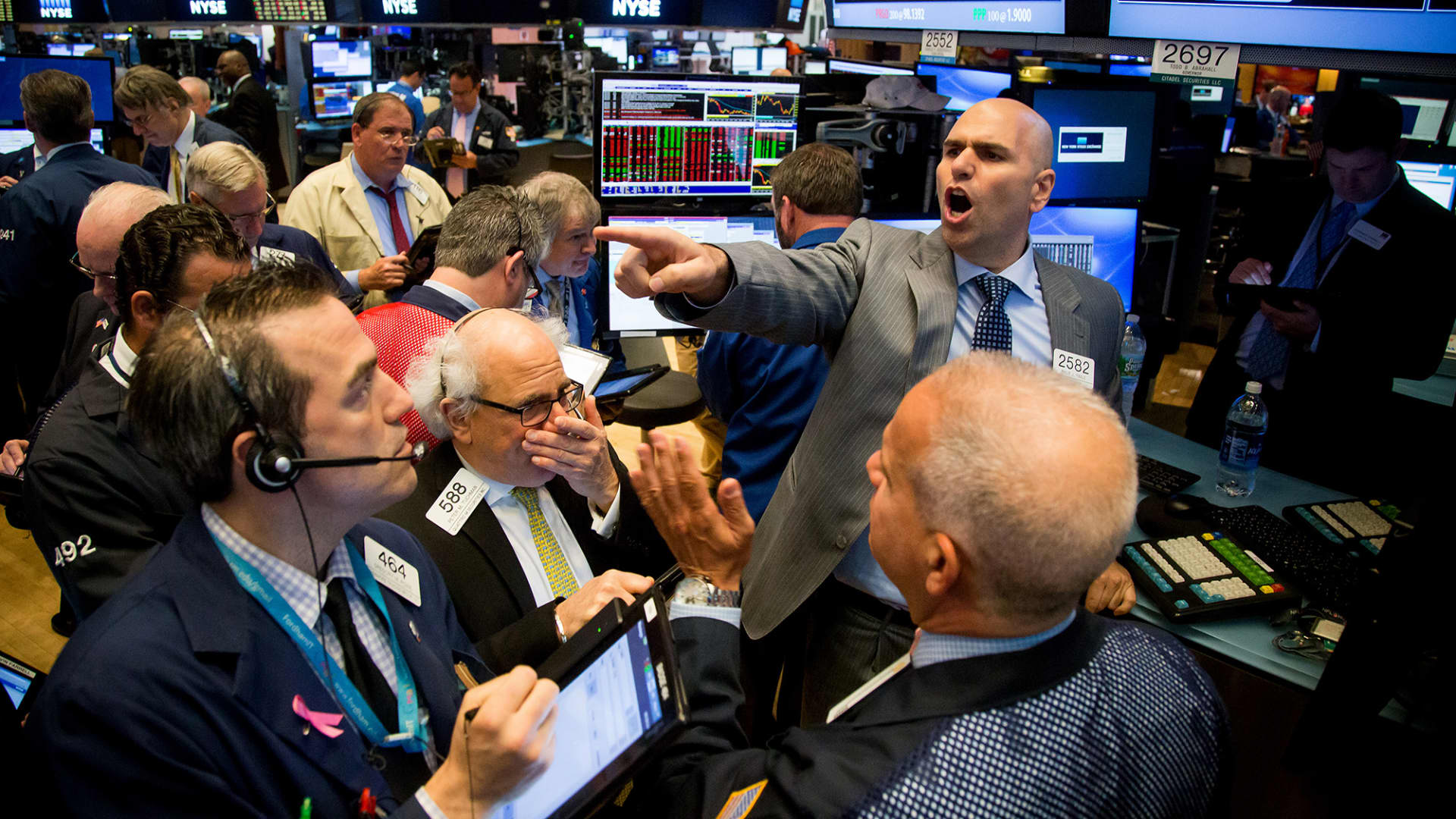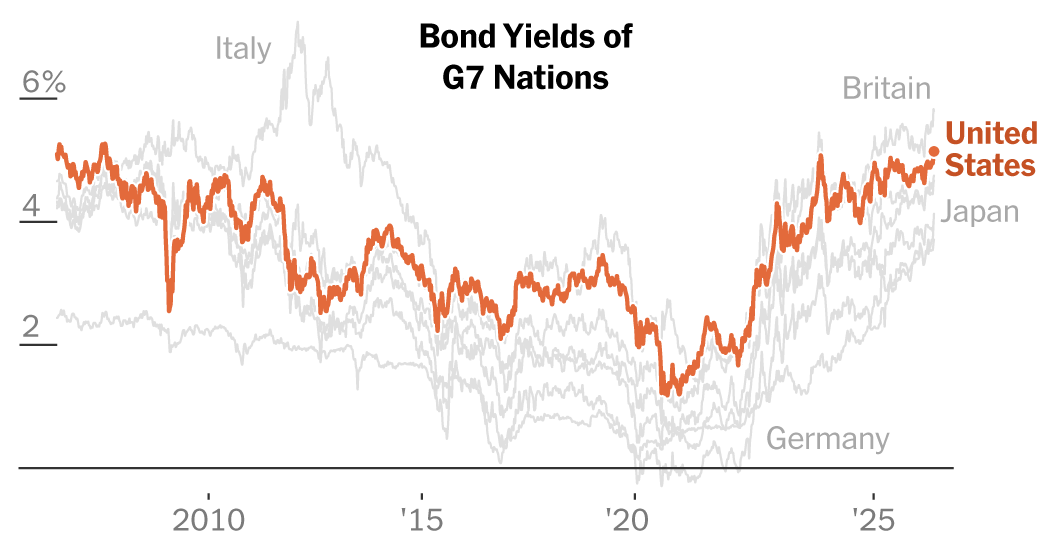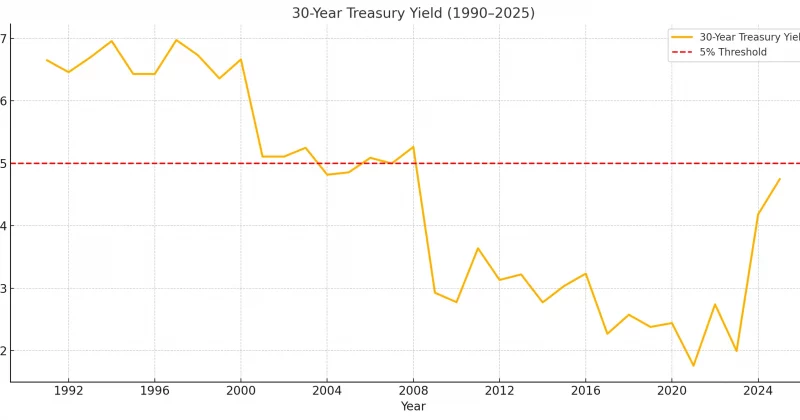
The US 30-year Treasury yield closed at 5.02% on May 14, a threshold that tends to make everything else in financial markets a lot more uncomfortable. The last time yields at this maturity crossed above 5% was October 2023, and the fallout was swift: equities sold off, crypto stumbled, and risk appetite evaporated like morning fog.
What’s driving yields higher
The proximate cause is inflation anxiety tied to geopolitical tensions. Escalating energy costs and ballooning defense spending are feeding into expectations that prices will stay stubbornly elevated. When markets price in persistent inflation, they demand more compensation for holding long-dated government debt. That compensation shows up as higher yields.
But the story runs deeper than war-driven commodity spikes. The US is financing enormous deficits, and the sheer volume of new Treasury issuance is weighing on bond prices. More supply, same demand, lower prices, higher yields.
There’s also the term premium to consider. That premium has been expanding, reflecting genuine uncertainty about the fiscal trajectory of the US government. When investors aren’t sure Washington can manage its debt load responsibly, they charge more for the privilege of lending to it.