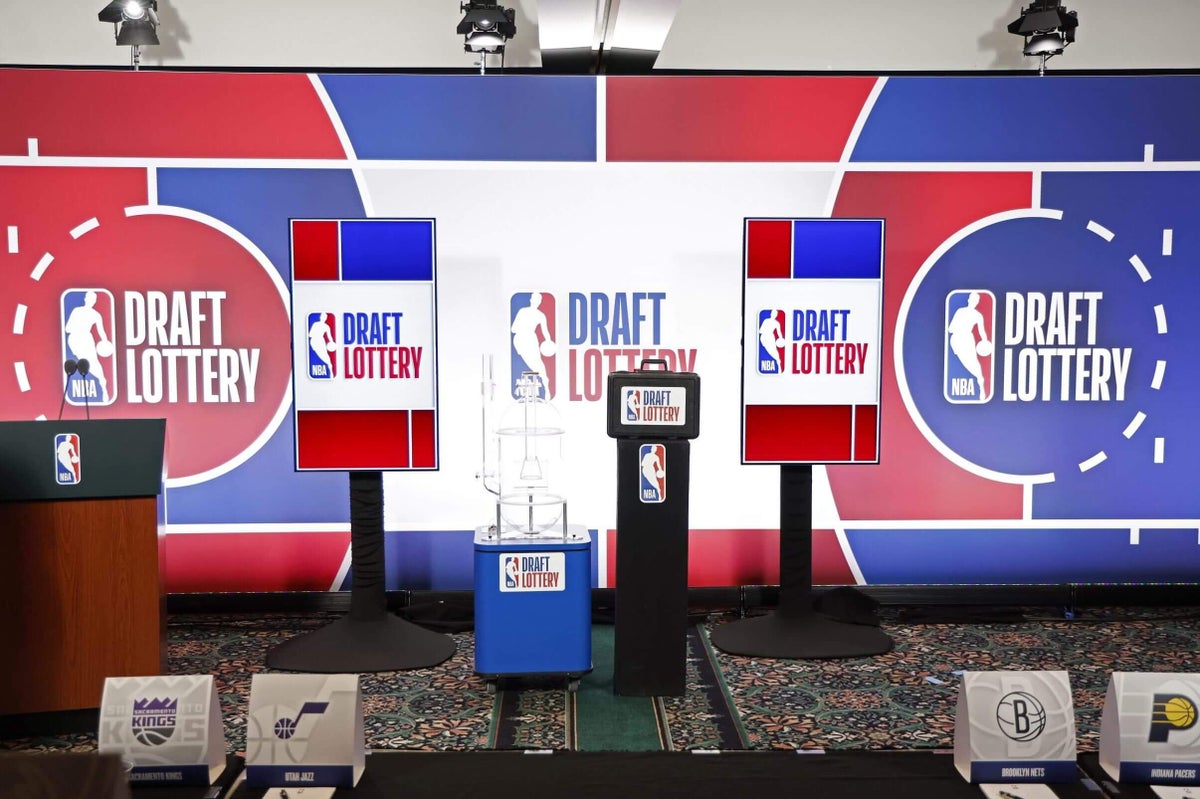
CHICAGO — While the NBA appears headed toward its most significant draft lottery changes in decades, with a vote on the “3-2-1 proposal” looming at a Board of Governors meeting on May 28, critics remain inside the league’s front offices.The most common concern from team executives polled by The Athletic at last week’s Draft combine event? That the new rules might swap one set of problems for another, potentially solving the tanking issue that commissioner Adam Silver has vowed to fix, while making it that much harder for the NBA’s worst teams to get out of the basement. In the eyes of these executives — many of whom believe this is an overreaction to a problem that was largely inspired by the strength of this particular draft — that’s the irony of this approach.If it works as designed, with all 30 teams truly trying to compete at the highest possible level throughout the 82-game regular season, then the three worst teams would be, in fact, the three worst teams. Yet as part of this proposal, which was first presented to teams during an April 28 virtual meeting with general managers, those teams would be part of a “relegation tier” that has the same chances of landing the No. 1 pick as the ninth and 10th seeds for the Play-In tournament.The ability to land a top-three pick is seen by many as the best way to acquire high-end talent. As many executives see it, the extreme change could keep those bottom-three teams in the lottery for a longer period of time.“Teams that aren’t trying to tank will then get penalized,” one front office staffer said.According to league sources, this specific concern was raised by one team at the NBA’s most recent general managers’ meeting on Monday. Yet beyond that complaint, league sources say there has been minimal pushback from executives during the many league-run meetings that were designed to make this process collaborative. There is, it seems, a feeling of resignation among some executives who don’t want this system that its approval is inevitable. At least 23 of the league’s 30 governors must approve the changes for them to pass. If it goes through, it would begin with the 2027 draft.“They’re hellbent on doing this,” one assistant general manager said.Under the proposed system, which would expand the lottery from 14 to 16 teams, the NBA would put 37 balls into a draw for the top 16 picks. The three worst teams would each get two balls — after having one ball removed as a penalty because of the “relegation” — but would not be able to pick lower than 12th. League sources say the floor for those teams was still being discussed in recent weeks, with some teams expressing a belief that it should not be that low.The teams slotted Nos. 4-10 in the lottery standings would get three balls each. The teams that finished ninth and 10th in the Play-In Tournament would each get two balls, while the losers of the 7-8 matchup would each get one. The best shot any team would have to win the lottery would be 8.1 percent, down from 14 percent under the current system, and far from the 25 percent shot the last iteration of the lottery offered.As some executives shared, there is a fear that the new system will create unintended consequences that would greatly alter the team-building process. The likely variance in the draft lottery could have widespread implications, with some executives predicting that it would make most first-rounders more valuable because the flatter odds would make each pick more likely to land high in the lottery. That could create more friction in the transaction market, when trades are already harder to do because of the first apron and where free agency has petered out in recent years.Teams could be reticent to trade firsts, even if they project the team that owns it would have a record outside one of the league’s 10 worst. While a team that picked 16th has no shot at a top-3 pick right now, for example, they would have a better shot at No. 1 in the coming years (2.7 percent) than the Dallas Mavericks did last year when they won the right to draft Cooper Flagg (1.8 percent). Another assistant GM bemoaned that this system would take even more control out of a team’s hands in how to rebuild.Some executives also expressed frustration with the abruptness of the proposed changes, as they traded away future first-round picks under the old value system without knowing what was coming next.Others kvetched that there is already a simple cure: Enforcing the current rules. The NBA fined the Utah Jazz $500,000 and the Indiana Pacers $100,000 in February, but did not discipline any other teams, even as many generally agreed that tanking continued. The combined record of the top three teams in the draft order, for instance, was 12-72 after the All-Star break.“David Stern wouldn’t change the system,” a team executive said. “He’d get a bigger hammer. … It’s abysmal.”Yet, as some team and league officials countered, that would invite league officials to get more involved in team lineup choices — an approach that would also not be well received. Especially as team and league officials already spar plenty.Then there is the uncertainty of how long this new system will remain in place and how that flows into team-building. The current plan, as presented by league officials and deemed the “sunset provision,” is for the NBA to use it through 2029. That timing, per league sources, is tied mostly to forthcoming collective bargaining agreement negotiations (the current deal runs through the 2029-30 season but has a mutual opt-out that could end it on June 30, 2029). The NBA could also add two new expansion teams by then.If the 3-2-1 rules work sufficiently, they could remain in place. The league could also shift to something new. One popular idea that league and team sources say will be studied intensely, and some believe is the lottery cure of the future, is a draft credit approach. It was considered before the league settled on its current option, but was considered too radical to implement so quickly. But the next few years will give the league and teams a larger buffer to work through the issues.There are still final details of the 3-2-1 proposal to be finalized. While it includes a rule that teams can’t have the No. 1 pick in successive years, for example, the question of whether that would be allowed if one of the picks came via trade has been debated. That same scenario could be applied to the rule that prohibits teams from landing a top-five pick for three consecutive years.The plan also increases Silver’s disciplinary powers, with the commissioner given “an added ability to reduce teams’ lottery odds and/or modify teams’ draft positions,” as it was explained to the league’s general managers as part of the league’s presentation.Not everyone across the league, of course, is against the NBA’s plan. If it passes, it will have the support of more than three-quarters of team owners. Some front office members say that tanking needs to be fixed, but prefer different approaches.“I’m tired of watching Brooklyn and Washington in March,” a scout said.But no matter where any team or executive stands, this will likely be the new way of life next season. The following May, when the league again returns to Chicago, the draft lottery will be completely different. The lottery drawing itself will change, too. After decades of being drawn in a backroom where the results fed the televised broadcast, the lottery may be televised live next year, according to sources. Teams that had progressively tilted seasons into a Hunger Games for tanking will soon find out that the odds are no longer in their favor.
Why NBA execs believe lottery reform is inevitable: ‘They’re hellbent on doing this’
The biggest concern from team execs regarding lottery reform? That the new rules might swap one set of problems for another.
1,305 words~6 min read