Image via Wikimedia Commons
I’ve just started reading J.R.R. Tolkien’s The Hobbit to my daughter. While much of the nuance and the references to Tolkienian deep time are lost on her, she easily grasps the distinctive charms of the characters, the nature of their journey, and the perils, wonders, and Elven friends they have met along the way so far. She is familiar with fairy tale dwarfs and mythic wizards, though not with the typology of insular, middle-class, adventure-averse country gentry, thus Hobbits themselves took a bit of explaining.
While reading and discussing the book with her, I’ve wondered to myself about a possible historical relationship between Tolkien’s fairy tale figures and those of the Walt Disney company which appeared around the same time. The troupe of dwarves in The Hobbit might possibly share a common ancestor with Snow White’s dwarfs—in the German fairy tale the Brothers Grimm first published in 1812. But here is where any similarity between Tolkien and Disney begins and ends.
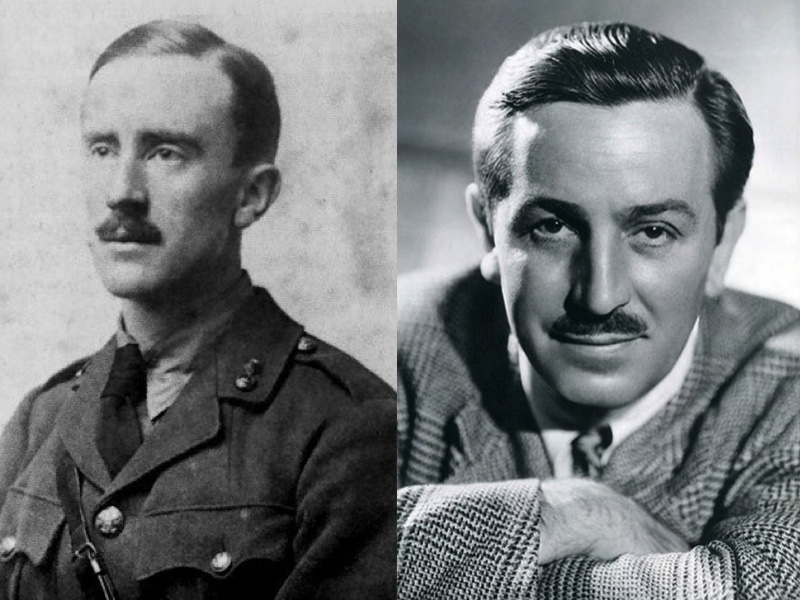
In fact, Tolkien mostly hated Disney’s creations, and he made these feelings very clear. Snow White debuted only months after The Hobbit’s publication in 1937. As it happened, Tolkien went to see the film with literary friend and sometime rival C.S. Lewis. Neither liked it very much. In a 1939 letter, Lewis granted that “the terrifying bits were good, and the animals really most moving.” But he also called Disney a “poor boob” and lamented “What might not have come of it if this man had been educated—or even brought up in a decent society?”