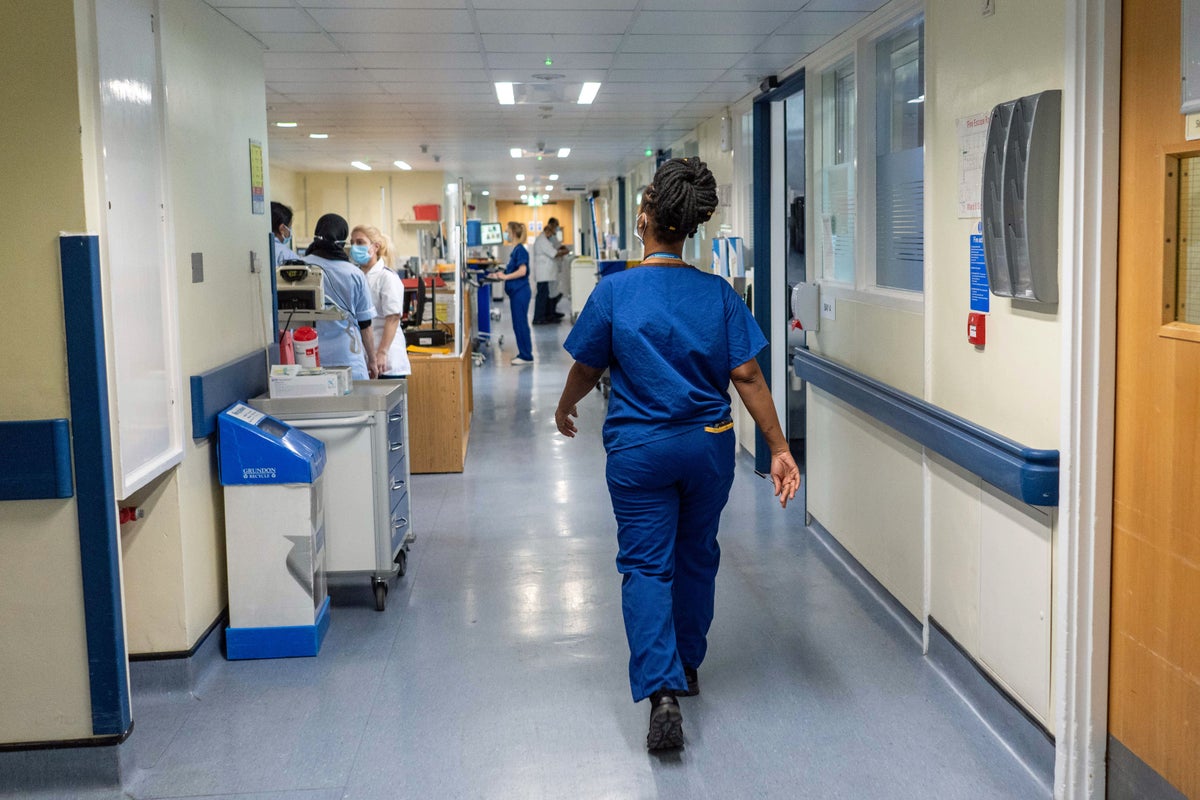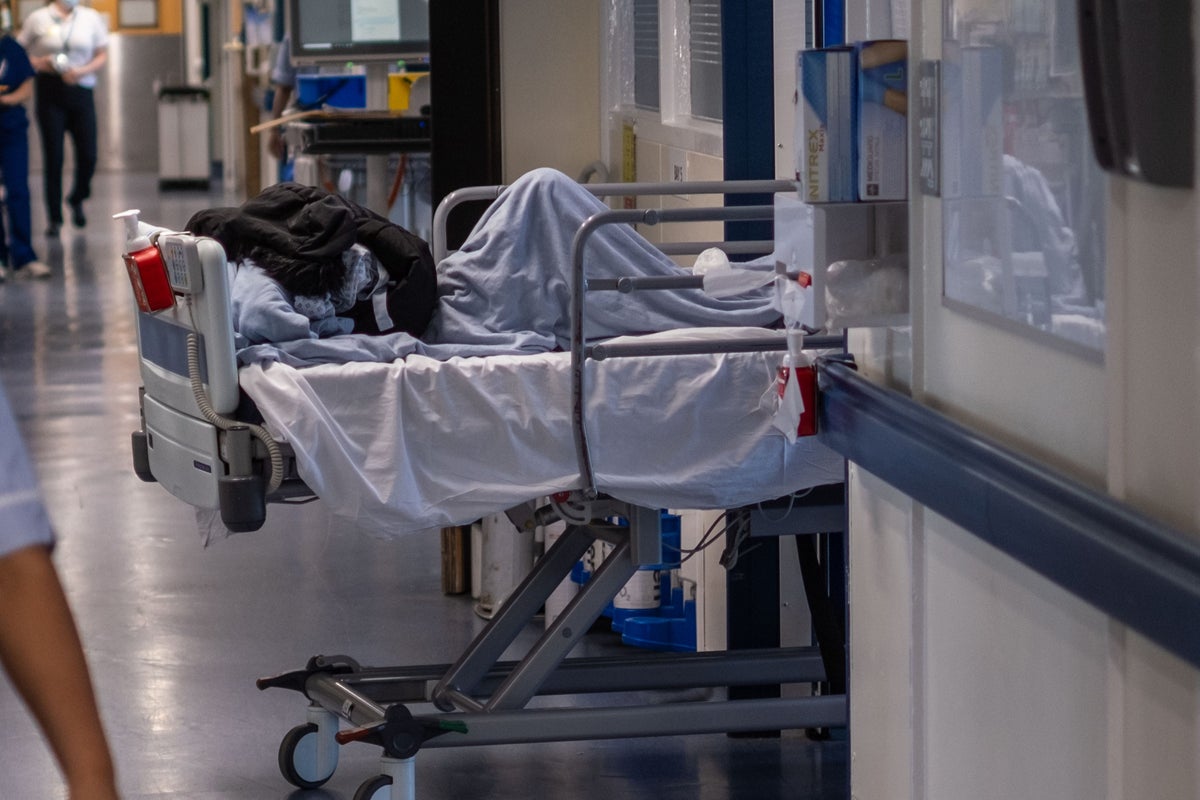
A Dublin resident spent two days in a bed positioned in a loud and busy corridor of St Vincent’s University Hospital this week as she waited to receive treatment. Sinead Ferron (51) says she felt “invisible” and that her surroundings made it impossible to sleep. Ferron suffers from several ongoing health problems, including a connective tissue disorder called Ehlers-Danlos syndrome (EDS).The condition affects people differently, but Ferron’s EDS manifests itself in back, shoulder and joint pain, digestive problems, osteoarthritis and a brain aneurysm. She went to the emergency department (ED) at St Vincent’s in the early hours of Monday morning, having experienced internal bleeding, and eventually underwent a CT scan some 80 hours later on Thursday.On Sunday afternoon, she had been out walking with her daughter and started to experience severe stomach cramps. As the evening wore on, Ferron endured severe vomiting and diarrhoea. She says she arrived at the emergency department of St Vincent’s at about 1.30am. The initial overflow area in the ED wasn’t too bad, says Ferron and she was triaged fairly quickly. She was then moved to the main waiting area, which was full. Ferron missed her aspirin dose, which she takes for a stent in her brain related to her aneurysm. She was “concerned” by the prospect of internal bleeding and says she pleaded to see a doctor. She also has diverticulitis, a condition that affects the large intestine, and was unsure whether or not that was causing her symptoms. “I think I was deemed low priority because the infection levels were low,” says Ferron. About 15 hours after arriving, that evening, Ferron was brought towards a hospital ward. She was told she would be on a bed in an adjacent corridor “for a little while” and would have a sigmoidoscopy [large intestine examination] on Tuesday. Surrounding the corridor bed were toilets for staff and patients, a store room, a break room, a utility room, a nurse’s station and an open sink area for patients. Ms Ferron was unable to sleep.“Throughout the night, I’d have constant people walking up and down – staff, cleaners, porters,” she says. “I had a privacy screen at the bottom of the bed, which didn’t really create any privacy because people were continuing to walk past the bed which was taking up the width of half the corridor.” On the sigmoidoscopy, Ferron told the hospital registrar she had been advised to avoid invasive procedures and asked if a CT scan would be possible instead. The subsequent wait for a scan meant she wound up spending 48 hours in the corridor. She does not attribute blame to “the nursing staff, the doctors, the tea ladies and the porter” who were “very attentive”. Ferron says she was told there is a shortage of CT scanners and diagnostic equipment at St Vincent’s.Eventually, on Wednesday evening, she was moved into the ward and subsequently transferred to St Vincent’s Private Hospital on account of her private health insurance. She underwent a CT scan on Thursday morning and remains in the private hospital.A spokesperson said St. Vincent’s University Hospital cannot comment on individual patient cases, but that during periods of exceptionally high demand and hospital escalation, some patients may be temporarily accommodated in ward corridor spaces while awaiting an inpatient bed. “Every effort is made to minimise this and to allocate ward beds as quickly as possible. We recognise that this environment does not provide the level of privacy and comfort patients deserve and regret when patients have this experience.” The hospital has three CT scanners in operation, “with urgent imaging prioritised at all times”. And “like many acute hospitals, periods of high demand can affect waiting times for some diagnostic scans”, said the spokesperson.
Patient on trolley in hospital corridor for 15 hours felt ‘invisible’
Sinead Ferron (51), who suffers from several ongoing health issues, upset over experience
619 words~3 min read