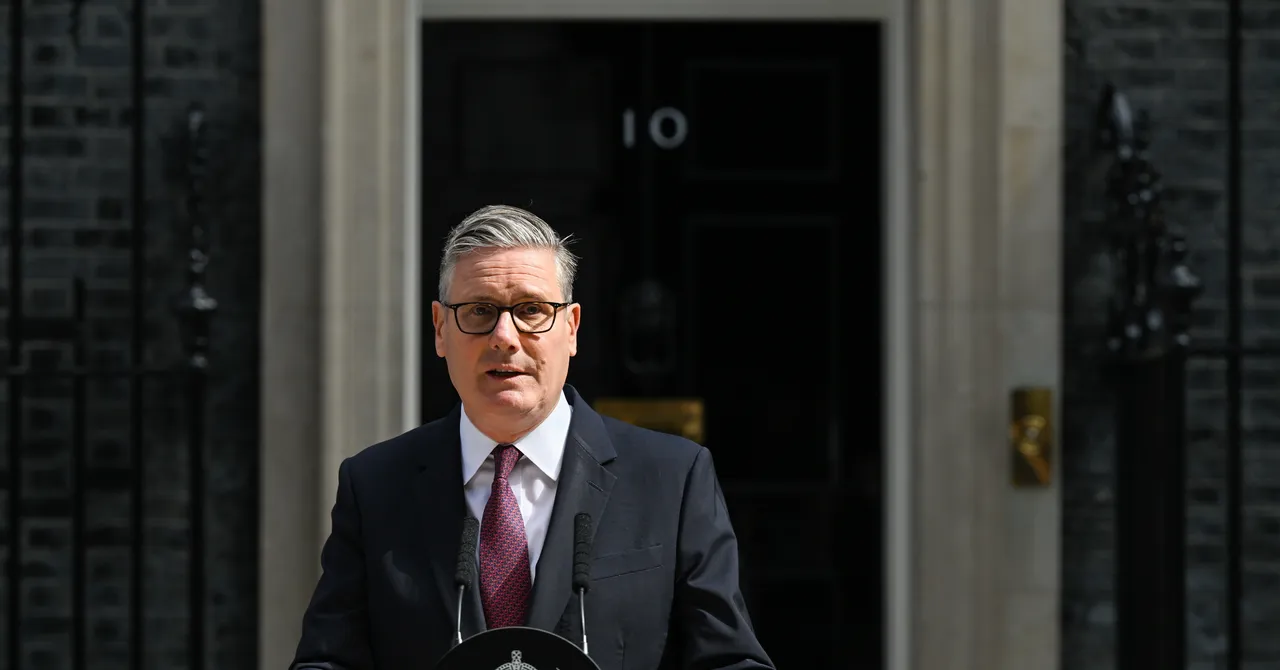
Weeks after his general election triumph, Keir Starmer sent voters a sobering message: “Things will get worse before we get better.”Things did get much worse for Britain’s prime minister, who is facing a potential leadership challenge after disastrous local election results this month. Policy U-turns and a series of scandals have rocked the fortunes of the man who led the Labour Party to a landslide election win less than two years ago. But the economy too has contributed to the current crisis, with many voters saying they feel no better off than they did in 2024. BloombergUK is in worse place than when Starmer became PM Unemployment is close to a post-pandemic high, inflation is accelerating, living standards have stalled and growth is expected to slow to the weakest in three years. With mortgage rates up sharply since the Iran war began, the economy has overtaken immigration as the top issue for voters, according to YouGov. While much can be blamed on US President Donald Trump’s erratic foreign policy, economists and business leaders say Starmer and his Chancellor of the Exchequer Rachel Reeves have also played their part, notably by piling billions of pounds of taxes on businesses. “Some of the policy decisions are probably pushing us towards a slower pace of growth,” said Andrew Goodwin, chief UK economist at Oxford Economics. “The underlying picture is just one of an economy that’s growing at a pretty soft pace.”Growth and InflationStarmer and Reeves made economic growth their number one mission, seeing that a faster economy could help unlock the money they needed to plow into crumbling public services. The prime minister vowed to boost GDP growth to the highest in the Group of Seven — a title that looks set to stay with the booming US economy for years to come. BloombergBritain trails the US and Canada in the G7 growth league Growth has averaged 0.3% a quarter since Labour came to power, little better than the 0.2% in final seven quarters of the previous Conservative administration. A strong start to 2026 is showing signs of petering out as businesses and consumers struggle with the fallout from the Iran War.The International Monetary Fund expects the UK to be the worst affected G-7 economy, predicting growth will almost halve this year. The energy shock has driven inflation to 3.3%, meaning wages are barely growing in real terms and putting pressure on the Bank of England to raise interest rates.Labour’s clampdown on immigration could further weigh on the economy and fuel inflation by curbing labor supply, economists say.Taxes and Jobs While US tariffs and the Middle East conflict have weighed heavily on the UK economy, many also criticize policy decisions under Labour that have lifted the overall tax burden to around 37% of GDP — its highest since World War II.A £25 billion ($33 billion) increase in employer payroll taxes last year coupled with another above-inflation hike in the national minimum wage have been blamed for discouraging firms from hiring. BloombergYouth unemployment is higher than in the EU for the first time With job creation failing to keep up with the supply of labor, there are now almost three jobless people per vacancy. Youth unemployment is running at around 16% — triple the UK average — with increased labor costs and AI often cited by employers for the dearth of entry-level graduate jobs. “Apart from some sea changes to planning regulations and the like, there’s little concrete on the big picture growth trajectory that can be pointed to,” said Hetal Mehta, chief economist at St. James’s Place. Public FinancesDebt levels remain around their highest since the early 1960s at 94% of GDP, with interest payments now costing around £110 billion a year — as much as the education budget and more than defense. The £23.6 billion buffer Reeves had against her borrowing rule — to balance day-to-day spending and revenue by the end of the decade — has already been wiped out by the Iran war, economists reckon.BloombergGift supply has been historically high in recent years The existence of that rule, along with a pledge to bring down debt, has nonetheless earned Starmer and Reeves a degree of trust in markets, allowing them to warn of “chaos” if the prime minister is ousted.Investors, who have absorbed hundreds of billions of pounds of government debt in recent years, fear constraints on borrowing will be loosened if Manchester Mayor Andy Burnham, the bookmakers’ favorite to be the next prime minister, takes over.“The possibility of a government leadership change raises the uncertainty around the fiscal consolidation path as it brings with it the risk of a shift in the fiscal rules,” said James Moberly, economist at Goldman Sachs.Bond MarketsThe benchmark 10-year gilt has risen to a post-financial crisis high of over 5% — raising the cost of borrowing for the government, firms and consumers. Thirty-year gilts yield over 5.8%, the highest since the late 1990s and well above European and developed-world peers. BloombergBritain trails the US and Canada in the G7 growth league In a speech last week, BOE policymaker Catherine Mann warned that new shocks could result in a potential “persistent risk premium” on UK government debt, given that an increasing share of the market is held by foreign investors, many of them highly leveraged, that are more flighty than the pension funds and insurance firms that once dominated.Starting PointThe economy Starmer inherited in 2024 was challenging, with significant tax rises required to fill a hole in the public finances A huge debt-funded spending boost in Reeves’ first budget was partly destined for capital investment that could along with planning reforms spur productivity and housebuilding.Starmer has also presided over a modest increase in living standards. Nominal pay has risen by almost 7% since mid-2024, boosted in part by increases to the minimum wage. On unemployment, the government repeatedly points to programs encouraging young people into training and apprenticeships.While Starmer may have failed to meet his lofty promises on the economy, his rivals — should they successfully challenge him — could also find themselves hemmed in by febrile markets and stubbornly weak growth.
Taxes and Trump leave UK in a worse state than Starmer found it
Britain's Prime Minister Keir Starmer faces a tough economic climate. Inflation is rising, and living standards are not improving. Economic growth is expected to slow significantly. High mortgage rates and increased taxes on businesses are impacting the economy. Unemployment is nearing a post-pandemic high. The government's economic policies are under scrutiny amid these challenges.
1,017 words~5 min read