TL;DRChatGPT can now connect to your bank accounts via Plaid, giving OpenAI access to the most intimate data category left.
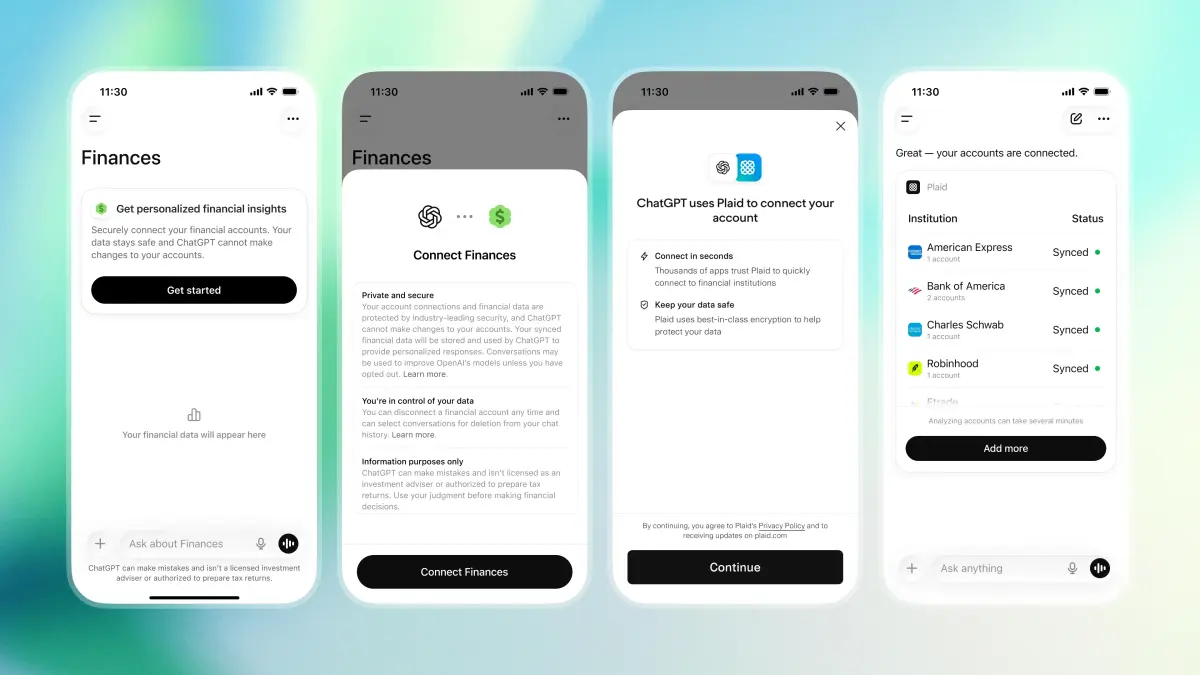
OpenAI has launched a personal finance experience inside ChatGPT, letting subscribers connect their bank accounts, credit cards, investment portfolios, and loan accounts to the chatbot and ask questions grounded in their actual financial data. The feature, released on 15 May, is available in preview to US-based ChatGPT Pro subscribers on web and iOS, with support for more than 12,000 financial institutions through a partnership with Plaid.
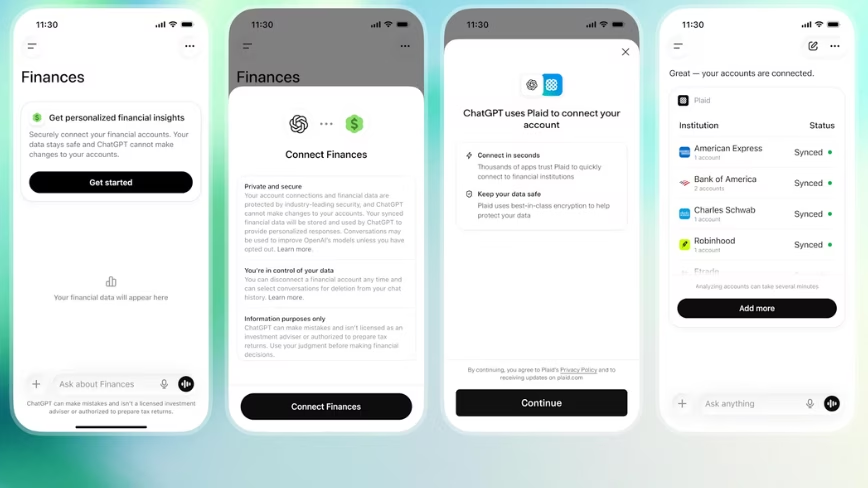
The integration is straightforward. Users open a new “Finances” tab in the ChatGPT sidebar or type “@Finances, connect my accounts” in any conversation. ChatGPT guides them through linking accounts via Plaid, the same connectivity layer used by Venmo, Robinhood, and most major budgeting apps. Once connected, the chatbot generates a dashboard showing portfolio performance, spending patterns, subscriptions, and upcoming payments. Users can then ask questions like “what did my last holiday actually cost me?” or “help me build a plan to buy a house in five years.”
OpenAI says ChatGPT can see balances, transactions, investments, and liabilities, but cannot see full account numbers or make changes to accounts. Users can disconnect services at any time through settings, and synced data is removed within 30 days. Financial memories, the contextual information ChatGPT stores about a user’s goals and priorities, can be viewed and deleted from the Finances page.