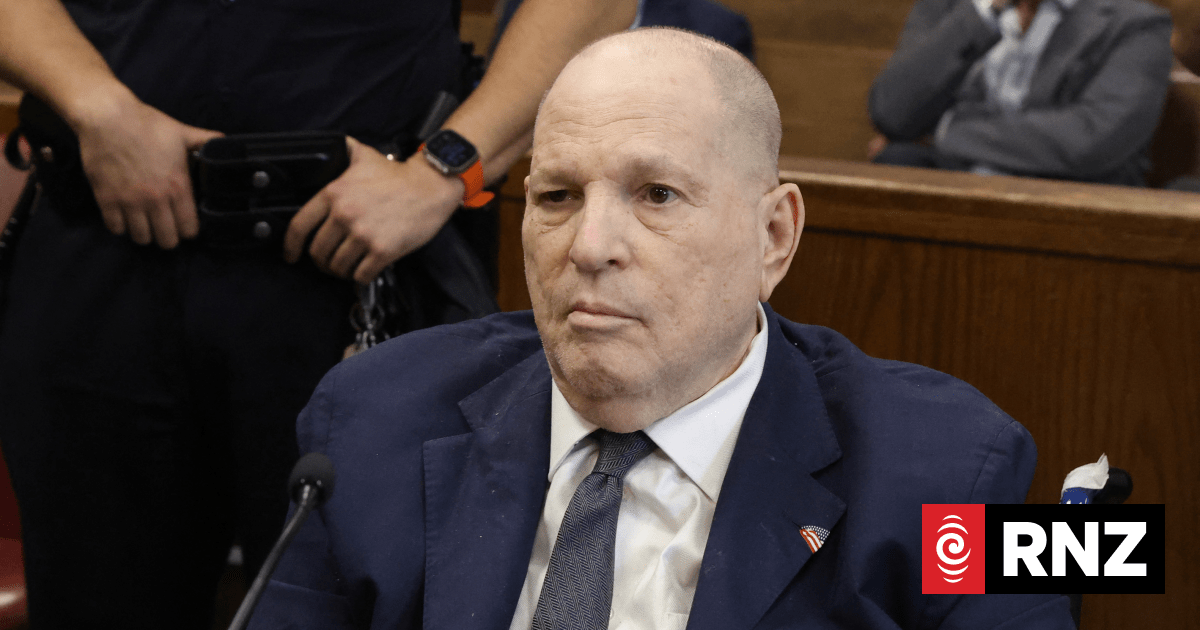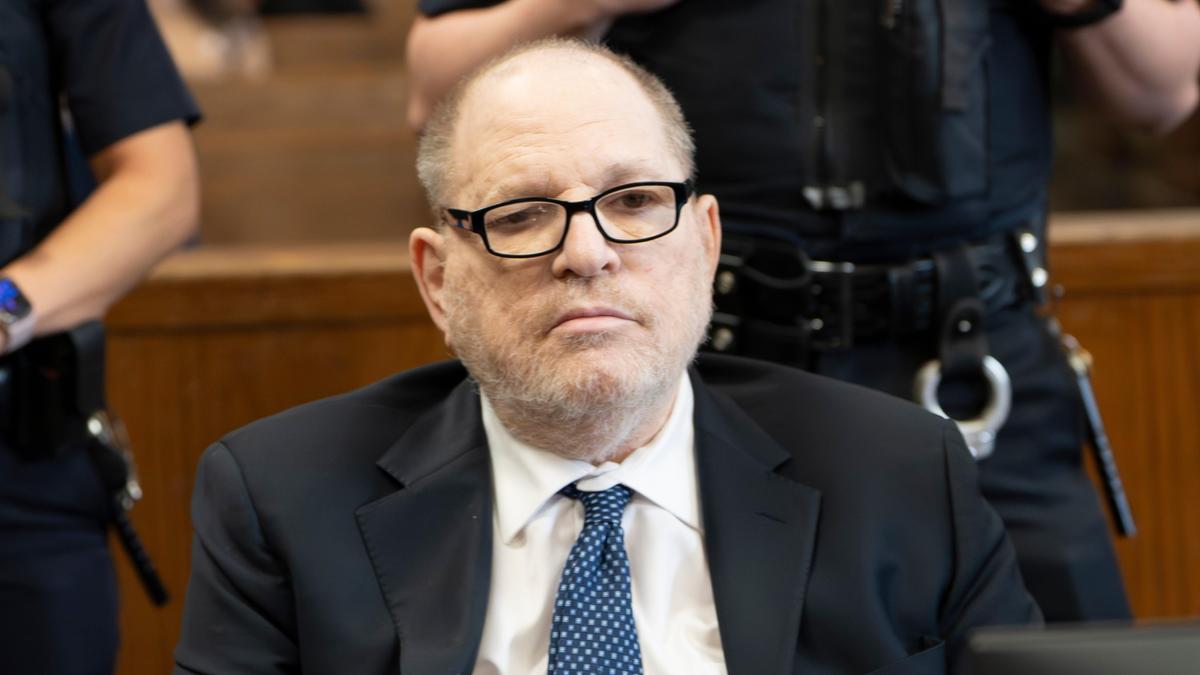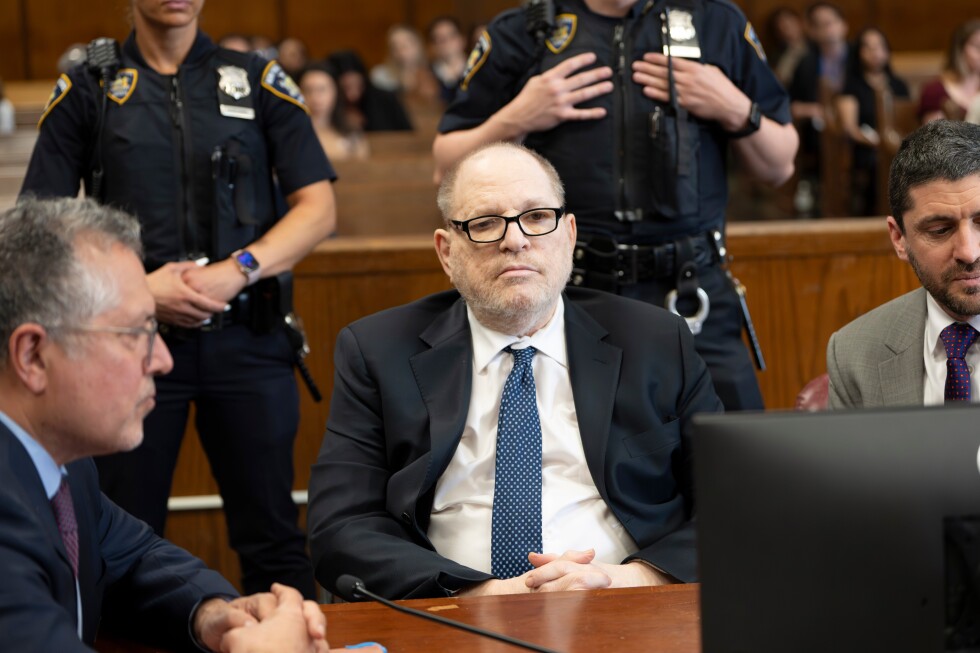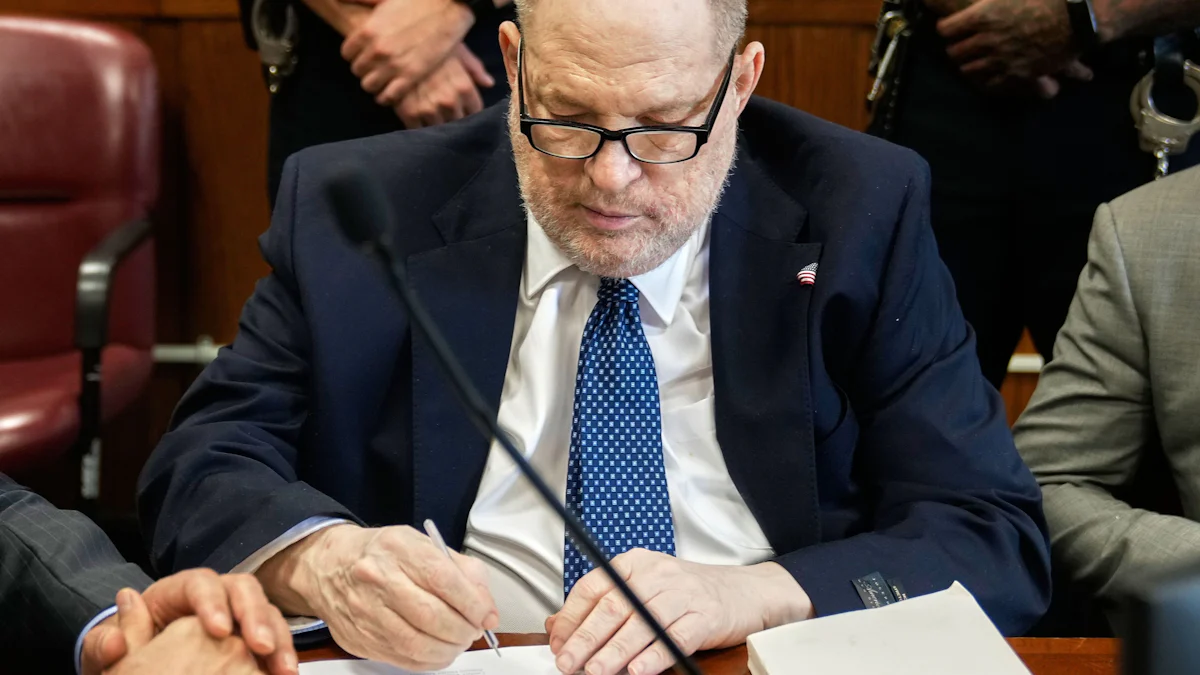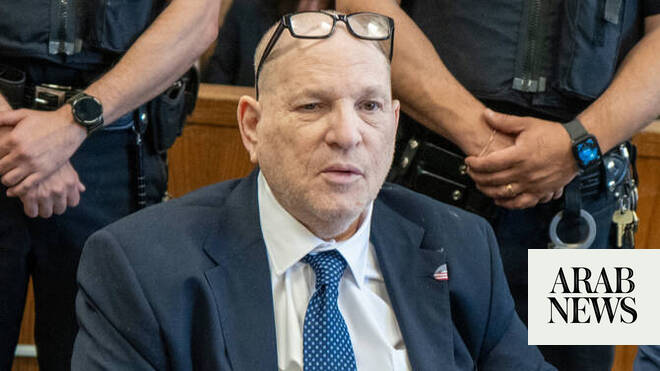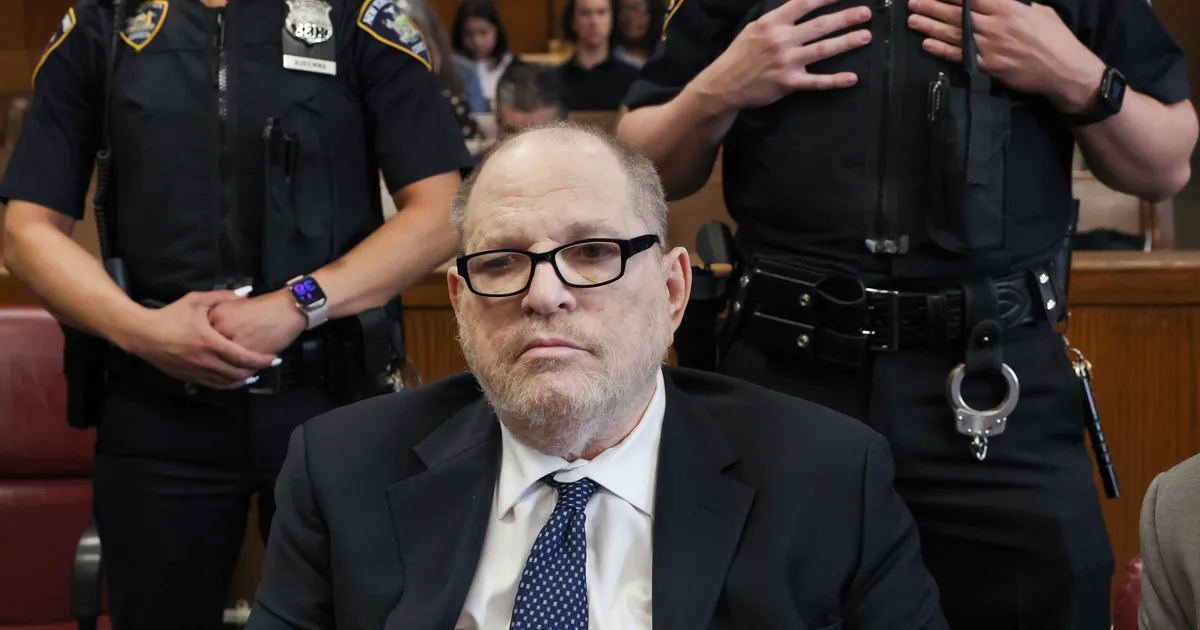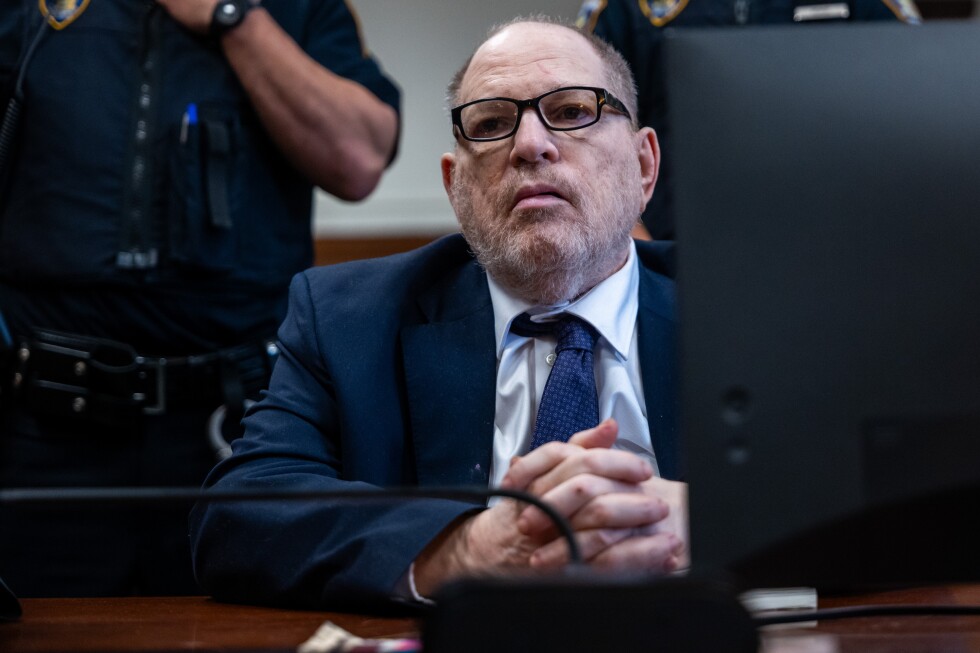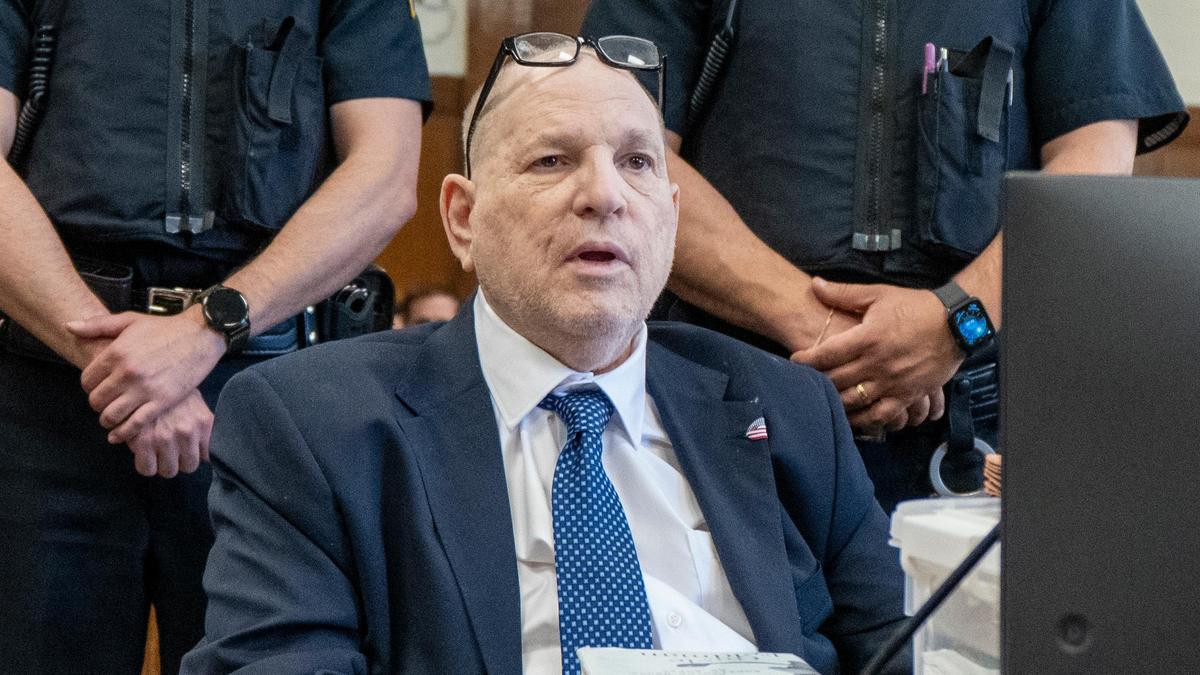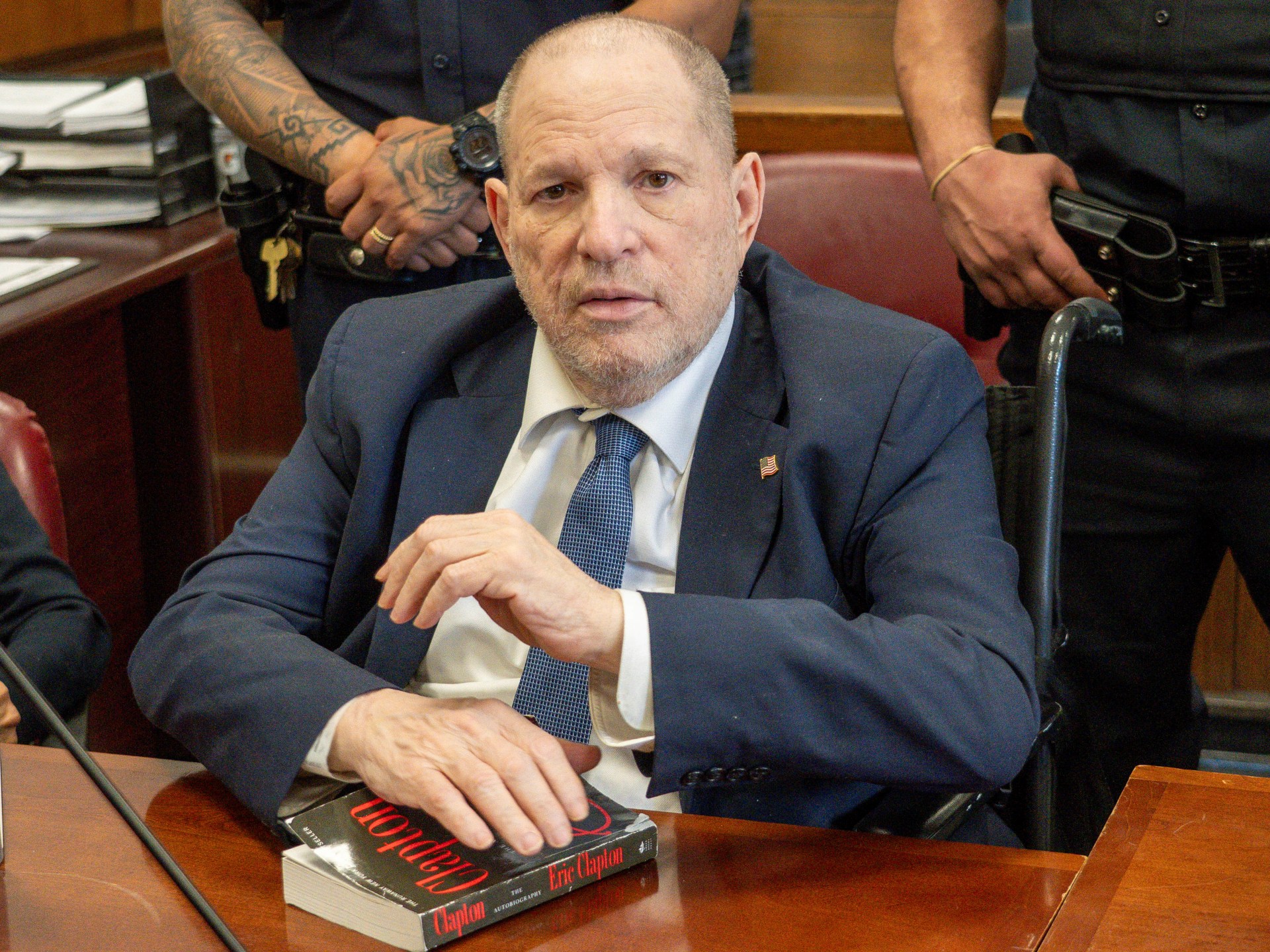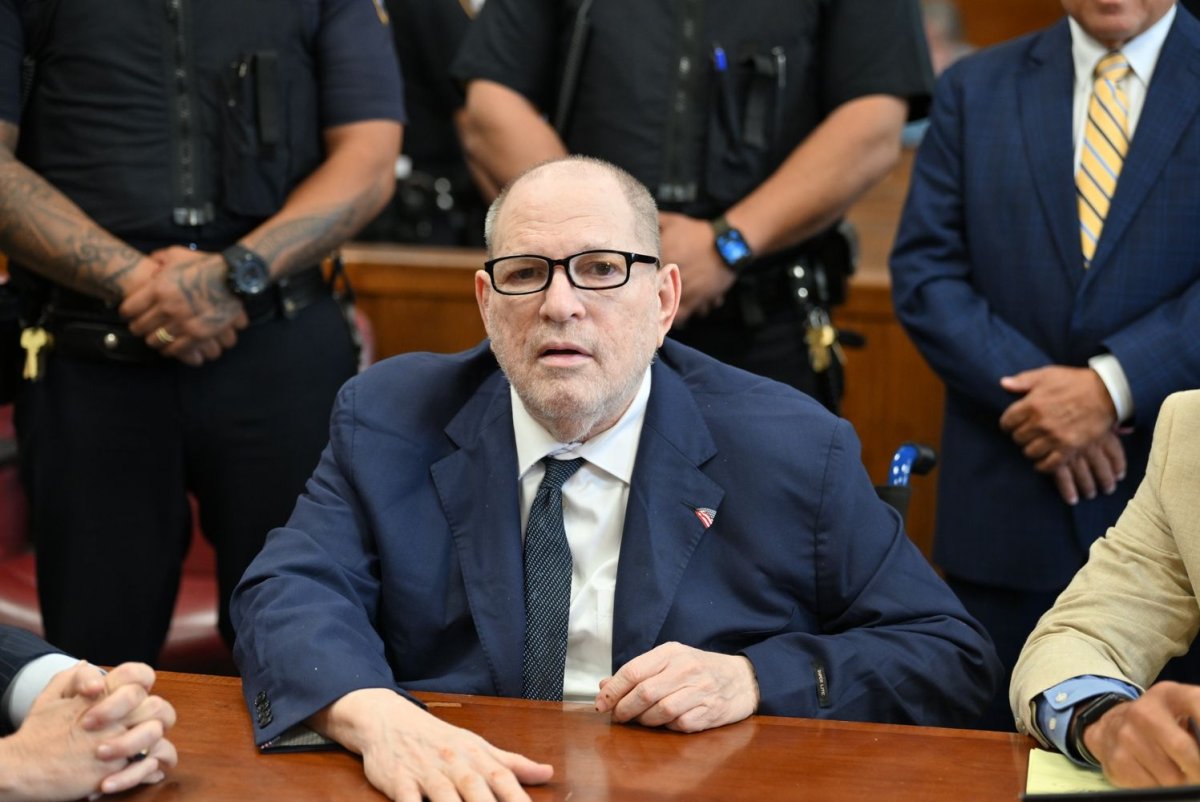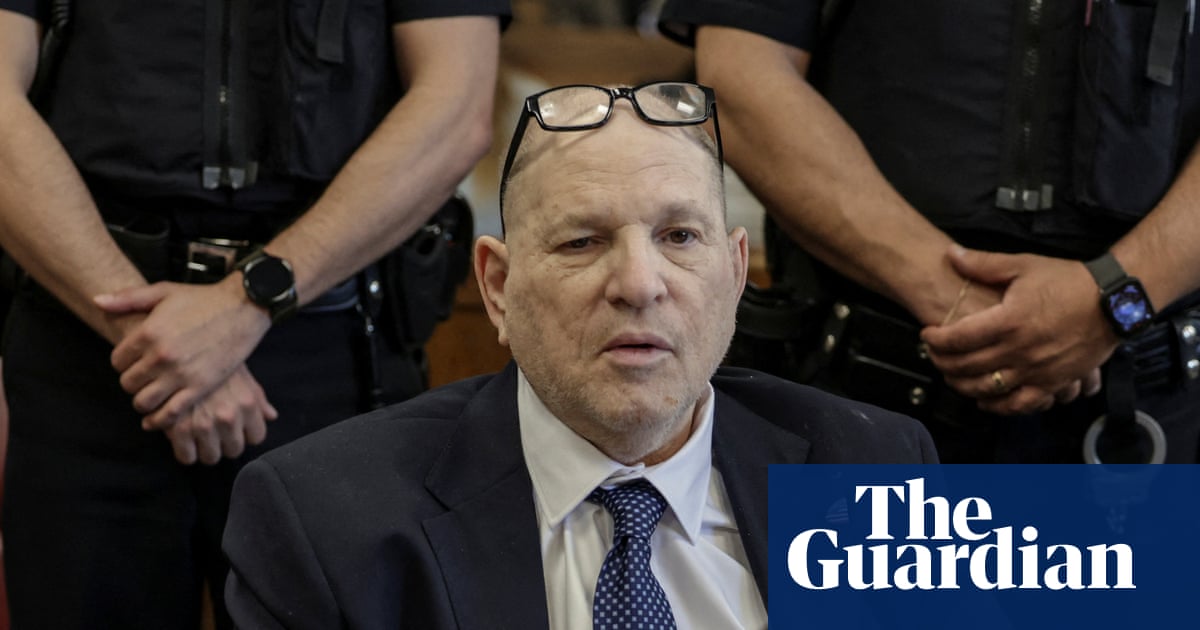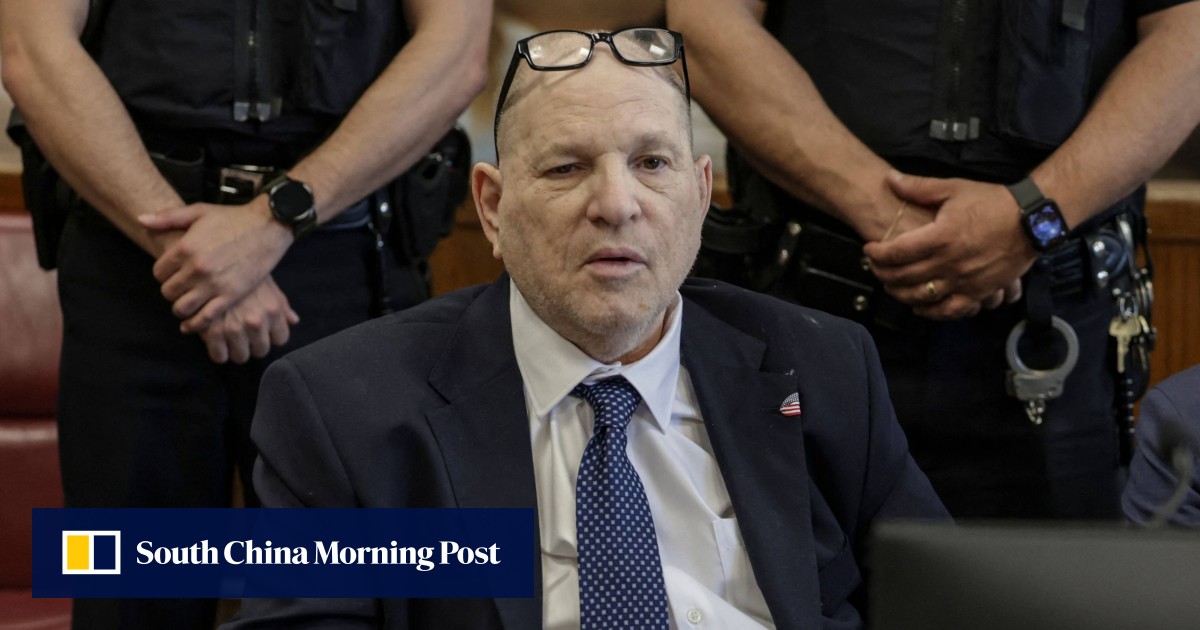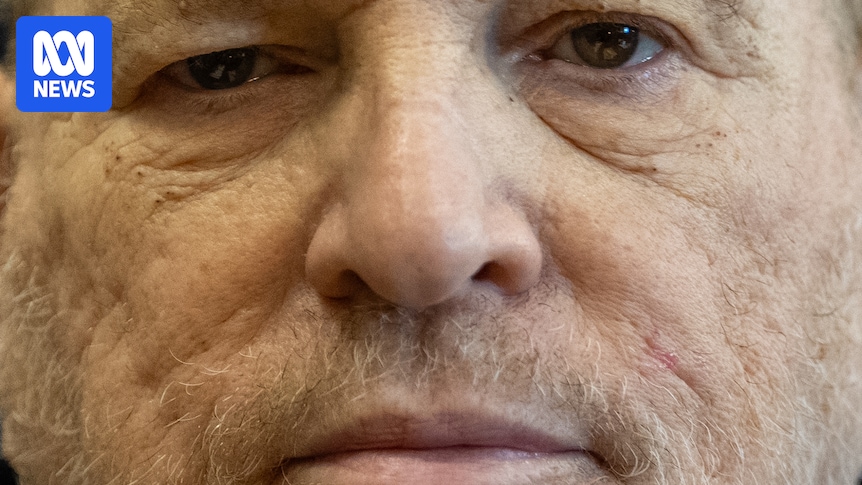
Camera flashes envelop a dishevelled Harvey Weinstein, who moves towards the doors of a Manhattan court.His 2020 trial is packed with reporters, notable if only for the dozens more who want in.Outside, actors Rosanna Arquette and Rose McGowan brace the New York cold to proclaim "time's up" on the culture that enabled the now-disgraced film producer.Rose McGowan, who accused Weinstein of assaulting her at the 1997 Sundance Film Festival, stands outside his 2020 rape and sexual assault trial. (Reuters: Jeenah Moon)Six years later, Weinstein faced another courtroom.Only this time, there is no media circus. In fact, there's barely any.As New York Magazine's Irin Carmon wrote, Weinstein's fourth trial, focusing on allegations he raped actress and hairstylist Jessica Mann in 2013, came and went "without leaving much of an impression".Harvey Weinstein fronts a nearly-empty Manhattan courtroom. (Reuters: John Angelillo/Pool)Almost a decade on from the reports that exploded Hollywood and spurred #MeToo's moment of reckoning, its legacy has grown complicated.Now, as jurors fail to reach a unanimous verdict in Weinstein's third New York rape trial, advocates are left dissecting a movement that was once deemed "a revolution of refusal".The hashtag that ignites the globeHollywood hearsay soon grew into a defiant cry after a series of stories were published by The New Yorker and The New York Times in 2017.The pieces detailed years of sexual harassment at the hands of Weinstein, a producer who had helmed films such as Shakespeare in Love, Pulp Fiction and Silver Linings Playbook.Close to 100 women eventually came forward with allegations that dated back decades.For many, the reports were simply confirmation of the industry's "open secret".The #MeToo movement was originally created by Tarana Burke as a way to address the sexual violence of women and girls of colour in the American South.But by the end of 2017, the hashtag was synonymous with Weinstein, a momentum Burke later lamented had overshadowed Black women.Tarana Burke started the #MeToo hashtag in response to her own survivorship. (ABC News: File)The charge also coined Time's Up: a catchphrase and group of about 300 Hollywood women hoping to yield "real accountability and consequences" in the industry.There had been hashtags before, including #SayHerName in 2014, but it was the Miramax founder's "star power" that saw #MeToo reverberate around the world, according to journalism academic Andrea Baker."It was outrageous behaviour that was normalised for decades, and it took Hollywood's power to make it very visible," Dr Baker, who has studied the journalism of #MeToo, explains."It's a classic example of white privilege and power."They call it the Weinstein effect that, straight away all this naming and shaming came out about powerful white men and also black men."Among them were stars like Danny Masterson, Kevin Spacey, and Louis CK.Years on, their careers have seen varying degrees of comebacks.Masterson was immediately fired from his Netflix show, before being sentenced to 30 years to life in prison after raping two women.Spacey has compared himself to Dalton Trumbo, an award-winning screenwriter blacklisted during the McCarthyism era. (AP: Alberto Pezzali)Spacey was wiped from his hit show House of Cards, but in 2023 cleared of nine sexual offence charges. This year, he avoided further court action through a settlement towards three men who accused him of sexual assault.In hints of a soft relaunch, he was awarded a 2025 lifetime achievement award at a Cannes gala.Meanwhile, after a brief exodus, CK just headlined a show for the Netflix Is a Joke festival.Louis CK (left) also appeared as a headline act alongside Jimmy Carr at a Saudi comedy festival last year. (Supplied: Visit Saudi)Dr Baker argues no-one, including the victims forced to relive their abuse or face public scrutiny, has been granted immunity."Louis CK and Kevin Spacey are currently, or trying to, work outside the mainstream Hollywood system," she says."They've gone for recent career re-entries, they've gone to rehabilitation, but in many people's eyes, they've been cancelled."Still, she acknowledges there have been cases such as R Kelly's, where for years, mainstream media largely opted not to investigate his sex trafficking and racketeering."[They] are guilty in some ways of giving these men immunity because there's a whole notion of, 'They're creative geniuses, leave them alone,'" she says."Another case is Bill Cosby, who was accused of sexual harassment and misconduct with 60 women."At the end of the day, I don't think anybody gets off scot-free, but I also do think that Harvey Weinstein is one of many."Bill Cosby was the first celebrity tried and convicted in the #MeToo era. (Reuters: Mark Makela)A retrial amid Trump 2.0For the victims of Weinstein, the past six years have been equal parts victories and crushing setbacks.In 2020, he was sentenced to 23 years in prison over the rape and sexual assault of two women.A 2023 Californian trial saw him sentenced to another 16 years.Then he was granted an appeal in 2024, on the basis of prejudicial testimony, with his first conviction overturned.His retrial saw him convicted of one sex abuse charge and acquitted of another.Proceedings over a third charge have twice ended in a mistrial, which brings us to now.Ashley Judd, one of the first actors to come forward with allegations against Weinstein, labelled the 2020 overturning an "institutional betrayal"."Our institutions betray survivors of male sexual violence," she said at the time.Weinstein's 2023 conviction meant he remained behind bars, but that too is something he is actively appealing.As of this March, The Hollywood Reporter spoke to a largely unrepentant Weinstein.The producer said he was sorry for cheating on his wives but labelled the #MeToo movement "a march to the money pile".Weinstein, who has gone through several bouts of illness, told The Hollywood Reporter he does not want to die in prison. (AP: John Minchillo/File)More than just a retrial, Weinstein's third trial also highlighted the different cultural climate #MeToo was entering.Donald Trump, himself found liable of sexually abusing writer E Jean Carroll in a 2023 civil trial, was in his second term as US president.Eyes were fixed on Trump administration members facing their own sexual misconduct allegations, including Pete Hegseth.And the same month Weinstein's verdict was reached, Mr Trump was distancing himself from notorious paedophile Jeffrey Epstein."The Epstein files have really reflected that #MeToo is more important than ever before," Dr Baker notes.Magazine writer E Jean Carroll accused Donald Trump in her 2019 memoir of sexually assaulting her decades earlier in a Manhattan department store. (Reuters: Jane Rosenberg )In many ways, the manosphere has always existed, Dr Baker says, but she acknowledges that in a "divided America" there are now those "very much tied" to its beliefs.Believers who are increasingly gaining influence inside the White House.Andrew Tate, for example, is understood to have been freed from Romanian travel restrictions after several high-level Trump officials took an interest in his human trafficking and rape case."No-one's taking it. The rallies are there," Dr Baker argues."I think the manosphere is being dismantled."The American women aren't taking this lying down."Manosphere comedian Theo Von has interviewed Donald Trump and appeared at his inauguration, alongside Jake Paul. (Reuters: Jasper Colt/Pool )Revising the rape myth and the next winsThose who once proclaimed themselves champions of #MeToo also fell on their own sword.New York Attorney-General Eric Schneiderman, who brought a lawsuit against Weinstein and his company, later resigned from office after four women accused him of physical violence during intimate encounters.Roberta Kaplan, the former chairwoman of the TIME'S UP organisation resigned after reports emerged that she allegedly advised New York Governor Andrew Cuomo's administration on sexual harassment allegations against him."TIME'S UP has abandoned the very people it was supposed to champion," cried an open letter to the board of directors in 2021.Yet, the movement is more than its losses.A 2026 commemoration of 2017 Women's Marches, held in the wake of #MeToo. (Reuters: Elizabeth Frantz)Without its precedent, it is unlikely men like Sean "Diddy" Combs would have faced prison time, nor that the Epstein files would lead to mass arrests or resignations.TIME'S UP estimates its legal aid has helped fund 456 cases involving sexual harassment or related retaliation since 2018.A fund that it says prioritises the cases of low-wage workers, people of colour and the LGBTQIA+ community.Six years after #MeToo, 25 US states and the District of Columbia passed a total of more than 80 workplace anti-harassment bills, The National Women's Law Centre said in 2023.In Australia, it prompted the establishment of the Sex Discrimination and Fair Work (Respect at Work) Amendment Act, an act that aims to protect employees from sex discrimination and sexual harassment in the workplace.Social media campaigns like Teach Us Consent also emerged.For Dr Baker, the movement has meant a shift towards more nuanced reporting that has largely "revised the rape myth"."'She had a short skirt on, she had too many drinks, she deserved it.' That's being revised now," she explains."Because that's totally and utterly not the case."At the same time, she is keen to see that action extends past Hollywood and white women."What about First Nations women? They're eight times more susceptible to sexual violence than non-Indigenous women," she says."It's a movement that has been so powerful, but still has got work to do, as we all do."So too does the way we understand stories of survival, she says."What we've really seen from the Me Too movement in 2017 is visibility," Dr Baker says."But the unfortunate thing, what we're at now, is the believability."That is the problem. Do we believe them?"Jessica Mann has been an unflinching voice on Harvey Weinstein's prolonged abuse. (AP: Richard Drew)At the heart of Weinstein's latest trial was not a flock of A-listers but one woman: Jessica Mann.Over five days of testimony, the actor told the jury how Weinstein raped her in a New York hotel in 2013.It was a story she had now recited before a courtroom three separate times."I am ready, willing and able to endure this as many times as it takes for justice and accountability to be served," Mann said last year.A hint, as the latest mistrial leaves the case in limbo, that #MeToo's battle may be far from over.
Who was still watching Harvey Weinstein almost a decade on from #MeToo?
Almost a decade after the #MeToo movement began, disgraced producer Harvey Weinstein's latest trial took place in a new climate. But supporters says its significance remains.
1,662 words~8 min read