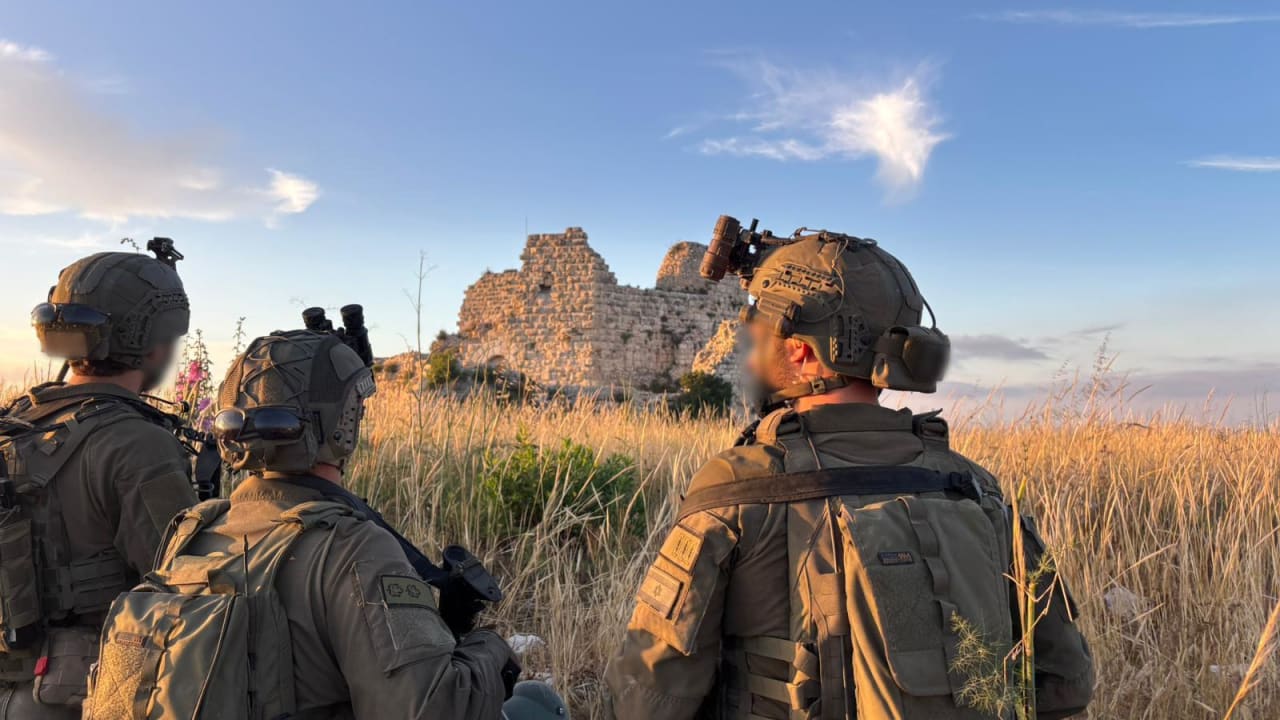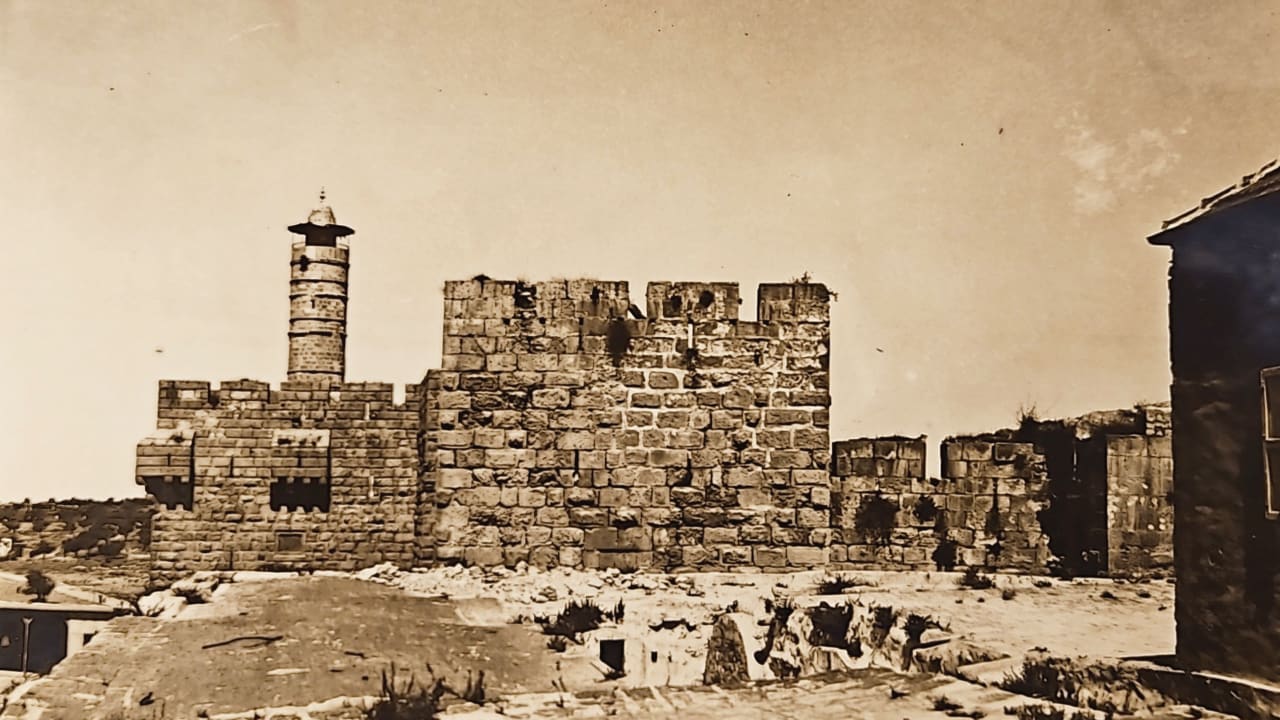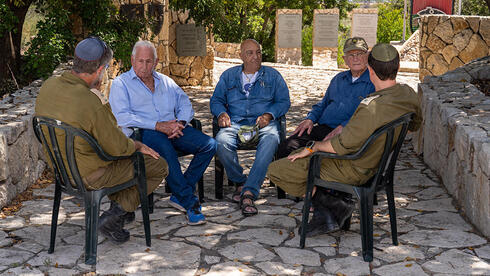
They are in their ninth decade of life, but their handshake remains as firm as that of an active-duty tank crewman. Hagai Man, 89, Omri Avishai, 87 and David Yair, 86, are veterans of the Harel Brigade and among the forces that helped liberate Jerusalem during the Six-Day War. They broke the way into the city and reached as far as Ramallah and Jericho via Shuafat and Tel al-Ful. Yet despite their role and the brigade’s contribution, the story of the Harel Brigade, later the 10th Brigade, is less known in the Israeli narrative of Jerusalem’s capture.The Harel Brigade played a central and critical role in the Six-Day War nearly 59 years ago. It operated as an armored brigade on the Jordanian front, mainly in the Jerusalem area, Ramallah and the Jordan Valley. Under the command of Brigadier General Uri Ben-Ari, the brigade breached fortified Jordanian positions north of the Jerusalem corridor. It was responsible for capturing key locations including Radar Hill, Khirbet Luza, Nabi Samwil, Beit Hanina and Tel el-Ful, as well as the capture of Ramallah. Tank units from Battalion 95 of the brigade also linked up with the Paratroopers Brigade, known as the 55th Brigade, in the push into the Old City of Jerusalem and with the Jerusalem Brigade.2 View gallery A meeting between fighters of the 10th Brigade and veterans of the Harel Brigade who liberated Jerusalem 59 years ago (Photo: Shalev Shalom)The realization that the dominant Israeli narrative of Jerusalem’s liberation would be associated primarily with the paratroopers came early, including for then brigade commander Uri Ben-Ari. According to a well-known story within the brigade, at the end of the Six-Day War Jerusalem Mayor Teddy Kollek convened the commanders of the three brigades that took part in the city’s capture: Eliezer Amitai of the Jerusalem Brigade, Uri Ben-Ari of the Harel Brigade and Mordechai “Motta” Gur of the Paratroopers Brigade. Each was asked to briefly describe the war. Amitai spoke for five minutes, Ben-Ari followed for five minutes and Gur then spoke for half an hour. During that time, Amitai reportedly told Ben-Ari: “We lost this war.”Today, three veterans of the brigade from the Six-Day War met with two current Harel Brigade battalion commanders, Lt. Col. G. and Lt. Col. M., to pass on their combat legacy to today’s soldiers, who are fighting in the current rounds of conflict over the past two years.“This sounds like defamation, the story about the three brigade commanders at the end of the war, but it is absolutely true,” said Hagai Man, who served as the brigade’s intelligence officer during the war. “Only after so many years are we being brought together with the new members of the brigade to tell the story of the Harel Brigade’s glory in the Six-Day War. There are so many acts of heroism. There is so much to tell about so few days of fighting,” he said.David Yair, who served as a machine gunner in the brigade, added: “If you watch television footage of the paratroopers arriving at the Old City, you will see a Harel Brigade tank there and the tank crew saying, ‘Look, there is the Western Wall.’”Lt. Col. G. told the veterans: “Even in this war, before the entry into Khan Younis, the paratroopers were told that they were the ones who liberated Jerusalem. It is in their DNA.”In a long discussion held at Yad La-Shiryon in Latrun, they recalled route names, villages, locations and commanders, including their admired brigade commander Uri Ben-Ari, who was called up just days before the war began.“For us it is clear that the tanks of the Harel Brigade broke the Jordanian formation. In the end, it is the tanks that make the difference,” said Lt. Col. G., who today serves as a reserve battalion commander in the 360th Battalion. “It is moving to meet them here today. These are people who liberated Jerusalem.”“That is the right term,” Man responded. He added that fears in Israel before the war were significant, noting, among other things, that the Chief Rabbinate had prepared sports fields as potential burial sites in anticipation of heavy casualties.2 View gallery A meeting between fighters of the 10th Brigade and veterans of the Harel Brigade who liberated Jerusalem 59 years ago (Photo: Shalev Shalom)Man explained that the brigade was not originally ordered to capture Jerusalem. “The Harel Brigade was ordered to move and capture the northern corridor outposts, advance quickly and block the Jerusalem–Ramallah axis. It was to be on standby to link up with Mount Scopus. The word Jerusalem as a city was not mentioned at all. All of this was until the morning of the second day of the war. In my assessment, even the division commander did not believe we would advance so quickly. The city itself was divided. I knew it well, from Givat HaTahmoshet in the north to the Monastery of Elias in the south. In the orders I remember, Jerusalem as a target was not mentioned. I do not know what orders were given to the 55th Brigade. They were meant to link up with Mount Scopus.”“I did not do much in the war,” said Avishai modestly, who served as deputy commander of the brigade’s reconnaissance unit. Man responded sharply: “Excuse me?”Avishai then described how his unit captured Beit Iksa, what happened at the Shuafat fort when an Israeli Air Force aircraft mistakenly fired on them, and how they reached Ramallah and Jericho and heard over the radio the historic announcement: “The Temple Mount is in our hands.”“At my current age I see everything differently,” he said. “But then, before I was 30, it was something else. When we were on the way to Jericho and heard over the radio that the Temple Mount was in our hands, we were very moved. Only later did I understand the significance of what we took part in, the capture of Jerusalem and what Jerusalem means to the Jewish people. Today I have started studying the Bible. I had never studied it before. The first lesson was on the Book of Esther. It speaks about longing for Jerusalem and I began to understand. For generations Jews dreamed of Jerusalem. Today I understand its great meaning for the Jewish people. For me, it is very significant.”“As combat soldiers and commanders in the brigade today, we carry the brigade’s legacy, including the Six-Day War, and it meets us in the current war,” said Lt. Col. G. “It is a great privilege to hear these Israeli heroes firsthand.”Lt. Col. M. added: “I will take this 60 years forward. As a soldier on the ground, you are so focused on fighting. But in today’s combat, especially in the current war, we are experiencing a historic event and we do not really understand it. Maybe when we sit 59 years from now with the battalion commander of the Harel Brigade, I very much hope they will also be moved.”
Emotional reunion: Harel Brigade tank crews recall battle for Jerusalem in 1967
Veterans of the Harel Brigade from the Six-Day War reunited with current commanders, recalling the rapid push into the Jerusalem and hearing that 'The Temple Mount is in our hands'
1,155 words~5 min read