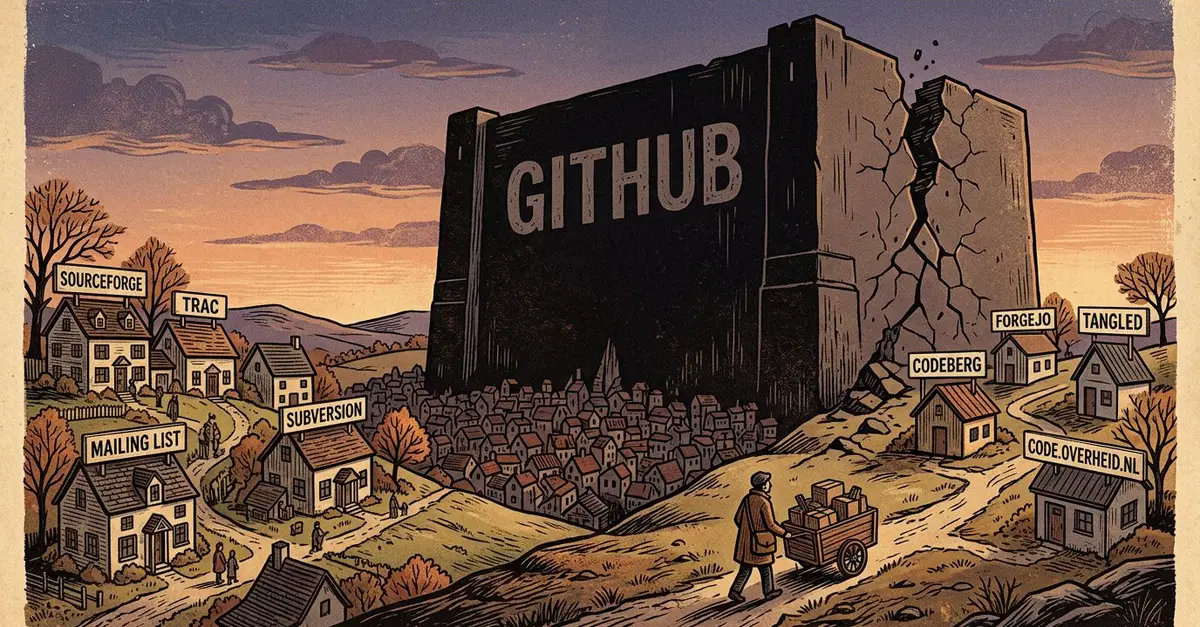
Last month, Mitchell Hashimoto, HashiCorp co-founder, publicly declared that he was moving his popular open source Ghostty terminal emulator project from GitHub. GitHub runs the world’s largest service built on the Git distributed version control system, created by Linus Torvalds.Once an enthusiastic user, Hashimoto grew disillusioned with service disruptions, and increasingly slow pull requests. “This is no longer a place for serious work if it just blocks you out for hours per day, every day,” he wrote. Hashimoto was quick to defend Git itself: “The issue isn't Git, it's the infrastructure we rely on around it: issues, PRs, Actions, etc.”
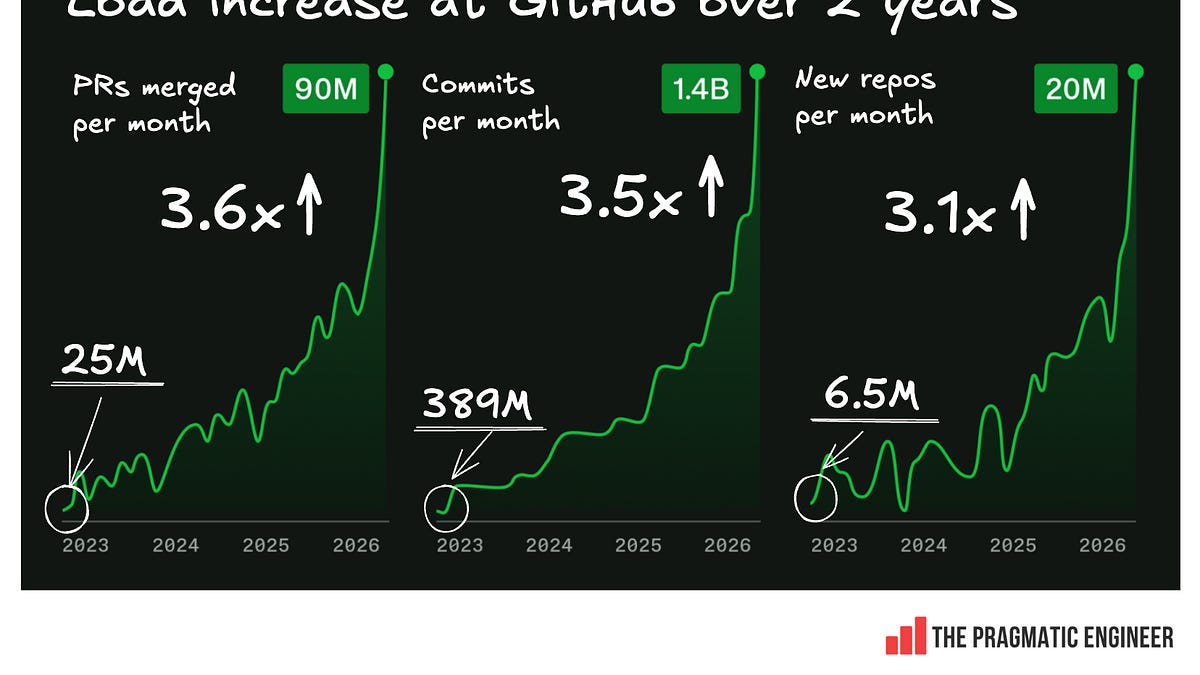
Many have blamed GitHub’s performance on Microsoft, which acquired the company in 2018. But to be fair, GitHub itself has been experiencing heavier-than-expected traffic thanks to a proliferation of AI-generated pull requests.
In 2025, GitHub saw a 206 percent year-over-year growth in AI-generated projects measured by the use of Bash shell scripts, a widespread way of running agents. And more AI code means more bugs. Research from GitClear found that AI-generated code heaped 10.83 issues per pull request, compared to 6.45 for the old-fashioned human variety.Our new agentic workforce is raising big questions about how the entire software development lifecycle (SDLC) should evolve, and if Git should come along. “Agents are nudging us toward a continuous flow,” warned Peco Karayanev, co-founder of DevOps platform provider Autoptic, which bridges Git-based deployments with observability tools for agent-based remediation. Autoptic’s entire user base runs on some form of Git, either homebrew or from a service provider like GitLab. Given the volume and magnitude of changes across repos, “we need git to start operating in a more continuous mode,” Karayanev wrote in an email interview.Git operations, especially when used in GitOps-style automated deployments, still need to be managed by people. Updates, commits, pushes, merges are often yoked into sequences of “stop/go” episodes where someone has to hit enter on the keyboard a few times to continue the workflow, Karayanev noted. This model may not hold up once agents start getting priority. A butler for GitGit has always had its share of critics, especially those who use the tool daily.