The AI coding agent market looks almost unrecognizable compared to 2024 or even early 2025. What started as inline autocomplete has evolved into fully autonomous systems that read GitHub issues, navigate multi-file codebases, write fixes, execute tests, and open pull requests — without a human typing a single line of code. By early 2026, roughly 85% of developers reported regularly using some form of AI assistance for coding. The category has fractured into distinct archetypes: terminal agents, AI-native IDEs, cloud-hosted autonomous engineers, and open-source frameworks that let you swap in whatever model you prefer.
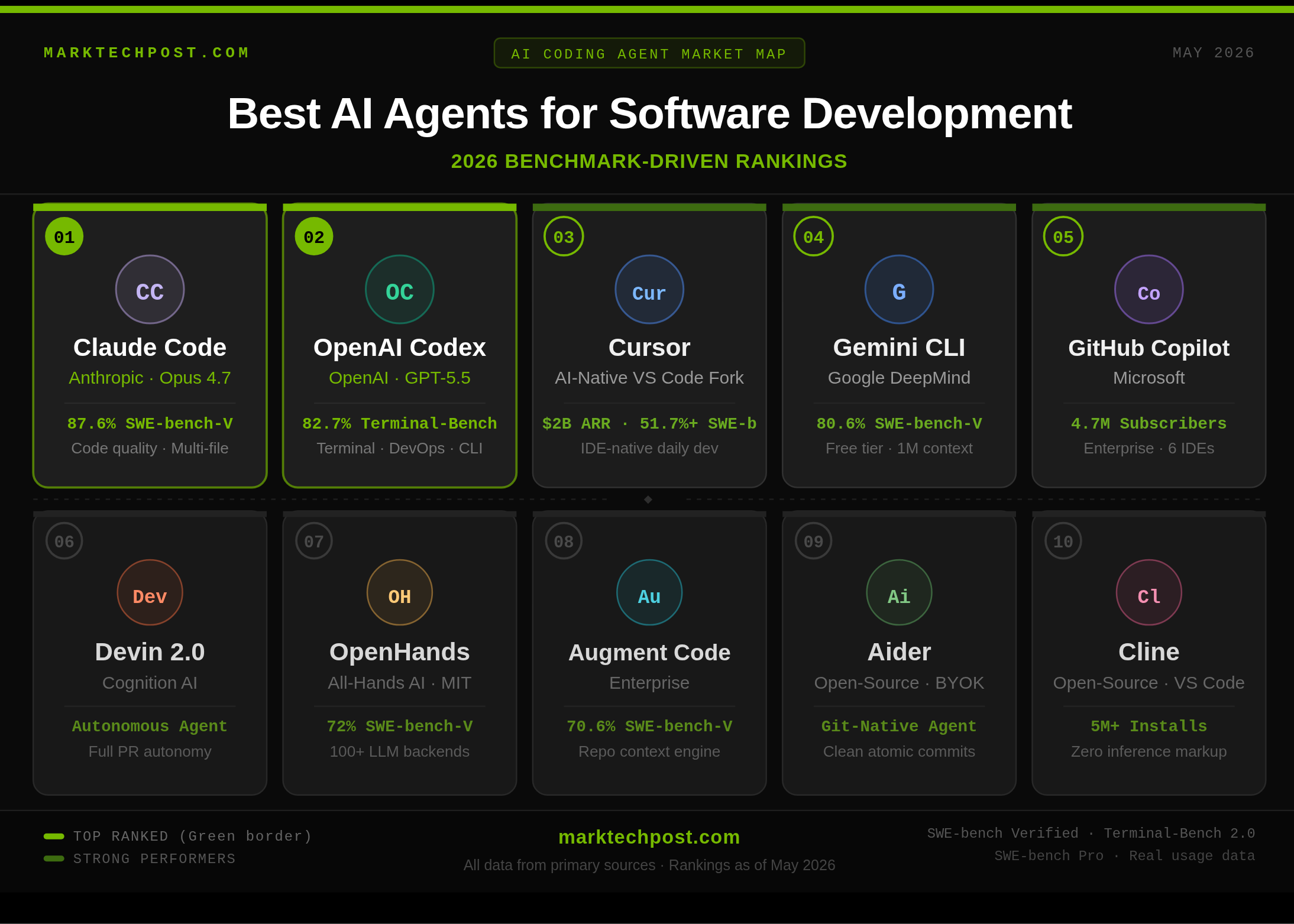
The problem is that every tool claims to be the best, and the benchmarks used to justify those claims are not always measuring the same things — and in some cases are no longer credible measures at all. This article features the most important AI coding agents by the metrics that actually matter for production software development, while being honest about where those metrics have broken down. If you are an AI/ML engineer, software developer, or data scientist trying to decide where to invest your tooling budget in 2026, start here.
Before the listing, an important calibration on the numbers — because one major benchmark shift happened mid-cycle and is not yet reflected in most tool comparison articles.